A payslip can reveal a difference in earnings. It cannot always reveal where that difference began.
In South Africa, the gender pay gap stretches beyond the question of whether a woman and a man receive equal pay for doing the same work. New research suggests that a significant part of the gap is connected to the companies women enter, the sectors they work in and whether their career moves take them towards higher-paying employers.
A study by economists Ihsaan Bassier and Leila Gautham used administrative tax records to track millions of formal-sector workers between 2010 and 2018. It found that women earned, on average, 12% less than men.
Crucially, about 45% of that gap, equal to 5.5 percentage points, was associated with women being more concentrated in lower-paying firms.
That does not mean the remaining gap can simply be labelled direct pay discrimination.
The researchers did not compare men and women doing identical jobs. The remaining difference may reflect factors that were not fully measured, as well as bias operating across the labour market.
The finding, however, shifts the conversation.
The question is not only whether women are paid fairly once they enter a workplace.
It is also which workplaces they are able to reach in the first place.
The company on the payslip matters
The research places the employer at the centre of an important part of South Africa’s gender earnings divide.
Two workers can have similar qualifications or work in the same broad industry, yet their earnings can differ because they work for companies that pay at different levels.
The study found that the difference between the average pay levels of women’s and men’s employers was relatively small among workers in their early twenties. It then widened considerably from the mid-20s through the mid-40s.
That period overlaps with the years when many women may also carry significant family and care responsibilities.
The research does not establish that care responsibilities directly cause the pay gap. However, the timing highlights how employment pathways can change during important stages of working life.
Women changed employers at roughly similar rates to men. The difference was what happened after the move.
Women’s job changes were less likely to take them towards higher-paying companies. Women returning to formal employment after unemployment or informal work were also more likely to enter lower-paying firms.
A career move, therefore, does not automatically mean an upward move.
Where women work can shape what they earn
The divide appears across several layers of the labour market.
Industry is one. Occupation is another. The employer is a third.
These layers can overlap and reinforce one another.
The South African study found that women entering formal employment were more concentrated in lower-premium sectors, including education, retail and personal care.
Men, meanwhile, were more represented in higher-premium industries such as construction, mining and manufacturing.
The latest Stats SA labour-market data shows that these occupational differences remain visible.
In the second quarter of 2026, clerical occupations accounted for 17% of employed women, compared with 5.8% of employed men. Domestic work represented 10.8% of women’s employment, compared with 0.5% of men’s employment.
Managerial positions accounted for 7.1% of employed women and 10% of employed men.
These figures do not, by themselves, prove why the pay gap exists.
They do show that women and men remain distributed differently across occupations.
And occupation can influence access to authority, progression and earnings.
The gender earnings divide starts before salary negotiations
There is another part of the story that is easy to overlook.
Before asking whether women and men are paid differently, there is a more basic question:
Who gets into paid employment in the first place?
South Africa’s labour market continues to show substantial differences between women and men in employment and labour-force participation.
Stats SA’s Q2 2026 labour-market data recorded an official unemployment rate of 33.6% across the population, underlining the wider employment pressures facing the country.
The gender gap is therefore not simply a salary issue.
It is also an access-to-work issue.
For women who are outside paid employment, there is no monthly salary to negotiate, no promotion to pursue and no employer contribution to build into their future earnings.
This is where unpaid care work becomes part of the wider conversation.
Women remain disproportionately responsible for unpaid household and care responsibilities. Those responsibilities can affect the type of work a person can realistically accept, including decisions around working hours, flexibility, location and job stability.
The result is that the earning gap can begin forming long before two people sit across a table discussing salaries.
Education opens doors — but not every door leads to the same place
The pathways into employment can also begin much earlier.
South Africa’s post-school education figures show that women are strongly represented among graduates overall.
According to the Department of Higher Education and Training’s 2024 statistics, women accounted for 64% of graduates from public higher education institutions, compared with 35.9% for men.
But the picture changes when fields of study are examined.
Women outnumbered men among graduates in areas such as Business, Commerce and Management Studies, Education, Training and Development, and Health Sciences and Social Services.
Men outnumbered women in Physical, Mathematical, Computer and Life Sciences, Manufacturing, Engineering and Technology, and Physical Planning and Construction.
Education does not determine a person’s future earnings on its own.
But different fields of study can lead into different occupational and industry pathways.
That makes the journey towards the gender pay gap more complicated than a single salary comparison.
The years between the first job and the next opportunity matter
The research by Bassier and Gautham points to another important part of the story: movement through the labour market.
Women were not necessarily switching jobs less often.
Instead, their moves were less likely to take them higher up the pay ladder.
The researchers found that women who remained continuously employed could move laterally or downward in terms of firm pay levels more often than men during parts of their careers.
Women who re-entered formal employment after being unemployed or working informally also tended to enter lower-paying companies.
This creates a cumulative effect.
A worker who starts in a lower-paying company may have fewer opportunities to build earnings, bargaining power and career progression than someone who enters a higher-paying employer.
Then the next job can either widen or narrow that difference.
Over several years, those seemingly small differences can become significant.
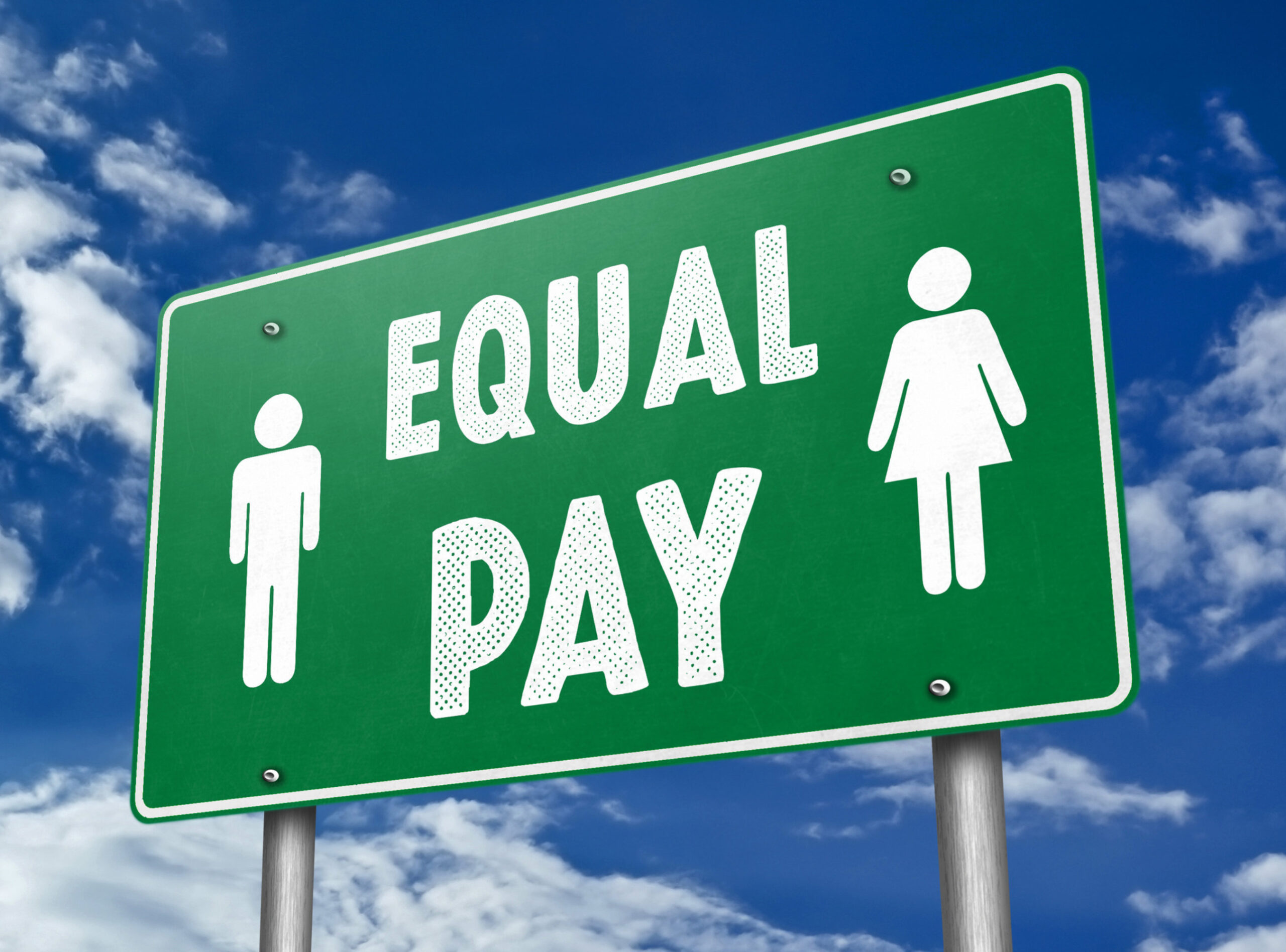
Equal pay still matters
None of this makes equal-pay protections less important.
South African law prohibits unfair discrimination in remuneration for work that is the same, substantially the same or of equal value.
Employers can also examine their remuneration structures to identify unjustified differences.
Pay transparency, remuneration reviews, effective enforcement and regular pay audits can help expose inequalities within organisations.
But there is a limit to what a pay audit can reveal.
A company can examine whether women and men performing comparable work are being paid fairly.
It cannot, on its own, explain why women may be less represented in higher-paying sectors, occupations or companies.
That requires looking beyond the payslip.
Closing the gap means looking at the whole journey
The South African gender pay gap is therefore not a single problem with a single solution.
It is connected to employment access, industry choices, occupations, employer pay levels, career mobility and unpaid care responsibilities.
The research also highlights the importance of formal employment. South Africa’s formal-sector opportunities are limited, and the researchers found that lower levels of formality were associated with wider gender gaps in firm pay.
That makes access to higher-paying formal employment particularly important.
Childcare support, flexible working arrangements that do not penalise earnings, fair recruitment practices and stronger pathways into higher-paying fields are among the areas identified in the research as relevant to reducing the wider divide.
The conversation around equal pay must therefore become bigger.
It is not only about what happens after a woman gets the job.
It is about whether she has a fair opportunity to reach the job, progress through her career, move to a better-paying employer and remain economically active without unpaid responsibilities closing doors around her.
Because sometimes the gender pay gap does not begin on the payslip.
It begins much earlier — with the opportunities available before the payslip is ever printed.