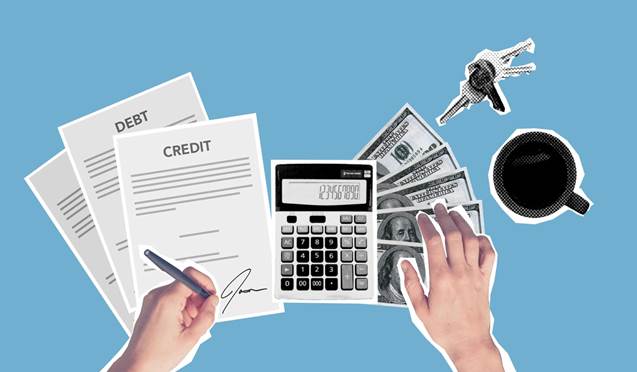
Is borrowing money a smart financial move or a decision that could leave you struggling to make ends meet? The answer is not always as straightforward as you might think.
Debt is often divided into two categories: “good debt”, which is believed to improve your financial position, and “bad debt”, which pays for unnecessary purchases that quickly lose value. However, this simple distinction does not tell the whole story.
According to Shafiek Ho-Kim, Growth Head at DirectAxis, what matters is not simply what you borrow for, but whether the debt makes financial sense for your circumstances.
“Debt is not inherently good or bad,” explains Ho-Kim. “Typically, people consider credit to be good when it creates or preserves value and bad when it’s used for discretionary spending. This isn’t always the case.”
The real question is whether borrowing is affordable, sustainable and appropriate for your financial situation.
When Good Debt Can Become a Financial Burden
Some loans can help people build assets, reduce future expenses or improve their earning potential.
A home loan, for example, can help someone purchase a property. Borrowing for home improvements, such as installing solar panels to reduce electricity costs, may also offer potential long-term benefits. Furthering your education through borrowing could similarly improve your earning prospects.
On paper, these decisions may appear financially sensible. But even a loan intended to improve your circumstances can become a burden if the repayments stretch your budget too far.
An investment’s potential benefits do not automatically make its financing affordable.
Before committing to a loan, Ho-Kim advises borrowers to consider the full cost of credit. This includes interest, fees, insurance and the length of the loan agreement.
A longer repayment term may make monthly instalments more affordable, but it can also increase the total amount paid over time, particularly because of interest.
A shorter-term loan with higher monthly repayments may cost less overall, but those larger instalments could put pressure on your monthly budget.
The challenge is finding a balance between the total cost of borrowing and what you can realistically afford to repay.
Can You Afford the Repayments Without Sacrificing Your Financial Security?
Being able to make a monthly repayment today does not necessarily mean you can comfortably manage the loan over its full term.
Ho-Kim encourages borrowers to look beyond the proposed instalment and consider their entire debt burden.
“Don’t just consider whether you can afford the new loan; look at your total debt burden and whether the combined repayments will leave you with enough disposable income each month. Also think about what happens if there’s an unexpected expense or emergency. Will you still be able to make the repayments?”
This is an important consideration when assessing any new financial commitment.
Your salary may cover your existing expenses and a new loan repayment, but what happens when your car needs an unexpected repair or another essential expense arises?
Leaving some breathing room in your budget can help you manage unforeseen costs without immediately turning to additional credit.
The aim is not simply to qualify for a loan. It is to ensure that repaying it does not undermine your ability to meet other financial commitments.
Is Consumer Debt Always Bad?
Another common misconception is that all consumer debt is financially irresponsible.
Life does not always follow a predictable budget. An essential household appliance may break down, or a vehicle may need an urgent repair. These expenses can arise when there is not enough money available to cover them immediately.
In such situations, borrowing may be a reasonable option, depending on the circumstances and the cost of the credit.
A personal loan, for example, may provide a structured repayment plan that is easier to manage than more expensive or unpredictable forms of credit.
However, the purpose of the loan is only part of the decision. Borrowers still need to consider the interest, fees, repayment period and impact on their monthly finances.
The key distinction is whether the borrowing addresses a genuine need in a manageable way or creates additional financial pressure.
The Warning Sign: Borrowing to Repay Borrowing
One of the biggest risks arises when people repeatedly take out new loans to cover existing repayments or everyday expenses without addressing the underlying cash-flow problem.
This can create a debt spiral.
As new borrowing is used to manage previous commitments, the overall financial burden may become increasingly difficult to sustain. Instead of resolving the original problem, each new loan can add another repayment to an already stretched budget.
Ho-Kim highlights the importance of distinguishing this pattern from debt consolidation or refinancing.
Debt consolidation combines multiple debts into a single loan, potentially simplifying repayments and making them easier to manage. Depending on the terms, it may also reduce the overall cost of servicing the debt.
However, consolidation does not automatically make debt cheaper. The interest rate, fees, repayment term and total amount payable all need to be considered before deciding whether it is beneficial.
The important question is whether the new arrangement genuinely improves affordability and the overall cost of the debt, rather than simply moving the problem elsewhere.
Three Questions to Ask Before Taking Out a Loan
Before signing a credit agreement, Ho-Kim recommends considering three key questions.
1. Is it productive?
Could the borrowing create value, reduce future costs or improve your financial position? If it could, are the repayments affordable within your existing budget?
2. Is it manageable?
Is the expense legitimate and necessary? Do you understand the total cost of the loan, and can you comfortably make the repayments while retaining enough financial flexibility to deal with unexpected expenses?
3. Are you just postponing the problem?
Are you borrowing to obtain temporary financial relief without addressing the underlying affordability or cash-flow issue? If so, the new loan could leave you facing the same problem with additional debt to repay.
These questions encourage borrowers to think beyond the immediate need for money and consider the longer-term consequences of their decisions.
Look Beyond the Label Before You Borrow
Ultimately, the difference between a helpful financial tool and a costly mistake cannot always be determined by whether a loan is labelled “good debt” or “bad debt”.
A loan intended to build value can still cause financial hardship if the repayments are unaffordable. Equally, borrowing for an unexpected essential expense is not automatically a poor decision if the costs are understood and the repayments are manageable.
The focus should be on affordability, the total cost of credit, the purpose of borrowing and the impact on your broader financial position.
“Credit is more complex than the simple labels we sometimes use to define it. When it is used deliberately and responsibly, it is a useful financial tool,” Ho-Kim concludes.
For anyone considering a loan, the lesson is clear: understand what you are committing to, look beyond the monthly instalment and make sure the decision supports your financial stability rather than putting it at risk.