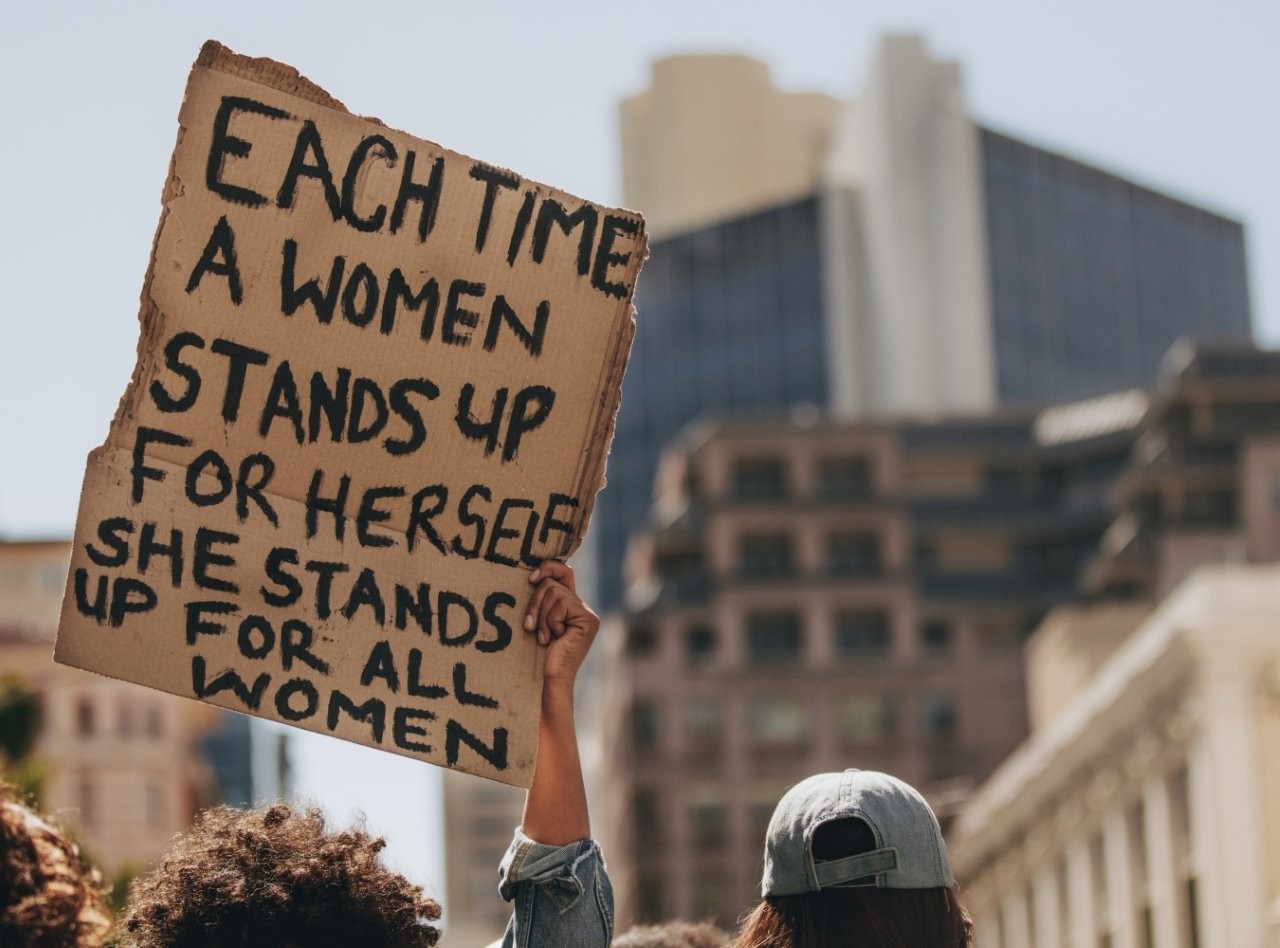
Seventy years ago, approximately 20,000 women marched to the Union Buildings.
They came together to challenge a proposed law that would restrict their freedom of movement and force them to carry passes dictating where they could live, work and exist.
Their message was clear: enough.
That historic act of resistance became one of the defining moments in South Africa’s struggle for equality.
Today, 32 years into democracy, South Africa has a Constitution that protects equality, dignity and freedom from discrimination.
But there is a difficult gap between having rights on paper and experiencing equality in practice.
For women, that gap can appear in a payslip, a boardroom, a job interview or inside the home.
And according to Prof Linda Meyer, MD at Rosebank International and Visiting Professor at Nelson Mandela University, closing that gap requires more than constitutional protection.
It requires visible action.
The pay gap tells a different story
South Africa’s legal framework recognises the principle of equality. Yet when it comes to income, women continue to face significant disadvantages.
According to research using SARS administrative tax data, women in registered, tax-paying jobs earned about 78 cents for every rand earned by men in 2021. The figure was 89 cents in 2008, indicating that the gap had widened over that period.
The picture becomes even more difficult in the informal economy.
According to the information supplied, the gender pay gap reaches 56.1% in this part of the economy, where many women work as street traders, domestic workers or in unregistered small businesses.
The problem is made worse by visibility.
Formal-sector protections such as the Employment Equity Act cover only part of the workforce. Informal work is also not captured in SARS administrative tax records in the same way as registered employment.
“The constitutional promise of equal pay unravels fastest precisely where it’s hardest to measure, in the informal economy, leaving many of South Africa’s most vulnerable working women furthest from equality in practice,” says Prof Meyer.
The numbers therefore raise a bigger question.
What happens when a right exists, but the people who need it most remain outside the systems designed to measure and protect it?
The glass ceiling has not disappeared
South Africa has made progress in getting women into senior positions.
But reaching senior management is not necessarily the same as reaching the rooms where the biggest decisions are made.
Women currently hold 47.3% of senior management roles in South Africa, according to Grant Thornton data cited in the release. That compares favourably with the global average of 32.9%.
Yet representation drops closer to the top.
Women occupy around 31% of executive committee roles, while research cited from Just Share indicates that women hold roughly 38% of JSE Top 40 board seats but only about 27–28% of executive roles.
There are also only three female CEOs among the JSE Top 40 and five female board chairs.
The progress is real.
So is the imbalance.
Women are strongly represented in areas such as CFO and HR leadership, but remain less visible in some of the senior decision-making positions that influence revenue, strategy and succession.
That distinction matters.
Representation without authority is not the same as equality.
South Africa has moved forward from 2010, when only 4.5% of JSE CEOs were women. Yet the continued gap in executive leadership suggests that the challenge is not simply about whether women are entering the corporate pipeline.
It is about whether they are being given the opportunity to reach its highest levels.
The hidden cost of being a homemaker
The workplace is only one part of the equality conversation.
Another challenge begins at home.
Women continue to carry a disproportionate share of unpaid domestic and care work. That work may not appear on a payslip, but it can have a direct impact on income, career progression and employment security.
The figures supplied in the release are stark.
Women spend three to four times as many hours on unpaid domestic and care work as men. Women reportedly devote about 64% of their time to unpaid domestic and care activities, compared with 18.8% for men.
Research cited in the release also estimates that South African women perform around 30.5 hours of unpaid care and housework each week, compared with 12.2 hours for men.
That means women carry roughly 72–81% of unpaid care time nationally.
The consequences can follow women into the labour market.
Of the 2.4 million people who identified themselves as homemakers as a reason for being outside the labour force, 2.1 million, or 88.2%, were women, according to figures from Statistics South Africa cited in the release.
For many women, stepping away from paid employment is not simply a personal choice.
It can become a long-term economic penalty.
The same challenge can emerge later in life when women become primary caregivers for ageing parents.
This creates another layer of pressure: the career and income cost associated with taking on family responsibilities that frequently fall more heavily on women.
And in the absence of a dedicated, universal system of publicly funded long-term care, families continue to depend heavily on unpaid arrangements.
Black women and grandmothers can carry an especially significant part of this burden, including providing childcare that enables younger adults to remain in paid employment.
The result is a form of invisible labour that supports households, employers and the broader economy, even when it is not formally recognised as economic work.
When ageism and sexism collide
For older women, the workplace can present another challenge.
Age and gender are both protected grounds under South Africa’s Constitution and the Employment Equity Act 55 of 1998.
Yet the combination of ageism and sexism can create what Prof Meyer describes as a “double penalty” for older women.
Discrimination does not always arrive in an obvious form.
It can appear through recruitment decisions, succession planning, performance assessments, promotion opportunities or assumptions about a person’s ability to adapt to technology and changing ways of working.
Older women can therefore find themselves navigating two sets of stereotypes at once.
One relates to gender.
The other relates to age.
Research cited in the release also points to workplace inequalities affecting South African women, including unequal pay, sexual harassment and age-based exclusion.
At the same time, assumptions that older employees are less adaptable to technology or hybrid working can reinforce exclusion.
But research cited in the release indicates that digital skills and adaptability are influenced more by access and training than age alone.
That distinction is important.
A stereotype can close a door before someone’s actual ability has even been considered.
The march has changed. The mission has not.
The women who marched to the Union Buildings in 1956 were confronting an openly discriminatory system.
Today’s challenges can be harder to see.
They may appear in the difference between two salaries.
They may appear when a woman is passed over for an executive position.
They may appear in the unpaid hours spent caring for children or ageing relatives.
They may appear when age and gender combine to influence how an experienced woman is perceived at work.
The barriers may be less visible than they were 70 years ago.
But invisible does not mean insignificant.
“Rights promised in law but not fully lived” is the central tension running through South Africa’s gender equality journey.
For Prof Meyer, the next stage of the country’s progress requires turning constitutional promises into lived realities.
That means recognising unpaid care as real work.
It means ensuring women have genuine decision-making power in corporate leadership.
It means challenging workplace cultures that treat motherhood, age or other stages of women’s lives as liabilities.
And it means examining the difference between what an organisation’s policies say and what employees actually experience.
Equality needs more than celebration
Women’s Month offers an opportunity to celebrate the achievements of South African women.
But it also offers an opportunity to ask uncomfortable questions.
Are women being paid fairly?
Are they reaching positions of real authority?
Who carries the unpaid care burden?
Are older women being given the same opportunities to progress?
Do workplace policies reflect the realities of women’s lives?
And perhaps the most important question:
If equality is guaranteed by law, why does it still feel out of reach for so many women?
The women who marched in 1956 understood that change does not happen simply because injustice is recognised.
They marched.
They challenged.
They demanded action.
Seventy years later, the march continues in a different form.
The challenge now is to ensure that equality is not simply something South Africa can point to in its Constitution, but something women can see in their salaries, careers, homes and everyday lives.
Because the real measure of equality is not what is promised on paper.
It is what women experience in practice.






![{"tiktok_developers_3p_anchor_params":"{"capability_extra_v2":{"portrait":[{"panel":"face-reshape"},{"panel":""}],"filter":[{"origin":"loki","resource_id":"7509778748628013569","effect_id":"2527224001"}]},"template_id":"7541764235387292981","client_key":"awgvo7gzpeas2ho6","capability_key":["filter","portrait"],"filter_id":["2527224001"]}","data":{"infoStickerId":"","activityName":"","appversion":"8.7.0","product":"hypic","pictureId":"0056B987-2C2E-4DB3-B740-00D1F27FBFCB","filterId":"7509778748628013569","playId":"","enter_from":"enter_launch","stickerId":"7541764235387292981","imageEffectId":"","os":"ios"},"source_type":"hypic"}](https://thevibeza.com/wp-content/uploads/2026/10/DF61D1A3-0F37-4DE5-9AE1-F2AF7CDF6022-copy-120x86.jpeg)