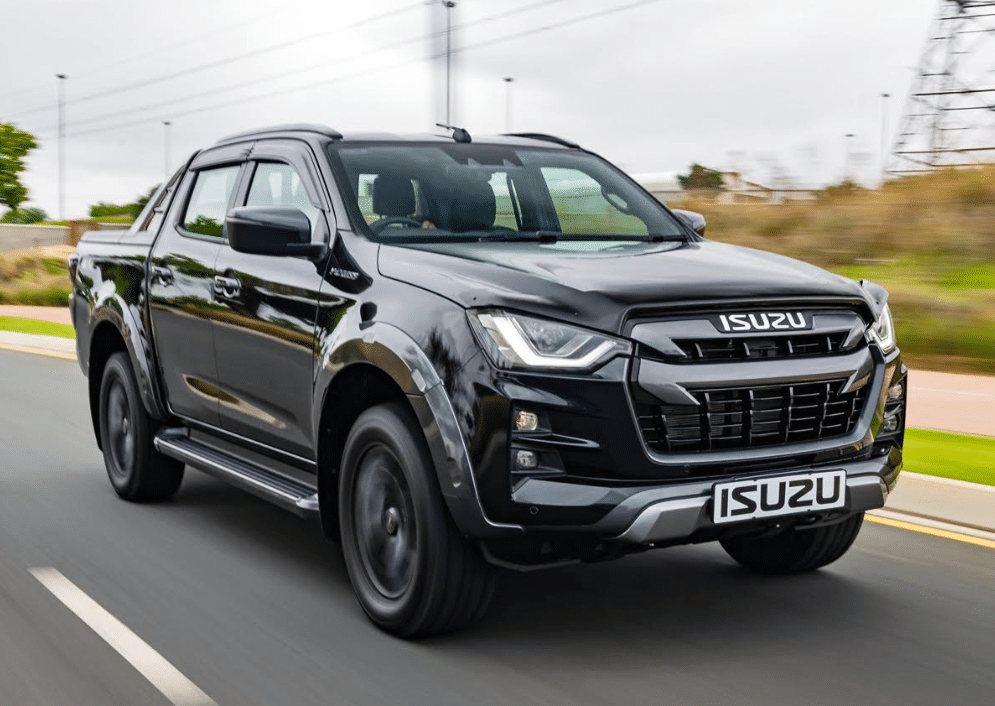
With diesel prices putting pressure on South African motorists, choosing the right bakkie is about more than power. It is about finding the right balance between purchase price, fuel consumption and the demands of everyday driving.
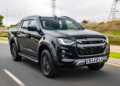
For buyers considering the Isuzu D-Max, the decision often comes down to two engines: the 1.9-litre Ddi turbodiesel and the more powerful 3.0-litre Ddi. Both are available in double-cab form, but their differences in performance, price and claimed fuel consumption could make a significant difference to your budget.
The question is simple: do you need extra muscle, or would a more economical option make better sense?
Isuzu D-Max 1.9 vs 3.0: The key differences
The Isuzu D-Max remains one of South Africa’s top-selling bakkies. Its two diesel engines offer different benefits, depending on how owners plan to use their vehicles.
The 1.9-litre Ddi produces 110 kW and 350 Nm of torque. The 3.0-litre Ddi delivers 140 kW and 450 Nm.
That gives the larger engine an additional 30 kW of power and 100 Nm of torque. However, the extra performance comes with a higher purchase price and slightly higher claimed fuel consumption.
According to Alan Quinn, Chief Innovation and Product Officer at Cars.co.za, the decision should depend on how the bakkie will be used.
“For buyers who spend most of their time in town and seldom tow, the 1.9 Ddi’s lower purchase price and better fuel economy make a very persuasive case,” Quinn said.
He added that the 3.0-litre remains worth considering for motorists who regularly tow or travel long distances with heavy loads.
Isuzu D-Max 1.9 Ddi: Efficiency for everyday driving
For families and motorists who spend most of their time in the city, the 1.9-litre Ddi offers a practical alternative to the larger engine.
Think daily commutes, school drop-offs, shopping trips and the occasional road trip. If heavy towing is not part of your routine, the smaller engine could provide the performance you need without stretching your budget as far.
Isuzu claims fuel consumption of 7.3 litres per 100 km for the D-Max 1.9 Ddi X-Rider 4×2 automatic.
With a 76-litre fuel tank, that translates to a theoretical driving range of just over 1,000 km on a full tank.
The model starts at R690,810, making it the more affordable option of the two X-Rider 4×2 automatic variants.
For buyers focused on everyday usability and keeping upfront costs down, these figures make the 1.9-litre a compelling choice.
Isuzu D-Max 3.0 Ddi: More power for demanding journeys
Some drivers need more from their bakkie.
Regularly towing a caravan, trailer or boat places different demands on an engine. Long-distance journeys with a full load can also make additional power and torque valuable.
This is where the 3.0-litre Ddi comes into the picture.
Producing 140 kW and 450 Nm, it offers more power and torque than the 1.9-litre engine. The extra performance can be particularly useful for buyers whose driving regularly involves towing, carrying heavy loads or overtaking on longer journeys.
However, the larger engine also costs more to buy and has a higher claimed fuel consumption figure.
Isuzu claims 7.9 litres per 100 km for the D-Max 3.0 Ddi X-Rider 4×2 automatic. Using the same 76-litre tank, the theoretical range is approximately 960 km.
The model starts at R792,470.
That means buyers pay R101,660 more than they would for the equivalent 1.9-litre X-Rider 4×2 automatic.
For drivers who regularly need the extra performance, that additional cost may be justified. For those who rarely tow or carry heavy loads, it is worth considering whether the bigger engine’s advantages will be used often enough.
The price and fuel consumption breakdown
The figures highlight the main differences between the two models.
| Specification | D-Max 1.9 Ddi X-Rider 4×2 automatic | D-Max 3.0 Ddi X-Rider 4×2 automatic |
|---|---|---|
| Starting price | R690,810 | R792,470 |
| Power | 110 kW | 140 kW |
| Torque | 350 Nm | 450 Nm |
| Claimed fuel consumption | 7.3 L/100 km | 7.9 L/100 km |
| Fuel tank capacity | 76 litres | 76 litres |
| Theoretical range | Just over 1,000 km | Approximately 960 km |
Prices, fuel consumption and driving ranges are based on the supplied information. Actual fuel consumption and range will vary with driving conditions, loads and driving style.
The price difference is R101,660. The larger engine also uses a claimed 0.6 litres more diesel per 100 km.
Although the difference in fuel consumption may appear small, it is worth considering alongside the higher purchase price, particularly for motorists who cover substantial distances.
Could the money saved buy a lot of diesel?
For buyers weighing up the two options, the upfront price difference deserves attention.
Choosing the 1.9-litre means keeping R101,660 in your pocket compared with the 3.0-litre equivalent.
Based on the supplied figures, that saving could cover approximately 40 tanks of diesel, depending on the amount paid per litre and the quantity purchased.
For a family managing fuel costs alongside groceries, school expenses and other household commitments, the lower purchase price could leave more room in the budget.
However, fuel savings should not be considered in isolation. Buyers who regularly tow or travel fully loaded should also weigh up the performance they need against the additional cost.
So, which Isuzu D-Max should you buy?
The answer depends on what your everyday driving looks like.
Choose the 1.9-litre Ddi if efficiency and affordability are your priorities. It is suited to buyers who spend most of their time in town, use their bakkie for family duties and only occasionally travel longer distances. Its lower starting price and better claimed fuel consumption make it an attractive option for drivers who seldom tow.
Consider the 3.0-litre Ddi if your lifestyle demands more power. Regular towing, long-distance travel with heavy loads and the need for additional overtaking performance are reasons to consider the larger engine. Its higher price and fuel consumption come with increased power and torque.
Ultimately, the smartest purchase is not necessarily the bakkie with the biggest engine. It is the one that fits your actual needs and budget.
For South African families looking to balance everyday practicality with rising fuel costs, the Isuzu D-Max 1.9 Ddi makes a strong case. For drivers who need the extra muscle, the 3.0 Ddi offers a more powerful alternative.
Before making the final decision, consider how often you tow, how much weight you carry and how far you typically drive. Those answers could matter more than the size of the engine alone.