
From documenting Ghana’s journey to independence to capturing the style, identity and everyday lives of Black communities in Accra and London, James Barnor has spent decades preserving moments that shaped history.
Now, the celebrated Ghanaian photographer is set to receive one of photography’s distinguished honours.
Barnor has been named the recipient of the Outstanding Contribution to Photography award at the Sony World Photography Awards 2027. The announcement marks a major moment for the photographer and the landmark 20th edition of the awards, which celebrates two decades of championing photographers from around the world.
The recognition will also bring more than 50 of Barnor’s works to London’s Somerset House in a special retrospective running from 16 April to 3 May 2027.
A photographer who captured history
Born in 1929, Barnor is recognised as Ghana’s first photojournalist. His career began during a period of significant change in the country.
After training under his cousin, portrait photographer J. P. D. Dodoo, Barnor made history in 1950 when he became the first staff photographer at Ghana’s newly launched Daily Graphic.
Through his lens, he documented a nation finding its voice. His photographs captured rallies, street parades and the historic moment when Kwame Nkrumah declared Ghana’s independence in 1957.
These were more than photographs of public events. They offered a record of people, communities and a country defining its future.
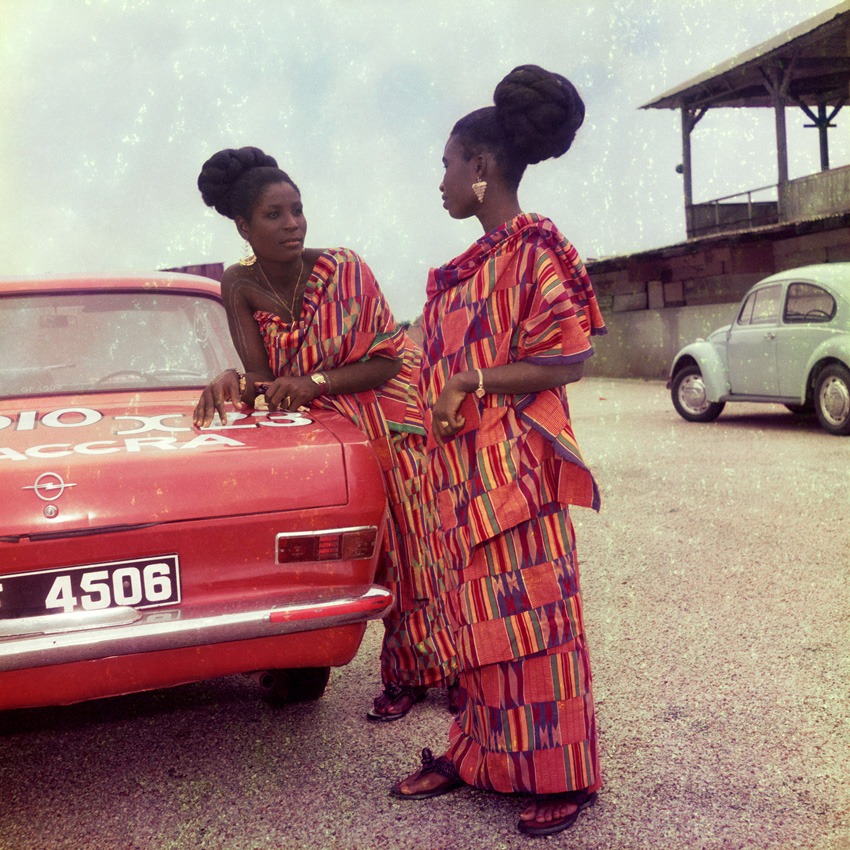
In 1953, Barnor opened the Ever Young studio in Accra’s Jamestown district. There, he photographed people from different walks of life, including shop assistants, students, traffic officers, judges and political figures.
His portraits captured the character of a changing society and would become an important part of Ghana’s photographic history.
From Accra to London: A career across continents
In 1959, Barnor moved to the United Kingdom to expand his technical knowledge of photography.
He studied at Medway College of Art in Kent before working as a colour printer at Colour Processing Laboratories, one of Britain’s leading colour laboratories at the time.
During this period, he also worked for Drum, the influential Black South African lifestyle magazine known for its anti-apartheid reporting.
His portraits of Black models and celebrities appeared on the magazine’s covers and in its fashion pages. These images helped shape a wider visual language of the African continent and its diaspora.
They also became important reference points for readers, photographers and artists for decades to come.
Bringing colour photography to Ghana
Barnor’s journey continued beyond the United Kingdom.
After receiving further training with Agfa-Gevaert in Belgium and Germany, he returned to Ghana in the late 1960s as the company’s technical representative.
He went on to establish Ghana’s first colour processing laboratory, introducing colour photography to new audiences.
Alongside this work, he continued practising as a photographer and journalist. His contribution helped shape Ghana’s photographic tradition and opened possibilities for aspiring photographers across the region.
In the early 1990s, Barnor settled back in London, where he lives today.
More than seven decades of photographic history
Barnor’s work has received international recognition through exhibitions, publications and retrospectives.
Among the notable presentations of his work was a touring retrospective curated by Hans Ulrich Obrist. It was shown at the Serpentine in London in 2021, MASI Lugano in Switzerland in 2022, and the Detroit Institute of Arts in the United States in 2023.
In 2022, James Barnor: Stories, Pictures from the Archive (1947–1987) opened at LUMA Arles in France. Curated by Matthieu Humery, the exhibition also marked the launch of the James Barnor Prize, dedicated to African photographers.
Another major presentation followed in October 2023, when James Barnor, Studio of Life opened at FOMU Antwerp in Belgium.
In May 2024, the photographer’s 95th birthday was celebrated with the James Barnor 95 festival in Accra and Tamale, Ghana. The celebrations featured a month-long programme.
His work continued to reach new audiences in 2025 through Ideas of Africa: Portraiture and Political Imagination at the Museum of Modern Art (MoMA) in the United States.
In 2026, Barnor’s photography featured in Ibrahim Mahama’s exhibition Le Temps des Récoltes at the Fondation Cartier pour l’art contemporain in France.
Somerset House retrospective brings his story together
The Sony World Photography Awards 2027 will give audiences another opportunity to explore Barnor’s remarkable career.
A special presentation featuring more than 50 works will be displayed at Somerset House in London from 16 April to 3 May 2027, as part of the flagship Sony World Photography Awards exhibition.
The retrospective will follow Barnor’s journey from Accra to London, his studies in colour photography and his return to Ghana.
Bringing together photographic prints and ephemera from across his career, the presentation will highlight defining moments in his practice and the people and communities he documented.
Joining an influential list of photography greats
The Outstanding Contribution to Photography award recognises individuals behind some of the most groundbreaking photographic work of our time.
Barnor joins a distinguished group of previous recipients whose work has helped shape the medium’s history.
The list includes Martin Parr (2017), Graciela Iturbide (2021), Edward Burtynsky (2022), Sebastião Salgado (2024), Susan Meiselas (2025) and Joel Meyerowitz (2026).
His inclusion reflects a career that has crossed continents, captured cultural transformation and created an enduring visual record of Black life across generations.
The celebration continues in April 2027
Barnor will receive his award at the annual Sony World Photography Awards gala ceremony in London on 15 April 2027.
The evening will also see the announcement of the overall winners of the Sony World Photography Awards 2027.
For Barnor, the honour recognises more than a lifetime behind the camera. It celebrates the stories, identities and historical moments he has preserved through photography.
From the streets of Accra to the pages of Drum and the galleries of international institutions, his images continue to connect generations and cultures.
And in April 2027, London will have another opportunity to experience the remarkable work of a photographer whose lens has helped tell Africa’s story to the world.