
South Africa’s push to improve disability representation in the workplace has put employment equity firmly in the spotlight. But achieving meaningful change will require more than employers meeting a numerical target. It will require the country to confront barriers that begin long before people enter the job market.
In 2025, new employment equity regulations introduced a five-year numerical target of 3% representation of persons with disabilities for designated employers. Yet people with disabilities remain significantly underrepresented in the South African workforce.
Employers often point to a shortage of suitably qualified candidates with disabilities. But this raises a bigger question: are people being given equal opportunities to access education, develop skills and build careers in the first place?
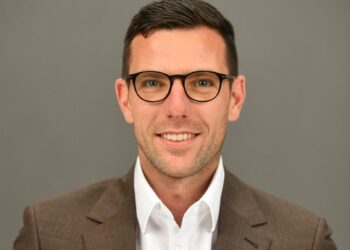
In an opinion piece, Professor Ozayr Mahomed, Public Health Medicine Specialist and Academic Head of the School of Healthcare at REGENT Business School, argues that higher education institutions have an important role to play in addressing these inequalities.
As South Africa observes Disability Rights Awareness Month, culminating in the International Day of Persons with Disabilities on 3 December, the discussion highlights why inclusion must start well before recruitment.
Disability inclusion starts with removing barriers
Disability is not defined by a medical condition alone. It is also shaped by the environment in which a person lives, studies and works.
A wheelchair user may have all the skills needed for a management position but struggle to enter an inaccessible interview venue. A student with a visual impairment may have strong analytical abilities but face difficulties using learning materials that do not support assistive technology.
In these situations, the barrier is not necessarily a lack of ability. It is the way the environment has been designed.
Mahomed argues that this distinction is central to meaningful inclusion. Instead of expecting people with disabilities to adapt to systems that exclude them, institutions and businesses must examine how those systems can become more accessible.
The higher education gap demands attention
The scale of the challenge is already visible in South Africa’s universities.
According to the Minister of Higher Education and Training, students with disabilities accounted for approximately 1.3% of enrolments at public universities in 2023.
While enrolment figures do not explain every cause of exclusion, they raise important questions about access to education and opportunities for advancement.
For many people, the barriers begin during childhood. Unequal access to quality basic education, limited learning support, financial pressures, inaccessible transport and inadequate access to healthcare, rehabilitation and assistive technologies can all affect the path to university.
Higher education institutions cannot solve every one of these challenges. However, they must recognise how their own policies and practices can reinforce existing inequalities.
Flexible learning models, including distance and blended education, can help widen access. These options may be particularly valuable for people with mobility limitations, chronic health conditions or ongoing healthcare needs.
But digital learning is not automatically inclusive.
Online platforms that do not work with screen readers, videos without captions and inaccessible assessment systems can create new barriers. Accessibility must therefore be built into educational design from the beginning, not added only after a student experiences difficulty.
Admission is only the beginning
Getting into university is one achievement. Being able to participate fully, progress academically and complete a qualification is another.
Modern business and management education often relies on group projects, presentations, simulations, case studies and workplace-based learning. These activities help students develop communication, leadership, problem-solving and decision-making skills.
However, when institutions design activities around assumptions about a typical student, they may unintentionally exclude others.
A handwritten assessment may disadvantage a student with impaired upper-limb function. A workplace visit without accessible transport may prevent a student with mobility limitations from participating. Activities based entirely on verbal communication may create barriers for students with hearing impairments.
Inclusive education does not mean lowering academic standards. It means separating the skills being assessed from the methods used to demonstrate them.
Where appropriate, alternative assessment methods can allow students to demonstrate their knowledge and abilities while maintaining academic rigour.
South Africa already has a policy foundation for this approach. The 2018 Strategic Policy Framework on Disability for the Post-School Education and Training System sets out an important direction.
The challenge is turning those commitments into everyday practice across higher education institutions.
Employers must look beyond the numbers
A qualification does not automatically guarantee employment.
Even suitably qualified graduates with disabilities can face barriers during recruitment and throughout their careers. These include inaccessible workplaces, negative perceptions, limited development opportunities and inadequate reasonable accommodation.
Employers must therefore examine their own practices before blaming low disability representation solely on a shortage of qualified candidates.
For business leaders, inclusion should go beyond meeting employment equity targets. It should form part of a wider human capital strategy that recognises individual capabilities, values different perspectives and creates opportunities for professional growth.
Business schools have a particularly important responsibility.
They educate current and future managers who will make decisions about recruitment, workplace design, employee support, resources and career advancement.
When students experience inclusive learning environments, they can develop a stronger understanding of disability inclusion as an organisational responsibility rather than simply a compliance requirement.
Disability inclusion must continue throughout working life
Disability does not only affect people entering the workforce. It can occur at any stage of life through injury, chronic illness, progressive health conditions or ageing.
As populations age and more people live longer with chronic diseases, workplaces and educational institutions must consider how to support changing functional abilities and healthcare needs.
An experienced employee who acquires a disability may need further education, new skills or a transition into a different occupational role.
Accessible and flexible higher education can help make that transition possible. It can support people in retaining their independence, protecting their livelihoods and continuing to contribute to society.
Employers also have something to gain. Supporting employees through these changes can help organisations retain valuable experience, professional skills and institutional knowledge.
Five ways higher education institutions can take action
Mahomed identifies five practical measures that institutions can use to strengthen disability inclusion.
1. Build accessibility into curriculum design
Learning materials, assessments, programmes and digital platforms should consider diverse learning and functional needs from the start.
2. Strengthen student support
Institutions should provide clear, confidential and accessible ways for students to request reasonable accommodation and appropriate support.
3. Include persons with disabilities in decision-making
Students, graduates and representative disability organisations should have a voice in developing institutional policies and learning experiences.
4. Build stronger employer partnerships
Accessible internships, mentorship programmes and workplace learning opportunities can help students move from education into employment.
5. Measure more than enrolment
Institutions should track participation, academic progression, completion, employment and career advancement. These outcomes can reveal barriers that enrolment figures alone may hide.
Importantly, these measures should form part of institutional planning, resource allocation and quality assurance. They should not be treated as once-off disability awareness initiatives.
The real test goes beyond 3%
South Africa’s 3% employment equity target creates an opportunity to accelerate disability inclusion. But representation figures should be viewed as one measure of progress, not the final definition of success.
Meaningful change requires cooperation across basic education, higher education, healthcare, social services and the labour market. Every sector has a role to play.
For higher education, the responsibility is twofold. Institutions must create environments where people with disabilities can develop their full potential. They must also prepare business leaders who will recognise and value that potential in the workplace.
Ultimately, inclusion should not be measured only by how many people with disabilities enter universities or secure jobs.
It should be measured by whether they have fair opportunities to participate, succeed, develop their careers and lead.
That is the real test for higher education – and for South African business.