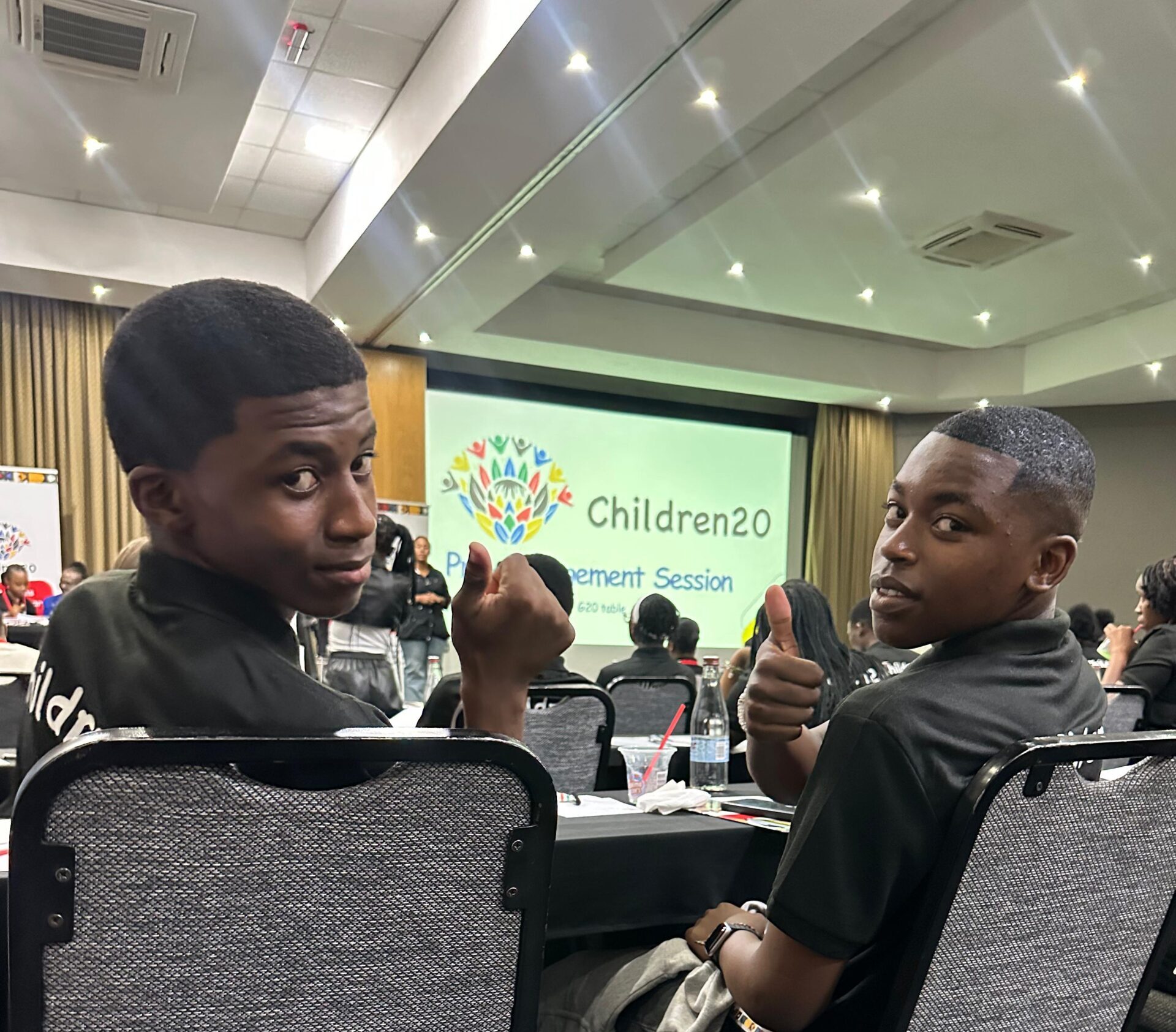
As the G20 Social Summit convenes this week, a chorus of young voices from across Africa has made one demand plain: global policy must stop speaking about children and start listening to them. Over the weekend of 15–16 November, hundreds of children met in Johannesburg for the Children20 Pre-Summit, with many more participating online, and produced a compact, uncompromising declaration spelling out what they want G20 leaders to prioritise.
The pre-summit was not a ceremonial exercise. Through facilitated dialogues, creative sessions and peer-led deliberations, children interrogated the same themes that frame the Social Summit — economic justice, digital governance, early childhood development and climate resilience — and translated their lived experience into concrete “calls to action.” The result is a children’s declaration that will accompany the Summit and be delivered to leaders at the event’s close.
Four official side events amplify youth insight
Children’s recommendations will be heard across four official G20 side events designed to move evidence and demands into policy conversation:
Early Childhood Development — Hosted by the Partnership for Maternal, Newborn and Child Health (PMNCH) with contributions from the Global Leaders Network, this session underscores the central role of early learning and maternal wellbeing in long-term, equitable development. The event is being run under the leadership of President Cyril Ramaphosa, who chairs the Global Leaders Network, reinforcing investment in women and children as a pathway to social inclusion and sustainable growth.
Adolescents, Participation and Agency — This session explores practical ways to embed youth participation into public policy, shifting adolescents from passive recipients to active partners in decisions that affect their education, livelihoods and civic lives.
Digital Justice and Safety — Children, policy-makers and technical experts will examine the urgent need for safe digital ecosystems: improved regulation, better digital literacy and equitable access so that the online world becomes a platform for learning and participation rather than exposure to harm.
UNICEF State of the World’s Children Launch (20 November) — Timed for World Children’s Day, the launch of UNICEF’s flagship State of the World’s Children 2025 report — focused on child poverty — will dovetail with the Social Summit to raise child poverty as an explicit political priority across G20 governments.
A symbolic handover on International Day of the Child
The Social Summit will conclude on 20 November — the International Day of the Child — with a defining moment of democratic symbolism. Children will formally hand over their declaration to summit organisers and leaders. That handover will be led by Amogelang Mashele (14), President of the Nelson Mandela Children’s Parliament, signalling South Africa’s commitment to elevating meaningful child participation in global decision-making.
Children’s priorities: practical, urgent, and wide-ranging
The Children20 declaration is clear and actionable. Young people are calling on G20 governments to:
-
centre inclusive digital transformation that widens access and shields children from online harms;
-
invest in strong early childhood systems so the foundations of learning and health are secured;
-
deliver climate justice measures that protect young generations from disproportionate future harm;
-
scale up poverty reduction policies and social protection that stop childhood deprivation; and
-
advance gender equality and governance reforms that actively protect children’s rights and agency.
These priorities reflect not only immediate needs but also long-term thinking: children asked to be recognised as partners in shaping the institutions, laws and technologies that will govern their lives.
Why this matters — and what it could change
The South African Social Summit takes place at a moment of intense global pressure on social systems. By integrating children’s voices into the policy conversation, the event reframes who counts as an expert: not only academics and ministers, but the people who will live longest with today’s choices. Elevating child participation is more than symbolic; it aims to improve the relevance and efficacy of policy — from social protection floors to digital regulation — by aligning decisions with the realities young people actually face.
For delegates and leaders, the message is straightforward: no credible social compact can exclude children. For civil society and advocates, the Children20 declaration offers a concrete accountability tool: it maps children’s demands to the Summit’s agenda and creates a public record of those expectations. For children themselves, the pre-summit has already been transformative — offering practice in civic literacy, negotiation and public advocacy.
What comes next
Delivering a declaration is the start, not the end, of the work. Implementation requires monitoring, funding and mechanisms to sustain participatory channels beyond a single summit. The coming months will test whether G20 members translate these calls to action into budgetary commitments, legislative changes and inclusive programmes — and whether national governments embed child participation as a standard element of policy design.
The Children20 Pre-Summit in Johannesburg made one thing clear: when children are heard — and their ideas treated as serious input — the policy conversation changes. The G20 Social Summit now has the children’s blueprint. The world will be watching to see whether leaders adopt it.