
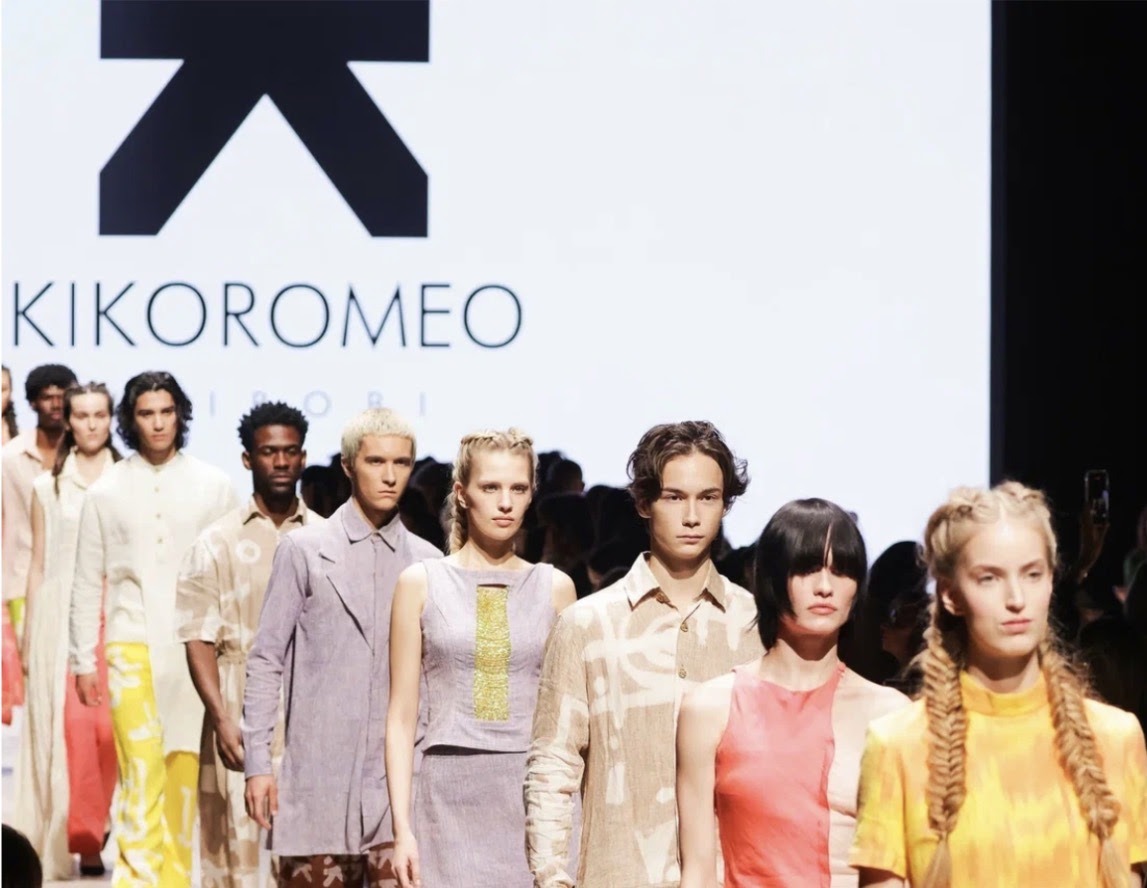
African fashion continues to tell its story beyond the continent. This season, Kenyan label KikoRomeo took that story to Moscow Fashion Week, presenting a collection rooted in craftsmanship, cultural heritage and artistic expression.
The showcase formed part of a partnership between Nairobi Fashion Week and Moscow Fashion Week, bringing Kenyan design to an international audience of fashion professionals, media and buyers.
The wider event concluded on October 1 after six days of runway shows featuring more than 350 designers from Africa, Asia, Europe, North America and Latin America. With independent labels from countries including Kenya, China, India, Sri Lanka, the United States, Türkiye, Spain, the United Kingdom and Nicaragua, the event reinforced Moscow’s position as a meeting point for emerging fashion talent from around the world.
For KikoRomeo, the moment offered an opportunity to introduce its artistic approach and Kenyan heritage to a new audience.
A collection woven with Kenyan identity
At the heart of KikoRomeo’s collection was a celebration of artisanal techniques and the stories that fabric can tell.
The designs drew inspiration from the Turkana people of north-western Kenya, translating cultural motifs into geometric batik patterns and hand-painted designs on linen.
The collection also showcased traditional textile processes. Cotton was woven on handlooms, while stamped batik patterns were applied to brown fabric made from handmade yarn before dyeing.
Every garment was made in Kenya, with men’s and women’s looks finished using hand-carved coconut-shell buttons. Together, these details placed material, technique and local craftsmanship at the centre of the collection.
For the brand, fashion is more than the finished garment. It is a way to communicate stories, preserve cultural expression and create connections across borders.
“Every new opportunity opens another world. Our brand is very artistic and we know Moscow has a very strong art scene. We hope to find lots of synergy,” says Iona McCreath, founder of KikoRomeo.
McCreath also explained the thinking behind the brand’s international ambitions.
“Our core purpose has always been to use art and fashion as a universal language to bring people together and build understanding across cultures. We are thrilled to bring our heritage, material intelligence, and story-driven craft to an expanding international audience.”
A global runway of contrasting creative voices
KikoRomeo was among a diverse group of international designers whose collections reflected different cultural influences, artistic references and approaches to construction.
Indian designer Kanika Goyal presented her Arc Echo collection under the KGL brand through an agreement with the Fashion Design Council of India. Known for designs worn by Priyanka Chopra Jonas and Deepika Padukone, Goyal is also featured on the Forbes 30 Under 30 list.
Her Moscow presentation featured braided denim and mosaic knitwear.
British label Black Crown Label brought a different aesthetic to the runway, presenting long dresses with kimono-inspired silhouettes, wide belts and theatrical hems.
The variety of collections highlighted how international fashion platforms can bring distinct design perspectives into the same space, allowing heritage, experimentation and contemporary style to share the spotlight.
Heritage takes centre stage in Russian fashion
Traditional craftsmanship also connected KikoRomeo’s presentation with several standout Russian collections.
Russian fashion house Slava Zaitsev presented couture designs combining natural silk and damask brocade with Vologda and Yelets lace, alongside hand embroidery.
Russian brand Gapanovich also incorporated the renowned Yelets lace into its collections, demonstrating the continued presence of traditional textile techniques in contemporary design.
Meanwhile, fashion house Alexandra Serova dedicated its Krasnaya Moskva collection to the history of the legendary Russian fragrance of the same name. The collection combined hand embroidery with floral motifs. The house is known for gowns selected by celebrities for red-carpet appearances and the Met Gala.
Elsewhere, Russian label Sol Selivanova Olga drew inspiration from paintings by Russian artists, translating their mood into fringe and shimmering threads.
The Kiri brand looked to the aesthetics of the 1950s. Large flowers appeared across a skirt and corset made from textured fabric reminiscent of an antique tapestry, while feather-trimmed trousers added movement and theatricality.
Across these collections, the relationship between fashion, art and heritage emerged as a shared creative thread.
South Africa’s fashion connection with Moscow
The international exchange also carries significance for South Africa’s fashion industry, which has been following Russian runway showcases for several seasons.
A partnership between Soweto Fashion Week and Moscow Fashion Week has previously enabled South African designers to present their collections in Russia, opening opportunities to engage with a new market and build relationships within the Russian fashion industry.
Stephen Manzini, founder and CEO of Soweto Fashion Week and president of the South African Fashion Association, sees meaningful similarities between the creative communities in Johannesburg and Moscow.
“I think both Johannesburg and Moscow share a strong sense of identity. Designers in both cities are driven by passion – they tell stories through fabric, culture, and emotion. There’s also this hunger to be seen, to redefine how the world perceives fashion from our regions.”
For Manzini, the value of international collaboration extends beyond a runway appearance. It can also create opportunities for designers to establish connections and explore markets beyond their home countries.
“Moscow showed me how powerful international collaboration can be. Our engagement with Moscow Fashion Week has created opportunities for South African designers to access a new market and build relationships within the Russian fashion industry. The biggest lesson is that meaningful partnerships can come from unexpected places.”
Fashion as a language without borders
KikoRomeo’s Moscow Fashion Week presentation placed Kenyan craftsmanship within a wider international conversation about identity, art and design.
From Turkana-inspired patterns and handwoven cotton to Russian lace, Indian knitwear and British silhouettes, the collections demonstrated the different ways designers draw on their backgrounds and creative influences.
For African fashion, platforms that connect designers with international audiences offer an opportunity to share these stories while building relationships beyond familiar markets.
KikoRomeo’s collection brought that idea into focus: a Kenyan-made garment can carry the influence of a community, the knowledge of a craft and the ambition to connect with audiences around the world.
As partnerships between fashion weeks continue to create opportunities for designers to cross borders, the runway becomes more than a showcase of clothing. It becomes a meeting place for cultures, techniques and stories that deserve to be seen.