

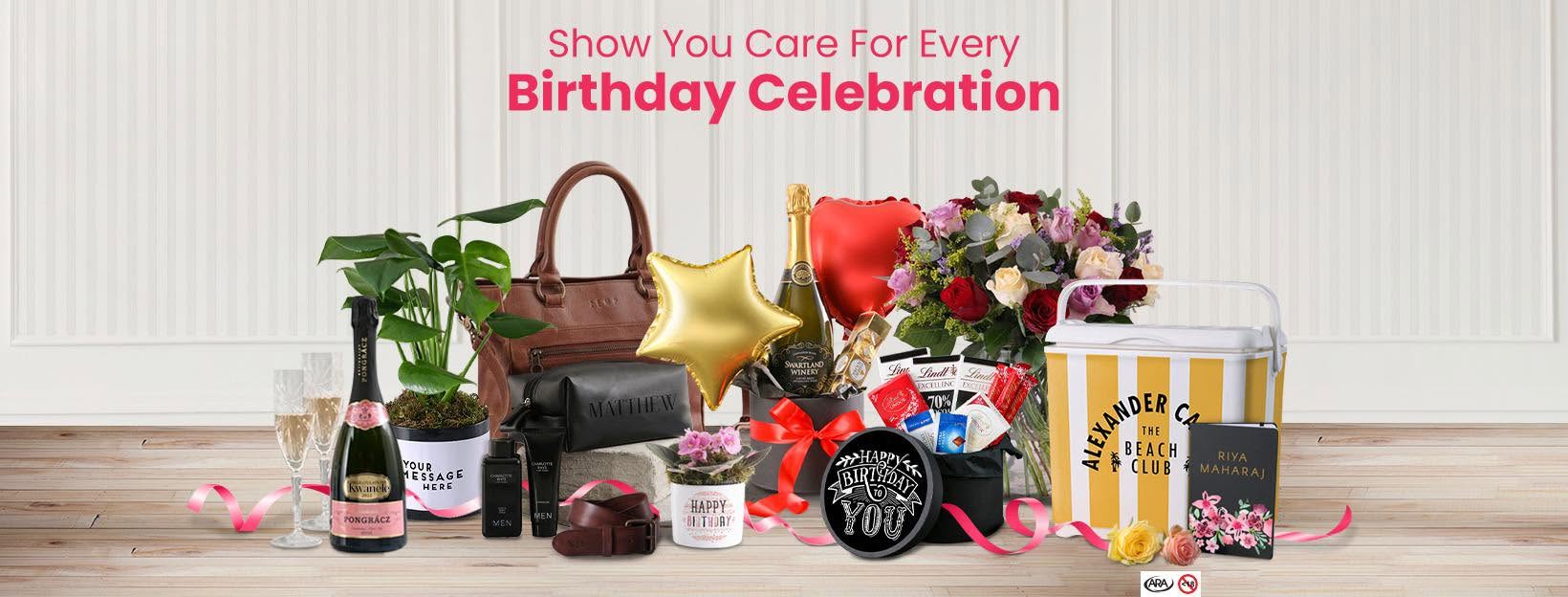
What does a birthday bouquet say about us? What about a sympathy hamper, a congratulations gift or an order placed just minutes before midnight?
According to NetFlorist, the answer is surprisingly human.
After more than 25 years in the gifting business, NetFlorist co-founder and Managing Director Ryan Bacher says the company’s millions of gifting occasions offer more than a snapshot of consumer spending. They reveal how South Africans remember, celebrate, comfort and connect with the people who matter to them.
Since its founding in 1999, NetFlorist says it has facilitated more than 10 million gifting occasions, with each accompanied by a personalised message card.
Now, data from January to April 2026 is offering a fresh look at how South Africans express emotion through gifting.
And the findings tell a fascinating story.
The Numbers Behind South Africa’s Gifting Habits
NetFlorist’s internal order and message-card data for January to April 2026 highlights several striking patterns:
- 70% of NetFlorist customers are women.
- 70,800+ birthday message cards accompanied orders during the period.
- 1 in 3 orders qualified for same-day delivery.
- 1 in 5 purchases were made after 6pm.
- 5,200+ orders were placed after 11pm.
The numbers suggest that gifting is not simply about buying something and sending it somewhere.
It is about timing.
It is about remembering.
And, most importantly, it is about making someone feel seen.
Women Are Keeping Connections Alive
Women’s Month provides an interesting backdrop for one of NetFlorist’s clearest findings.
While flowers are often associated with men buying romantic gifts for their partners, the company’s January-to-April 2026 data tells a different story.
Around 70% of NetFlorist’s customers are women.
Bacher believes this reflects the role women often play in maintaining relationships and remembering important moments.
“Women are often the people remembering birthdays, organising celebrations, sending sympathy gifts and making sure important moments don’t go unnoticed,” he says.
Behind a birthday, celebration or difficult moment, he suggests, there is often someone who remembered to reach out.
And according to NetFlorist’s data, that person is more likely to be a woman.
Personalisation Is the New Thoughtfulness
The way South Africans gift has also changed.
Bacher says one of the biggest behavioural shifts he has observed over the past decade, from 2016 to 2026, is the growing desire to make gifts feel genuinely personal.
The message is no longer simply I bought you something.
It is increasingly I chose this specifically for you.
“When you personalise something, there isn’t another gift exactly like it,” Bacher says.
NetFlorist has responded to this shift by expanding its personalisation offering beyond traditional message cards.
Customers can customise elements such as message-card designs, engraved gifts, embroidered textiles and personalised ribbons.
The difference can be subtle, but the emotional impact can be significant.
As Bacher puts it, there is a difference between sending someone a beautiful gown and sending them a beautiful gown with their name on it.
That personal detail can turn an expected gift into something that feels uniquely theirs.
Birthdays Beat the Big Calendar Moments
Valentine’s Day and Christmas may dominate the gifting calendar, but birthdays appear to hold an even stronger place in South African gifting habits.
NetFlorist recorded more than 70,800 birthday message cards accompanying orders between January and April 2026 alone.
That makes birthdays the country’s biggest gifting occasion within the data shared by the company.
But birthdays are far from the only moments prompting South Africans to send gifts.
Anniversaries, congratulations, new babies, get-well wishes and sympathy messages also generate substantial gifting activity.
For Bacher, the pattern reveals something important about South Africans.
“Momentous life events are more important to us than we may realise,” he says.
Whether celebrating someone’s achievement or offering comfort during a difficult period, gifting becomes a way of showing up.
Convenience Has Not Replaced Care
One of the most revealing findings may be hiding in the timing of the orders.
NetFlorist says one in three orders between January and April 2026 qualified for same-day delivery.
At first glance, that might suggest convenience is driving the gifting experience.
But there is another side to the story.
One in five purchases were made after 6pm, while more than 5,200 orders were placed after 11pm.
It would be easy to label these customers as last-minute shoppers.
Bacher sees it differently.
“People are busy, but they still want to show up for the people who matter to them,” he says.
Technology, in this sense, does not necessarily make gifting less thoughtful.
It can help people act on an intention before the opportunity disappears.
Someone may remember a birthday late.
Someone may suddenly realise they have not checked in on a loved one.
Someone may want to acknowledge an achievement after a long day.
The convenience of digital gifting gives them a way to turn that thought into action.
Behind Every Gift Is a Relationship
Perhaps the most powerful insight comes from the messages themselves.
Across the personalised messages accompanying gifts during the first four months of 2026, NetFlorist says recurring themes include love, gratitude, encouragement and celebration.
These messages reinforce the idea that gifting is about much more than the product being delivered.
A bouquet can represent appreciation.
A hamper can represent encouragement.
A gift can mark a milestone.
A sympathy arrangement can communicate support when words feel difficult.
“They remind us that every gift represents a relationship,” Bacher says.
In an increasingly digital world, that observation carries weight.
People may communicate through screens, work remotely and navigate increasingly busy schedules. Yet the desire to make another person feel valued remains.
25 Years of Business. One Human Lesson.
For Bacher, 25 years in the gifting industry have ultimately taught him something that has little to do with retail.
It is about connection.
“We’re not solitary beings,” he says. “We need community.”
His conclusion is that consumer behaviour cannot be understood through transactions alone.
Behind the order is often an intention.
Behind the intention is an emotion.
And behind the emotion is a relationship.
That may be the biggest lesson hidden within NetFlorist’s more than 10 million gifting occasions.
South Africans are not simply buying flowers, chocolates, hampers or personalised gifts.
They are finding ways to say I love you.
I appreciate you.
I’m proud of you.
I’m thinking about you.
And sometimes, even at 11pm, they are simply saying: I remembered.