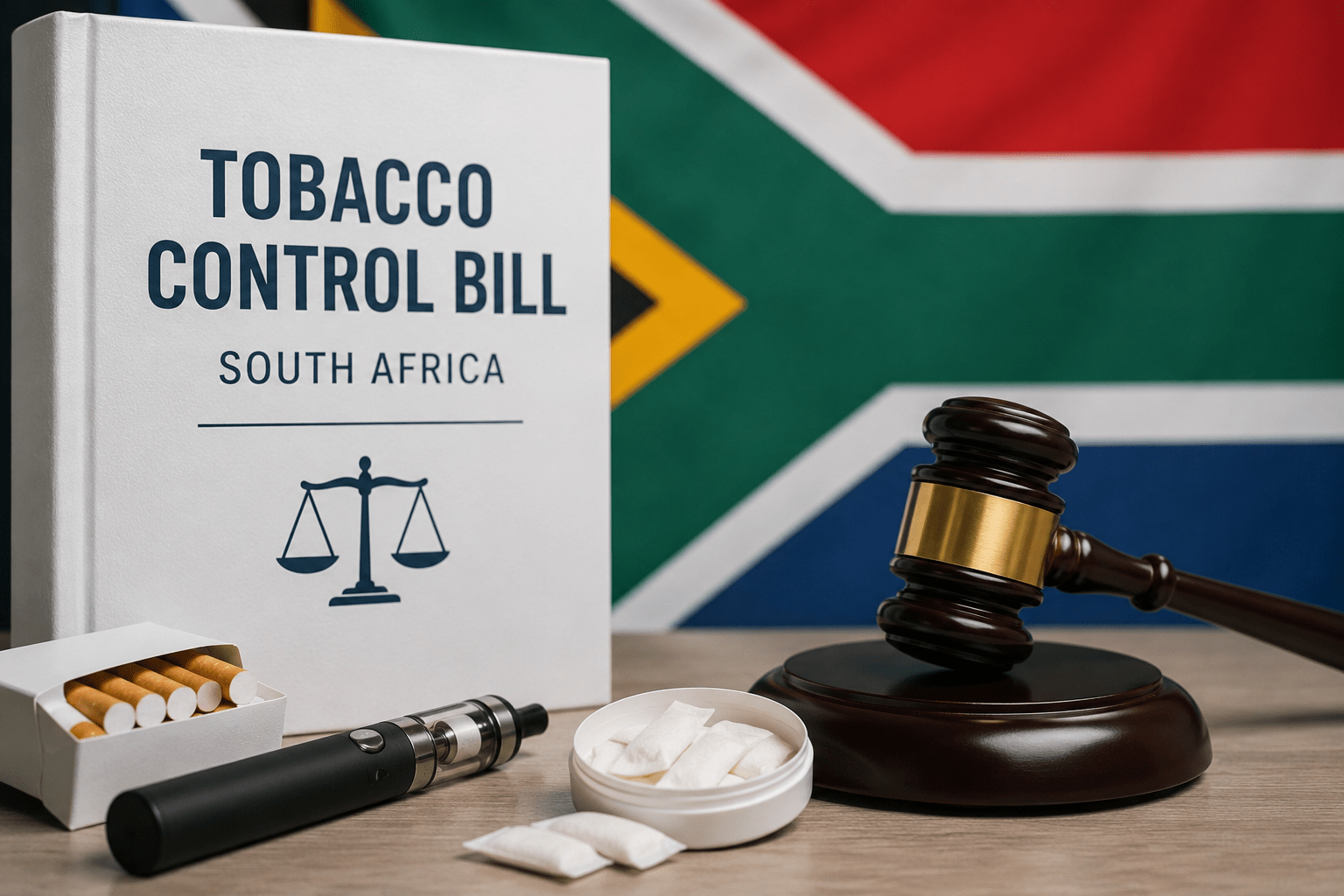
The wording of South Africa’s proposed Tobacco Products and Electronic Delivery Systems Control Bill is now being examined line by line, as the Portfolio Committee on Health moves into the detailed clause-by-clause stage of its legislative process.
The latest discussions have placed some of the Bill’s most contested issues firmly under the spotlight — from the definition of smoke and aerosols to electronic nicotine products, illicit tobacco and the rights of people who currently smoke.
Rather than simply debating the broad principles of the legislation, MPs are now examining how individual provisions could work in practice.
MPs Begin the Bill’s Clause-by-Clause Examination
The committee began with the preamble and definitions of the Bill.
Members put forward several proposed amendments and raised concerns about whether the legislation clearly distinguishes between different types of tobacco and nicotine products.
The long title of the Bill will be considered later, once the committee has completed its consideration of the proposed amendments.
Among the central issues under discussion are:
- Illicit tobacco and related products
- The rights of smokers
- Electronic nicotine delivery systems
- Electronic non-nicotine delivery systems
- Combustible and non-combustible products
- The definitions of smoke and aerosols
- Characterising flavours
- How different products should be treated under the law
The detailed debate highlights just how much hinges on the definitions contained in the legislation.
What Exactly Counts as Smoke?
DA MP Dr Karl le Roux proposed changes to the definitions of smoke and aerosols.
He also called for definitions covering non-inhaled products, including pouches and snuff.
DA MP Michele Clarke similarly argued that the definition of “smoke” should not include non-combustible products.
She called for greater clarity around electronic delivery systems, including distinctions between products that emit aerosol or vapour and those that do not.
Clarke also proposed that an aerosol definition be included in the Bill.
The debate reflects a wider challenge facing lawmakers: creating legislation that can clearly account for an expanding range of tobacco and nicotine products.
Debate Over the Precautionary Approach
Another significant point of disagreement centred on the Bill’s reference to a “precautionary approach” when regulating electronic nicotine delivery systems and electronic non-nicotine delivery systems.
MK Party MP Moshome Motubatse proposed removing the reference.
Instead, he argued that regulation should follow a scientific approach.
His argument was that legislation should be based on evidence and science rather than fear, particularly when dealing with products whose characteristics and potential risks may differ.
Motubatse also proposed new definitions for combustion and combustible products, alongside amendments concerning electronic delivery systems and non-combustible products.
ANC Calls for Risk Differences to Be Recognised
ANC MP Masello Senne also proposed several changes to the definitions section.
Her proposed amendments included provisions relating to characterising flavours, electronic delivery systems and combustible products.
Senne further proposed that the Bill recognise that different products can present different levels of risk.
She argued that evidence-based regulatory frameworks could take those differences into account while continuing to advance public health objectives.
That issue — how different products should be categorised and regulated — is emerging as a key part of the committee’s examination of the Bill.
Illicit Tobacco Put Under the Microscope
Illicit tobacco was another major issue raised during the committee’s deliberations.
EFF MP Naledi Chirwa-Mpungose proposed an amendment to the preamble that would explicitly recognise the detrimental impact of illicit tobacco and related products on public health.
Her proposal also highlighted the need for effective measures to address illicit trade.
Chirwa-Mpungose argued that the Bill should speak more directly about illicit tobacco.
She said explicitly addressing the issue could help empower institutions responsible for implementing and enforcing the legislation.
“We don’t agree that this Bill should be quiet on speaking overtly on the impact of illicit tobacco trade,” she said.
The proposal puts illicit trade firmly into the wider debate around tobacco control and public health.
Smokers’ Rights Become Part of the Debate
The committee also heard concerns about the rights of people who currently use tobacco products.
ActionSA MP Kgosi Letlape questioned wording in the preamble encouraging existing users to quit.
His question was straightforward: what happens to people who are unable to quit?
Letlape warned against what he described as a possible “quit or die approach” and argued that the legislation should also consider people who struggle to stop using tobacco products.
He suggested that the wording should allow current users to seek assistance, including support from healthcare professionals or access to less harmful alternatives.
The discussion adds another dimension to the legislative process: balancing public health objectives with the realities faced by people who currently use tobacco products.
Public Participation Has Already Taken Place
The clause-by-clause process follows an extensive public participation process.
The Portfolio Committee on Health received both written and oral submissions from stakeholders and members of the public.
Public hearings were also held across all nine provinces.
Committee chairperson Faith Muthambi said these submissions had given members valuable perspectives on the practical implications of the proposed legislation.
However, she emphasised that MPs must now exercise their own judgment when deciding which amendments are necessary.
The committee is therefore not simply adopting recommendations made during the public participation process.
Instead, members are being asked to consider the submissions alongside the Bill itself and determine which changes should ultimately be proposed.
The Wording Could Shape the Final Law
As the committee continues its work, MPs have been asked to submit their proposed amendments to the secretariat.
The drafting team will then work through the proposals as the committee continues its detailed consideration.
That means the wording currently under discussion is not necessarily the final wording that will appear in the legislation.
For now, the committee’s clause-by-clause examination is revealing the competing priorities at the heart of South Africa’s proposed tobacco control framework.
Public health remains a central objective.
But MPs are also debating how the law should treat different tobacco and nicotine products, how illicit trade should be addressed, how regulation should respond to scientific evidence and how the rights and realities of existing users should be considered.
The result is a Bill undergoing detailed scrutiny before its next stages in the legislative process.
And with every clause now under the microscope, the definitions may prove just as important as the policy itself.