
A tournament may end when the final point is played.
But its impact can continue long after the scoreboard goes dark.
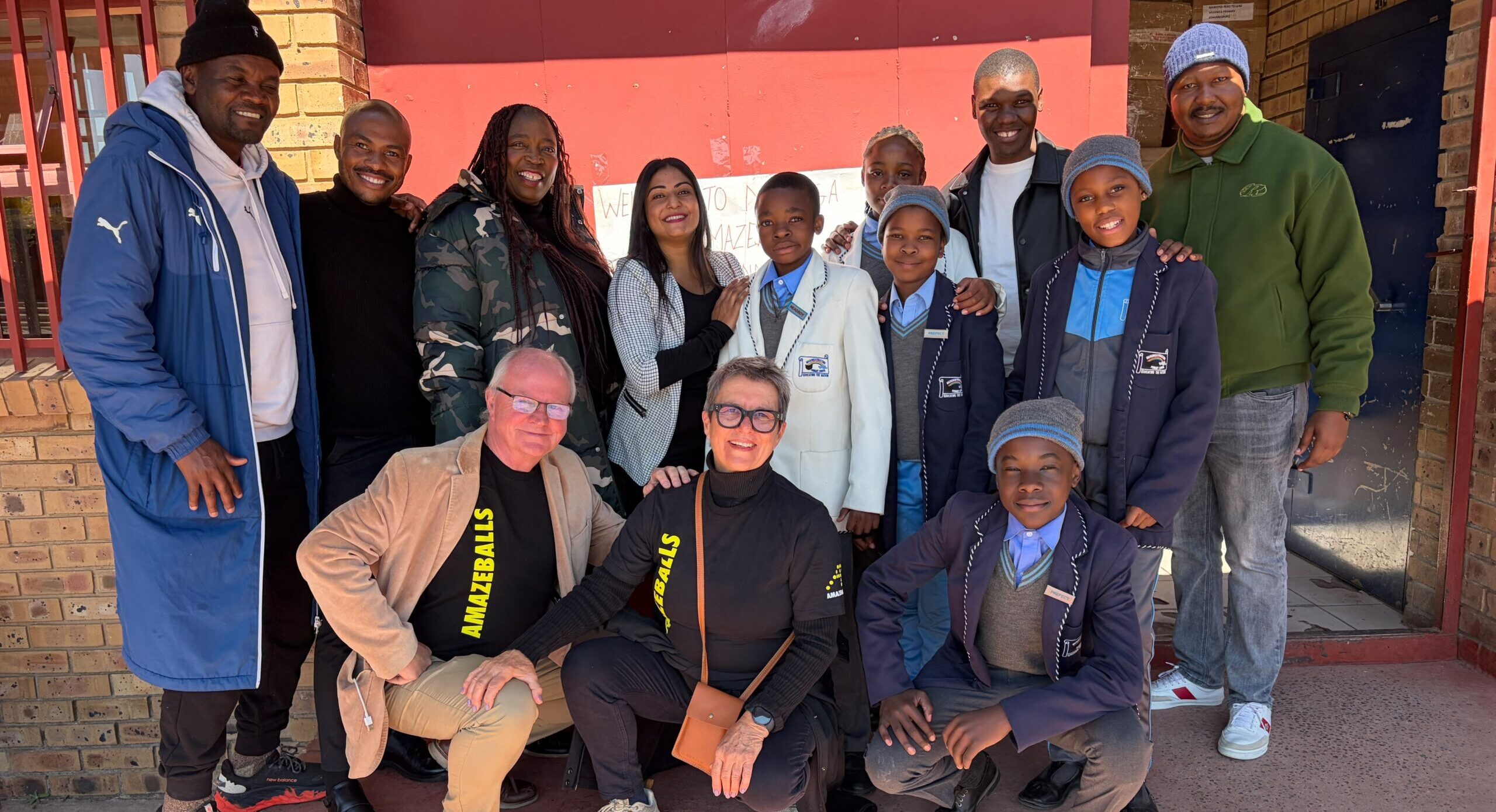
That is the idea behind a new sustainability initiative from Primedia Sport, in partnership with Amazeballs, which will see more than 600 padel balls used during the inaugural Pretoria Premier Padel P1 donated to Musenga Vhadzimu Primary School in Diepsloot.
The balls were used during professional practice sessions and main draw matches throughout the tournament. They will now become part of the school’s Sporting Chance programme, helping give learners greater access to sport, sporting opportunities and equipment.
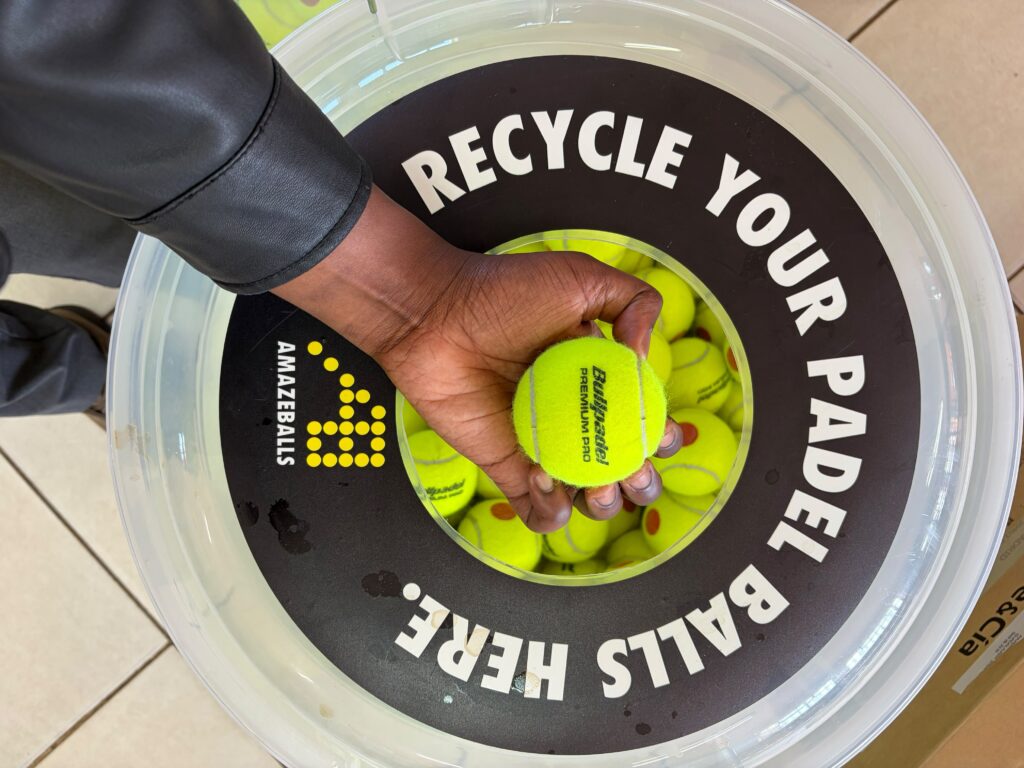
Two Amazeballs ball storage bins will also be donated to the school.
The result is a simple but powerful transition: equipment that was once part of a major international sporting event will now be placed directly into the hands of children.
From professional courts to young learners
For Primedia Sport, the promoter of the inaugural Pretoria Premier Padel P1, the donation is about ensuring that the tournament leaves behind more than memories.
Tobie Badenhorst, Vice President at Primedia Sport, said the organisation wanted the tournament to leave a tangible legacy.
“We wanted the Pretoria Premier Padel P1 to leave something behind.”
The balls, he said, had been part of a world-class sporting event. Their next chapter will be part of a young person’s sporting journey.
“That feels like a meaningful legacy for the tournament,” Badenhorst added.
It is a fitting continuation for equipment that has already travelled from the intensity of professional competition to a very different kind of sporting environment.
This time, there will be no centre-court pressure.
Just children learning, playing and discovering what sport might mean to them.
When sustainability creates opportunity
The donation is being made possible through Amazeballs, the tournament’s official sustainability partner.
The organisation repurposes used padel and tennis balls, with the goal of reducing waste while supporting local communities.
For Lesley Waterkeyn, Founder and CEO of Amazeballs, sustainability is not simply about keeping used equipment out of landfill.
It is about giving it another purpose.
“These balls have already had their moment on centre court. Now they are in the hands of children who can use them to discover a love of sport.”
That shift gives the initiative a significance beyond recycling.
The balls are not simply being discarded or forgotten. They are being redirected towards a school where access to sporting equipment can help create opportunities for young learners.
 A new sporting opportunity in Diepsloot
Musenga Vhadzimu Primary School is a zero-fee school in Diepsloot and runs its sporting programme through Sporting Chance, an organisation that creates opportunities for children to participate in sport and develop through structured sporting programmes.
For Rose Segale, Principal of Musenga Vhadzimu Primary School, access to equipment can make a meaningful difference.
“For our learners, having access to equipment can be the difference between simply watching sport and being able to take part in it.”
But there is another reason she believes this particular donation matters.
The balls have a story.
They were used at a major international sporting event. Now they are at the school, where learners can use them as part of their own sporting experiences.
Segale hopes they will be used, enjoyed and, most importantly, inspire learners to believe that they too can have a place in sport.
And that may be the most important part of the donation.
Because participation begins with opportunity.
The bigger legacy of Premier Padel in South Africa
The initiative also connects to the wider ambition behind bringing Premier Padel to South Africa for the first time.
The Pretoria Premier Padel P1 provided a platform for South Africa’s leading players to compete alongside the global elite. It also introduced new audiences to padel, one of the world’s fastest-growing sports.
But Primedia Sport believes the tournament’s success should not only be measured by what happened inside the arena.
There is another measure.
What happens after everyone goes home?
What remains when the final match has been played?
And can an international sporting event create opportunities for people who were never inside the arena in the first place?
For Badenhorst, that is where sport can have its greatest impact.
“If we can take one part of that experience and use it to open a door for a child who might not otherwise have had the opportunity, then the tournament has done something that a scoreboard can’t measure.”
He believes the real opportunity in sport extends beyond creating spectators.
It is about creating participants, believers and potentially the next generation.
The next generation starts here
There is something fitting about the journey these balls are now taking.
They began in the hands of professional players competing at the inaugural Pretoria Premier Padel P1.
They were part of practice sessions and main draw matches at an event that brought the global padel spotlight to South Africa.
Now, they are moving into a school sporting programme in Diepsloot.
The setting has changed.
The players have changed.
But the fundamental idea remains the same: sport creates possibility.
For some learners, these balls may simply become equipment for a game after school.
For others, they could become the starting point of something much bigger.
A new interest.
A new skill.
A new ambition.
Perhaps even a future in sport.
That is the kind of legacy that cannot be captured in a tournament result.
The Pretoria Premier Padel P1 may have reached its conclusion on the court.
But in Diepsloot, the next chapter is only beginning.
The tournament is over. The opportunity is still in play.