
What happens when 60 young South Africans are invited to rethink hunger? For KFC Add Hope, the answer is emerging through new partnerships, smarter food procurement, digital donations and millions of additional meals for vulnerable children.
The Biggest Hunger Hack began as a challenge to young innovators. One year later, ideas from the initiative are helping reshape how KFC Add Hope tackles food insecurity, showing how collaboration can turn creative thinking into practical action.
KFC opened up the “secret recipe” behind Add Hope at last year’s hackathon, inviting 60 young innovators to develop fresh approaches to the country’s hunger challenge. The solutions ranged from practical cost-saving ideas to digital innovations designed to unlock new donations.
Now, those ideas are moving beyond the drawing board.
According to KFC, Add Hope is targeting 3.2 million additional meals in 2026, with much of the growth expected to come from its Add Hope 2.0 Partnering for Efficiency workstream.
A Bigger Fight Against Hunger Requires Collaboration
For KFC Africa People, Culture & Purpose Director Andra Nel, the initiative reinforced a simple but important lesson: hunger is too complex for one organisation to solve alone.
“When you invite diverse minds to solve a problem together, the solutions are better. More importantly, they work,” says Nel.
She explains that Add Hope’s growing impact is being driven by external partnerships, youth-inspired solutions that lower feeding costs and digital innovations that open new donation channels.
The approach brings suppliers, retailers, food recovery organisations and technology platforms into a shared effort to help more children access meals.
It also changes how the programme approaches resources. Instead of relying on one solution, Add Hope is building a network that can reduce costs, recover surplus food and make donating easier.
Supplier Partnerships Help Stretch Every Rand
One of the biggest opportunities identified through the initiative is reducing the cost of ingredients.
In 2026, KFC is receiving approximately R2.74 million in supplier contributions, which the company says translates into about 955,000 meals.
The suppliers supporting the programme are McCormick, CPT, Digistics, SunSalt, Nature’s Garden, Unilever, Sovereign Foods and AFGRI.
Their contributions help reduce the cost of key ingredients. Lower costs mean Add Hope funding can stretch further and support more meals.
Nel says the programme is moving away from ad hoc contributions towards more targeted, recurring partnerships.
“We have identified the biggest costs in the Add Hope food basket and we are targeting suppliers who can help reduce them,” she says. “We have seen overwhelming willingness from these partners to be a part of the solution.”
The programme is also working with major retailers on central procurement. By using collective buying power, these partnerships aim to lower the cost of essential food items for Add Hope feeding partners.
The goal is straightforward: reduce expenses where possible and direct more resources towards feeding vulnerable children.
Saving Surplus Food and Feeding Communities
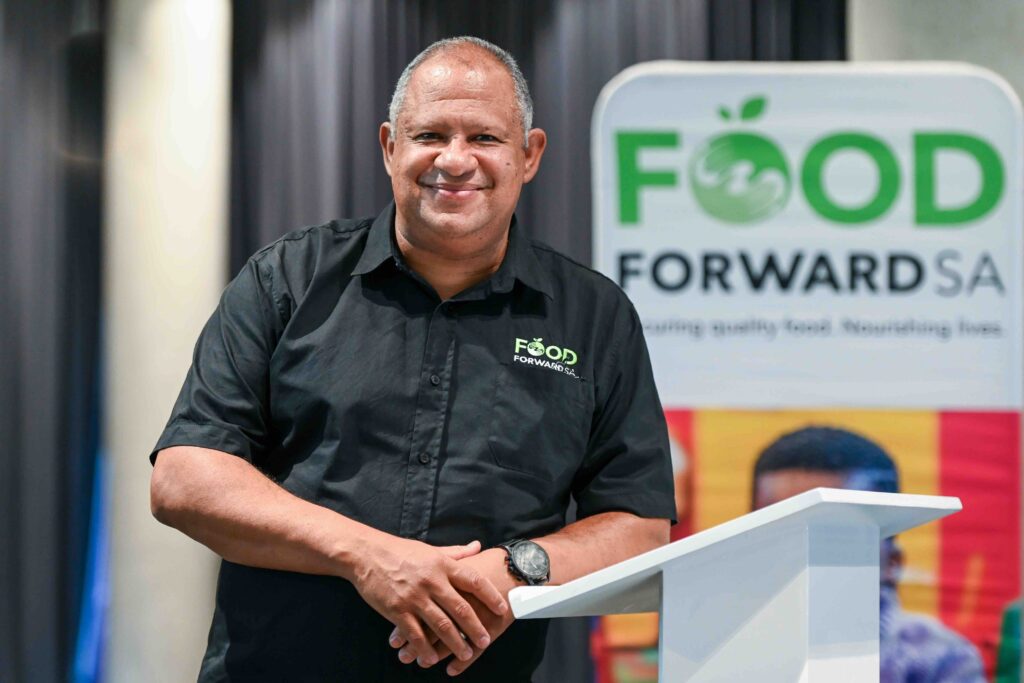
Another important development is the partnership with FoodForward SA, which connects surplus food recovery with Add Hope’s feeding network.
Food that might otherwise go to waste can instead help feed children in vulnerable communities. The partnership brings together quality surplus food from farms, retailers and restaurants, supplementing food purchased through traditional procurement.
According to the release, this work is reducing Add Hope’s food bill by 14%.
The idea connects directly to one of the hackathon’s winning concepts: a prototype app designed to rescue surplus produce from farms.
The release cites WWF figures indicating that 10 million tonnes of food go to waste every year. Redirecting suitable surplus food offers an opportunity to address waste while helping communities facing food insecurity.
FoodForward SA managing director Andy Du Plessis says connecting the organisation’s national surplus food recovery network with Add Hope’s feeding infrastructure addresses two challenges at once.
“We’re diverting good quality food from landfills and using this good food to feed people in vulnerable communities,” he says.
He adds that tackling hunger is not only about creating new resources, but also about redirecting resources that already exist.
Digital Donations Open New Doors
The Biggest Hunger Hack’s impact is also extending into digital spaces, where small contributions can add up through familiar platforms.
Ideas developed at the hackathon are helping bring donation opportunities to delivery apps and kiosks. The programme is also enabling KFC Rewards to be transferred to Add Hope.
Mr D has already generated R180,080 in donations from 33,874 transactions since the feature went live in March 2026. Uber Eats has also recently launched a donation feature.
These initiatives are expected to contribute a further 200,000 meals, according to the release.
By bringing donations closer to everyday digital transactions, the programme aims to make supporting Add Hope more accessible to customers.
It is another example of how technology can help connect existing resources with a pressing social need.
The Target: 3.2 Million More Meals in 2026
KFC says the combined efforts of supplier support, central procurement and surplus food recovery are projected to contribute an additional three million meals in 2026.
Digital optimisation is expected to contribute another 200,000 meals, bringing the total target to 3.2 million additional meals.
The figures reflect a model that combines cost savings with new ways to generate support. Supplier contributions help lower ingredient costs, retail partnerships improve purchasing efficiency, and surplus food recovery supplements traditional procurement.
Digital donation features provide another route for customers to contribute.
Together, these initiatives demonstrate how ideas developed in a collaborative setting can move into day-to-day operations and support a wider feeding programme.
An Open Invitation to Help Tackle Hunger
For Nel, the Biggest Hunger Hack represents more than a single event. It has helped establish a way of thinking about partnerships, efficiency and the resources available across an entire ecosystem.
She says the initiative and the partnerships it inspired have been transformational for Add Hope, but they are only the beginning.
With more than 17 million people experiencing food insecurity, as cited in the release, the need for action remains significant.
The programme is encouraging people to read its blueprint and join the mission, continuing the open-source approach that brought young innovators into the process in the first place.
The message for World Food Day is clear: addressing hunger does not always require inventing something entirely new. Sometimes, the breakthrough comes from connecting the resources, food, technology and supply chains that already exist.
For KFC Add Hope, the Biggest Hunger Hack is showing how ideas can become action — and how collaboration can help put more meals within reach of vulnerable children across South Africa