In a world where culture is increasingly currency, CR8TOR WEEK AFRICA 2026 did not simply host conversations — it redefined them.
Held from 24–29 March in Johannesburg, this year’s edition marked a decisive shift in the narrative of Africa’s creative industries. What began as a gathering for creators has matured into a continental force — a platform where influence is no longer aspirational, but operational. Where creativity is not just celebrated, but structured, scaled and positioned as a serious economic driver.
This was not a week about inspiration. It was a week about ownership, infrastructure and power.
From Expression to Economic Engine
There was a time when creativity was framed as soft value — expressive, emotional, intangible. That framing no longer holds.
At CR8TOR WEEK AFRICA 2026, a different truth took centre stage: Africa’s creative economy is not emerging — it is asserting itself.
Across a tightly curated programme, creators, executives, media voices and cultural architects gathered around a shared understanding — that culture is now one of the most powerful levers of economic growth. Whether in music, fashion, film, design or digital storytelling, African creativity is not waiting for validation. It is shaping global conversations in real time.
The shift is profound. From participation in global systems to the creation of new ones.
Where Culture and Commerce Converge
The 2026 edition leaned unapologetically into the intersection of art and business — a space often treated as tension, but here embraced as necessity.
International voices including Leila Fataar, Andrew Nocker and Sean Brown joined African leaders to unpack what it truly means to build sustainable creative ecosystems.
The message was clear: culture is no longer a layer added to business — it is the strategy itself.
In boardrooms across industries, relevance is increasingly determined by cultural fluency. Brands are no longer asking whether to engage with culture, but how deeply they are embedded within it.
CR8TOR WEEK AFRICA did not shy away from this reality. It confronted it.
Conversations That Refused to Stay Surface-Level
Panels throughout the week moved beyond the familiar rhythms of inspiration and into something far more necessary: honesty.
Discussions tackled authorship — who owns the work, the narrative, the value. They explored longevity — how creators build careers that extend beyond moments and trends. They interrogated representation — not as visibility, but as equity.
A standout all-female music panel reframed influence entirely. It shifted the focus away from charts and metrics, and toward impact, narrative control and cultural authorship.
Meanwhile, corporate conversations reflected a growing urgency: culture is no longer a marketing tool — it is a business imperative.
These were not comfortable conversations. They were necessary ones.
The Human Side of Creativity
Yet, amid the strategy and structure, CR8TOR WEEK AFRICA 2026 never lost sight of the human behind the work.
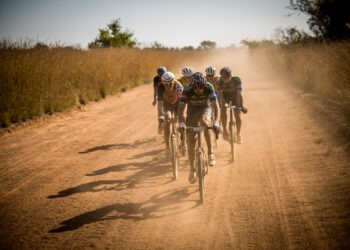
The week opened not in a conference room, but in motion — with a community run in Sandton, powered by VSC®, Rexona and the festival itself. It was a symbolic beginning: creativity as energy, as movement, as shared experience.
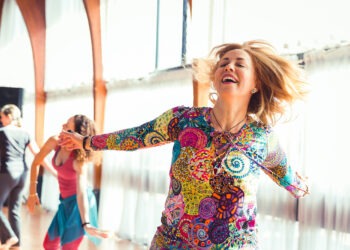
It closed with a Wellness Reset in partnership with the Remi Foundation — a reminder that sustainability in the creative economy is not just financial. It is physical. Emotional. Mental.
Because behind every campaign, every design, every beat — there is a human being navigating pressure, expectation and ambition.
CWA acknowledged that truth, and made space for it.
A Living, Breathing Cultural Ecosystem
What set this year apart was not just what was said — but how it was experienced.
CR8TOR WEEK AFRICA 2026 unfolded as a fully immersive ecosystem. Conversations flowed into curated parties. Panels transitioned into DJ sets. Ideas were exchanged not just in sessions, but in movement, in music, in shared spaces.
Food, sound, design and energy became part of the dialogue.
This was not accidental. It was intentional.
Because culture is not consumed in isolation. It is lived — in moments, in connections, in atmosphere.
And in creating those spaces, CWA did something rare: it turned networking into community, and conversation into collaboration.
Building Platforms, Not Moments
At the centre of it all is Jay Kayembe, whose vision for the platform has remained consistent — and uncompromising.
CR8TOR WEEK AFRICA is not designed to chase trends. It is designed to document and empower those shaping them.
“Our focus isn’t trends, it’s craft… the platform champions work that means something, voices that move the conversation forward.”
That philosophy is evident in every layer of the event — from the calibre of speakers to the intentionality of the audience it attracts.
This is not about moments of visibility. It is about building systems of value.
Africa Is Not Waiting Anymore
As the week drew to a close, one message echoed louder than the rest:
Africa’s creative economy is no longer asking for permission.
It is building. It is scaling. It is defining its own terms of engagement.
Across fashion, music, film, design and digital culture, African creators are not just participating in global conversations — they are leading them.
Platforms like CR8TOR WEEK AFRICA 2026 are accelerating that shift — moving the industry from visibility to ownership, from influence to infrastructure.
Looking Ahead: From Momentum to Movement
If 2026 was about consolidation of power, then 2027 promises expansion.
The conversations sparked in Johannesburg are already extending beyond borders — connecting industries, markets and ideas across continents.
Because what CR8TOR WEEK AFRICA has proven is this:
When creativity is treated as serious business, and culture as strategic capital, the possibilities are no longer limited.
They are exponential.