
The decision by Uber to discontinue UberX from 1 September has reignited conversations about how e-hailing services structure their ride categories.
It has also brought a bigger issue into focus: what does a sustainable e-hailing model actually look like for South Africa?
For passengers, affordability matters.
For drivers, so does earning enough to make each trip worthwhile.
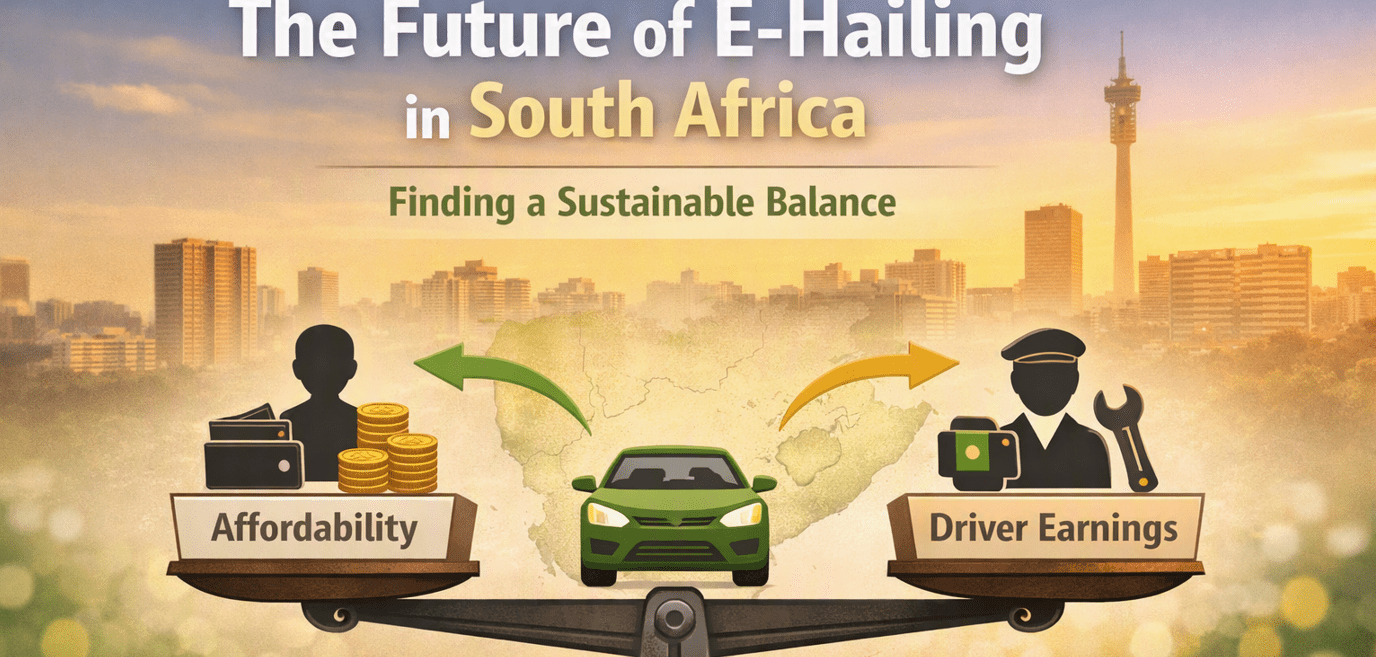
Finding the balance between those two realities could be one of the most important challenges facing the industry as the market continues to evolve.
Every ride has a cost
For passengers, transport is not an occasional expense.
For many people who rely on e-hailing to commute to work, the cost of individual trips can quickly become a significant household expense. Even relatively small differences in fares can add up over time.
South Africans are already dealing with economic, socio-economic and geopolitical pressures. That makes affordability an important part of the e-hailing conversation.
But affordability cannot be viewed from the passenger’s side alone.
Drivers also carry substantial costs.
Fuel, maintenance, insurance, vehicle finance or rental expenses all affect what it costs to provide a trip. There is another cost that can be easy to overlook: the kilometres a driver travels without a passenger.
The vehicle itself is also a major investment.
That creates a difficult equation.
A passenger needs a fare they can afford. A driver needs a fare that makes financial sense.
If either side of that equation stops working, the trip becomes harder to sustain.
Cheaper does not always mean better
The current discussion around UberX has highlighted the role that ride categories can play.
Drivers may choose vehicles based partly on the types of trips they expect to access and the income those vehicles could generate.
This creates an important distinction.
Making fares increasingly cheaper does not automatically create a more affordable or sustainable market.
If a passenger cannot afford a trip, the service has not met their transport needs.
But if the fare does not make economic sense for the driver, that trip may also become difficult to provide sustainably.
Affordability, therefore, has to work on both sides.
What if passengers and drivers had more control?
One alternative is to give both passengers and drivers a greater say in the terms of individual trips.
Passengers could consider the proposed price alongside information about the driver and vehicle before deciding who they want to travel with.
Drivers, meanwhile, could see the fare, pickup point and destination before accepting a request.
If the trip does not make financial sense, they could decline or counter the offer.
That creates a different model from one where a platform simply sets a fare that both parties must accept.
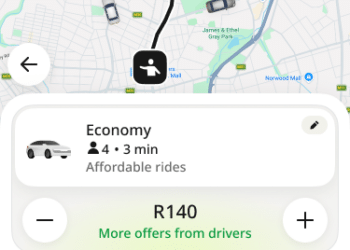
Instead, a passenger could propose what they are willing to pay.
Drivers could then accept, decline or counter the offer.
The passenger could choose from the drivers who respond.
In this model, both sides have a practical role in deciding whether a trip works.
What fare negotiation can change
Research published this year by Oxford Economics, conducted in collaboration with inDrive across seven emerging markets, offers insight into the potential of fare negotiation.
The research found that negotiation can enable trips that might otherwise not happen because a passenger considers the price too high or a driver considers it too low.
The research suggests that giving both parties some discretion over price can help the market find a point where the trip works for both sides.
That idea is particularly relevant to the current South African conversation.
Instead of viewing affordability simply as the lowest possible fare, the question becomes whether the fare creates enough value for the passenger while still providing a viable earning opportunity for the driver.
The driver’s share matters too
There is another part of the equation that deserves attention: how much of the fare the driver actually retains.
Platform fees form part of the driver’s cost of earning.
What remains after those fees, fuel and other vehicle expenses ultimately determines whether providing the trip makes financial sense.
That means conversations about affordable e-hailing cannot focus only on what passengers pay.
They also need to consider what drivers earn from that payment.
The two are connected.
A fare may look affordable from the passenger’s perspective, but if too little remains for the driver after costs, the model may struggle to remain sustainable.
A changing market needs a sustainable model
South Africa’s e-hailing market is entering another period of change.
Different ride categories will continue to serve different customers and budgets. But beneath those categories sits a more fundamental question.
Does the model give passengers enough value to keep using the service while giving drivers enough reason to keep providing it?
That is where sustainability becomes important.
A successful e-hailing market needs passengers who can afford to use the service and drivers who can afford to provide it.
It also needs platforms that continue improving affordability and safety while giving both sides meaningful information and control over the decisions they make on each trip.
The future of e-hailing may therefore depend on more than simply moving people from one destination to another.
It may depend on finding a better balance between price, choice, information and economic reality.
Because at the end of the day, a worthwhile ride is one that works for the person taking it — and the person making it possible.