
There is a dangerous myth about debt: if you are paying your accounts on time, everything must be fine.
But financial health is about more than meeting a payment date.
For many women, debt trouble can begin quietly. There may be no missed payment. No collection call. No dramatic financial crisis.
Instead, credit slowly becomes the answer to everyday problems.
The credit card covers the groceries. Another account handles an unexpected expense. The next payday arrives, but there is little money left after the monthly repayments.
On paper, everything may look manageable.
In reality, there may be very little room to breathe.
As Patricia Temba, Executive Head of Collections at FNB, explains, “making every payment on time does not necessarily mean your finances are in good shape.”
The bigger question is whether your debt still leaves enough room to live comfortably, save and deal with unexpected costs without reaching for more credit.
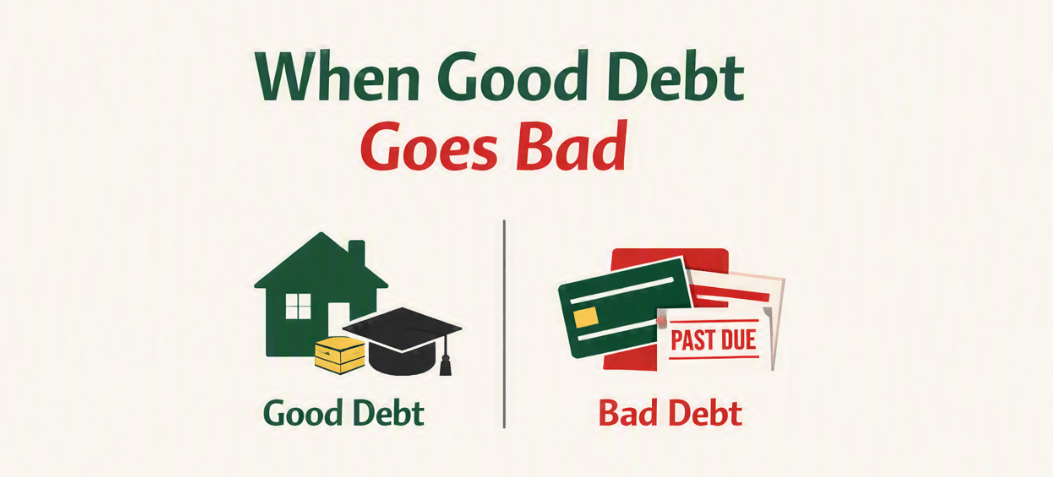
When good debt stops working for you
Not all debt is created equal.
A home loan, student loan or other borrowing that helps you acquire an asset or improve your earning potential can generally be viewed as “good debt.”
But the label is not permanent.
Life changes.
A bond that once fitted comfortably into your budget may become harder to manage when interest rates fluctuate and repayments increase.
A car instalment may have been affordable when you bought the vehicle. Then school fees rise. A parent needs support. Or a household moves from two incomes to one.
Suddenly, the same monthly commitment feels very different.
The same can happen with a credit card.
What starts as a safety net for a genuine emergency can gradually become a way to make it to payday every month.
“The reason you originally borrowed may not have changed, but your life may have,” says Temba.
That is why debt needs to be assessed against your current financial reality, not the circumstances you had when you first took it on.
The real question isn’t “Is my debt good?”
A better question is:
Can I pay my debt and still have enough money to live?
That question changes everything.
Financial pressure does not always come from one reckless decision.
For many women, one salary may support several people. It may need to cover a home, children, an ageing parent or extended family, while still paying for everyday needs.
Every individual commitment may appear manageable.
Together, they can become overwhelming.
That is why looking at each account separately can hide the bigger picture.
The real test is what happens to your money after all the repayments have gone off.
8 warning signs that your debt may be becoming a problem
According to Temba, there are several signs worth watching.
1. You repay your credit card, then use it again
If your available credit disappears almost as quickly as you repay it, your card may no longer be serving as occasional credit.
It may have become part of your monthly income.
2. Everyday essentials are going onto credit
Groceries and electricity are necessities.
If these costs are increasingly being placed on credit because your salary cannot comfortably cover them, it is worth taking a closer look at your budget.
3. You are using one form of credit to manage another
Moving financial pressure from one account to another does not make the pressure disappear.
It can be a sign that your current income is struggling to carry your commitments.
4. Almost nothing remains after repayments
You may be paying every instalment on time.
But if those payments leave you with almost nothing afterwards, your debt may still be placing your finances under significant strain.
5. A small emergency would require borrowing
Imagine an unexpected R2 000 expense lands tomorrow.
Could you cover it?
If the answer is no and your only option would be taking on more debt, that may be an important warning sign.
6. Debt repayments squeeze out household essentials
If your repayments leave too little money for everyday household expenses, something needs to change.
A payment being affordable on its own does not mean your overall debt load is sustainable.
7. Your salary has increased, but your breathing room hasn’t
A higher income should ideally create some additional financial room.
If your salary has grown but you still feel just as financially stretched, it may be worth examining where that additional money is going.
8. You avoid looking at your statements
Sometimes the warning sign is emotional.
If you feel anxious about checking your balances or opening statements, avoiding the numbers will not make them disappear.
Looking at them may be uncomfortable.
But knowing where you stand gives you a starting point.
Look at what is left after payday
This may be the most revealing financial check of all.
Instead of looking at every account separately, look at your salary as a whole.
Once your repayments have gone off, what is actually left?
Can you still comfortably pay for:
- Groceries
- Transport
- Electricity
- Household expenses
- Other essential needs
And if an unexpected expense arrives, can you cover at least part of it without immediately reaching for credit?
If you are constantly moving expenses from one account to another just to get through the month, your debt may no longer be working for you.
Then comes the uncomfortable question:
What am I giving up to make sure every account gets paid?
If the answer includes essentials, savings or your ability to handle emergencies, it is time to reassess.
What to do before you miss a payment
You do not have to wait for a missed payment before taking action.
Start by putting the full picture in front of you.
Write down:
- Everything you owe
- What you pay towards each debt every month
- The interest and fees attached to each account
- How much of your salary goes towards debt
- What remains after repayments
- What remains after essential living costs
The goal is not to judge yourself.
It is to understand your financial reality.
If the numbers no longer work, speak to your credit provider early.
Asking for help does not mean you have failed.
Your circumstances may simply have changed.
Depending on your situation and the type of credit involved, there may be options available to help you through a period of financial pressure.
The important part is acting early.
Waiting can narrow your options. Missed payments, additional interest and fees can make recovery more difficult.
Debt is not the failure. Ignoring the warning signs can be.
Being in debt does not automatically mean you are in financial trouble.
Someone can have a sizeable bond and still enjoy financial stability if the repayments fit comfortably within their income.
Someone with much less debt can experience serious financial strain if their repayments leave almost nothing for essentials, emergencies or savings.
As Temba puts it, “The real measure of financial health isn’t how much you owe, but how well your debt fits within your overall financial reality.”
That is the distinction worth remembering.
The goal is not necessarily to have zero debt.
The goal is to have debt that remains affordable and sustainable.
You don’t have to carry everything
Women are often celebrated for making a plan.
For stretching a salary.
For keeping the household moving.
For making sure everyone else is taken care of.
But financial resilience should not be measured by how much pressure you can carry before you break.
Sometimes the strongest financial decision is admitting that something has changed.
The bond may still be the right decision.
The car may still be necessary.
The credit card may still have a place in your financial life.
But if the debt that once worked for you is now forcing you to borrow for everyday life, it deserves a closer look.
Paying on time is good. Having enough left to live, save and handle life’s surprises is better.
And you do not need to wait for a crisis to start making that assessment.