
Rooibos has always been unmistakably South African.
But around the world, people are discovering that this familiar red infusion can be much more than a traditional cup of tea.
In Japan, it has found its way into ramen. In Britain, it is being used in iced drinks, kombucha and ice cream. Across Europe, it is appearing in everything from curry to cocktails. In North America, it is becoming the foundation for caffeine-free “red lattes” and other creative drinks.
As South Africa celebrates its heritage this month, Rooibos is showing how a proudly South African product can remain connected to its roots while being reinvented by different food cultures.
 A South African ingredient with global reach
Rooibos currently reaches more than 50 international markets.
Japan is its largest destination, accounting for 33% of exports in 2025. Germany, the Netherlands, the UK, France and the US also remain established international markets.
According to Adele du Toit, spokesperson for the South African Rooibos Council (SARC), its versatility is central to its appeal.
“Rooibos’ naturally mild, slightly sweet flavour and caffeine-free character make it incredibly adaptable, allowing people to incorporate it into their own food cultures and traditions,” she says.
That adaptability is now taking Rooibos far beyond the teapot.
Japan puts Rooibos in the bowl
Japan offers one of the most unexpected examples.
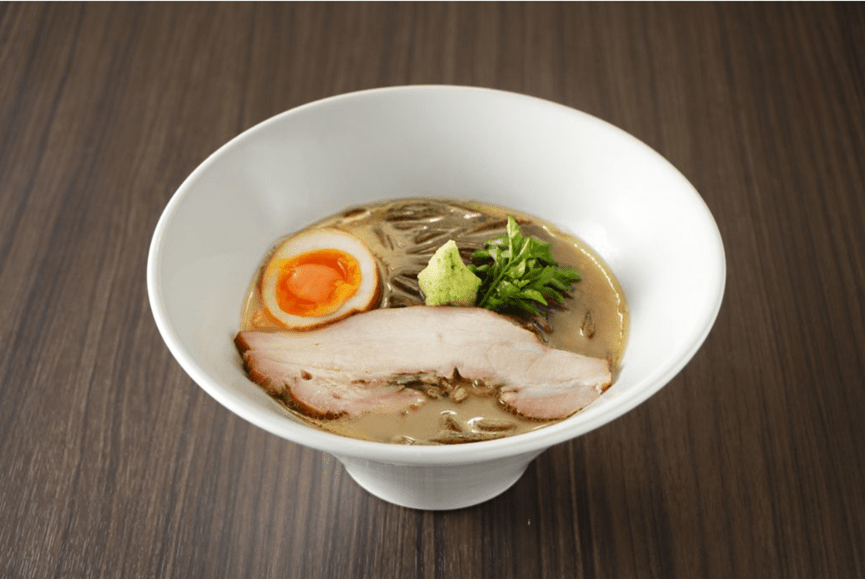
At Ippudo, the internationally known ramen chain, Rooibos is served alongside ramen.
In 2024, the pairing went further when Ippudo introduced a limited-edition ramen that incorporated Rooibos directly into the broth.
The dish combined tonkotsu with Japanese kombu-and-shiitake dashi, while the egg was also marinated in Rooibos.
The result brought a distinctly South African ingredient into one of Japan’s best-known dishes.
From medicinal drink to speciality tea
The story behind Rooibos’ growth in Japan stretches back decades.
Clinton Gass, Managing Director of Japan-based Rooibos Marketing Ltd and Owner of Gass Co Ltd, has been involved in developing the Japanese market.
He says an important shift came from changing how Rooibos was positioned.
“By setting up a business in Japan to distribute and market Rooibos we were able to change the positioning of Rooibos,” Gass said. “The tea purists in the Japanese market loved it and exports increased significantly.”
Over more than four decades, Rooibos has moved from being positioned as a specialist health product to becoming an everyday beverage in Japanese homes, convenience stores, cafés and restaurants.
And ramen is only part of the story.
Rooibos gets a latte makeover
Starbucks Japan introduced a Rooibos Tea Latte as a regular menu item at its specialist Tea & Café stores in 2023.
The drink combines Rooibos with milk and vanilla flavouring and can be enjoyed hot or iced.
Then, in 2024, DEAN & DELUCA Japan paired Rooibos milk tea with satsumaimo, the Japanese sweet potato, to create a Sweet Potato Latte.
It is a distinctly Japanese interpretation of Rooibos, showing how the ingredient can move from being the drink itself to becoming part of a wider flavour experience.
Britain discovers new ways to enjoy a cuppa
Rooibos has also established a strong following in Britain.
There, it forms part of the country’s diverse tea and infusion culture. Its naturally caffeine-free character and distinctive flavour have helped it find a place among consumers exploring alternatives and new flavour experiences.
Dr Sharon Hall, Chief Executive of the UK Tea & Infusions Association (UKTIA) and President of Tea & Herbal Infusions Europe (THIE), says younger consumers are bringing fresh energy to the herbal and fruit infusion category.
“Today’s consumers are increasingly adventurous in their beverage choices bringing fresh interest to the herbal and fruit infusions category through a desire for flavour exploration, wellness and variety,” she says.
Rooibos is appearing in increasingly creative formats.
Tick Tock, the family-owned tea brand credited with helping introduce Rooibos to the UK in the 1970s, showcases recipes ranging from Rooibos iced tea and kombucha to an Aperol Spritz Rooibos iced tea and Earl Grey Rooibos ice cream.
The familiar infusion is being transformed into something colder, creamier and more experimental.
Europe adds its own flavour
Across continental Europe, Rooibos is taking on local flavours and culinary traditions.
In Germany, it is primarily enjoyed as a hot herbal infusion and is particularly popular as the base for flavoured blends.
Vanilla, caramel, citrus, spices and other flavourings have been established combinations in the market for years. Rooibos is also used in baking and other culinary applications.
Some recipes push that versatility even further.
A Rooibos-soya latte macchiato gives a familiar coffee-style drink a South African twist. Rooibos has also been used in a sweet potato and chickpea curry and an elderberry soup.
In France, meanwhile, Rooibos is finding a place in desserts, drinks and cocktails.
One example combines Rooibos-infused cherries with fromage blanc sorbet, adding the infusion to a fruit-based dessert.
Then there is the “Tea Time du Syndicat”, a Rooibos-based cocktail created by Paris cocktail bar Le Syndicat. It combines Rooibos with lime, sugar syrup and sparkling water.
Another example is Rooibos Ale, a Cognac-based cocktail featuring Rooibos, lemon, ginger ale, orange and lime.
These creations demonstrate how the ingredient can move between sweet, savoury and beverage applications.
North America embraces the “red latte”
In Canada and the United States, Rooibos is increasingly being used as a beverage and flavour platform.
Its applications include milk-based lattes, mocktails, cocktails and functional-wellness blends.
Canadian Rooibos products include dessert-inspired flavours such as cinnamon chai and the former “Jelly Donut” Rooibos.
In the US, Rooibos lattes, often called “red lattes”, and “red espressos” are being used as caffeine-free alternatives to coffee.
They can be combined with ingredients such as steamed milk, honey, vanilla or cinnamon.
Rooibos also appears in punches and cocktails, including a South African-style mango Rooibos mint punch and a Rooibos-chai bourbon cocktail.
According to Shabnam Weber, President of the Tea & Herbal Association of Canada and the Tea Association of the USA, consumers are increasingly looking beyond traditional beverage categories.
“Today’s consumers don’t necessarily think in terms of choosing between tea or coffee,” she says.
Instead, she says, consumers are looking for beverages that fit a particular mood, moment or need.
The world is making Rooibos its own
What makes Rooibos’ international journey particularly distinctive is the way different markets are interpreting it.
The ingredient remains rooted in South Africa. Yet each market is finding a different way to work with its flavour and character.
Japan has taken it into ramen and lattes. Britain has explored iced drinks, kombucha and desserts. Germany has incorporated it into local flavour combinations and savoury dishes. France has taken it into cocktails and desserts. Canada and the US are exploring red lattes, mocktails and other drinks.
For du Toit, that evolution gives Rooibos renewed relevance.
“There’s something quite special about seeing a product that is so deeply connected to South Africa being embraced and reimagined by people around the world,” she says.
“They’re not changing what Rooibos is – they’re discovering what else it can be.”
And perhaps that is the most interesting part of Rooibos’ global journey.
A South African heritage product does not have to remain frozen in tradition to preserve its identity.
Sometimes, heritage travels best when people are given the freedom to discover what it can become.