 Our model of work is broken in a deceptively simple way: we trade hours, wellbeing and productivity for the right to sit in congested business districts. Every day millions of workers endure long commutes so they can spend most of their waking hours in an office that’s far from the rest of their life. The 15-Minute City offers a different blueprint — one that brings work, shops, schools, gyms and social life into the same neighbourhood — and for South Africa, that blueprint is suddenly urgent.
The idea is not new. Urbanist Carlos Moreno formalised the concept; when Paris adopted it as policy it moved rapidly from urban theory into practice. The premise is elegantly simple: design neighbourhoods so that most daily needs are reachable within 15 minutes on foot or by bicycle. Applied to work, that means professional infrastructure — high-quality offices, coworking spaces, meeting rooms and business services — sits close to where people live. The goal is not to erase city centres, but to create multiple nodes of activity so daily life no longer funnels everyone through a single choke point.
The pandemic fast-forwarded many of us into a hybrid future. Remote work proved that presence in a CBD office five days a week is not essential. But fully remote life exposed other costs — isolation, blurred boundaries and fewer opportunities for spontaneous collaboration. What workers and employers want increasingly looks like a middle path: access to professional, well-equipped workspaces near home, plus the option to meet in denser hubs when the job calls for it.
That’s where the 15-Minute City becomes a powerful operating model for organisations. Imagine being able to hold a client meeting at 9am, pop home for lunch with your children, and return to a short afternoon session — all without an hour-long commute. For startups, flexible local workspace removes the need for costly CBD leases while offering formal meeting venues and professional reception facilities. For employers, distributed workspace reduces commute stress for staff while retaining places for culture and collaboration.
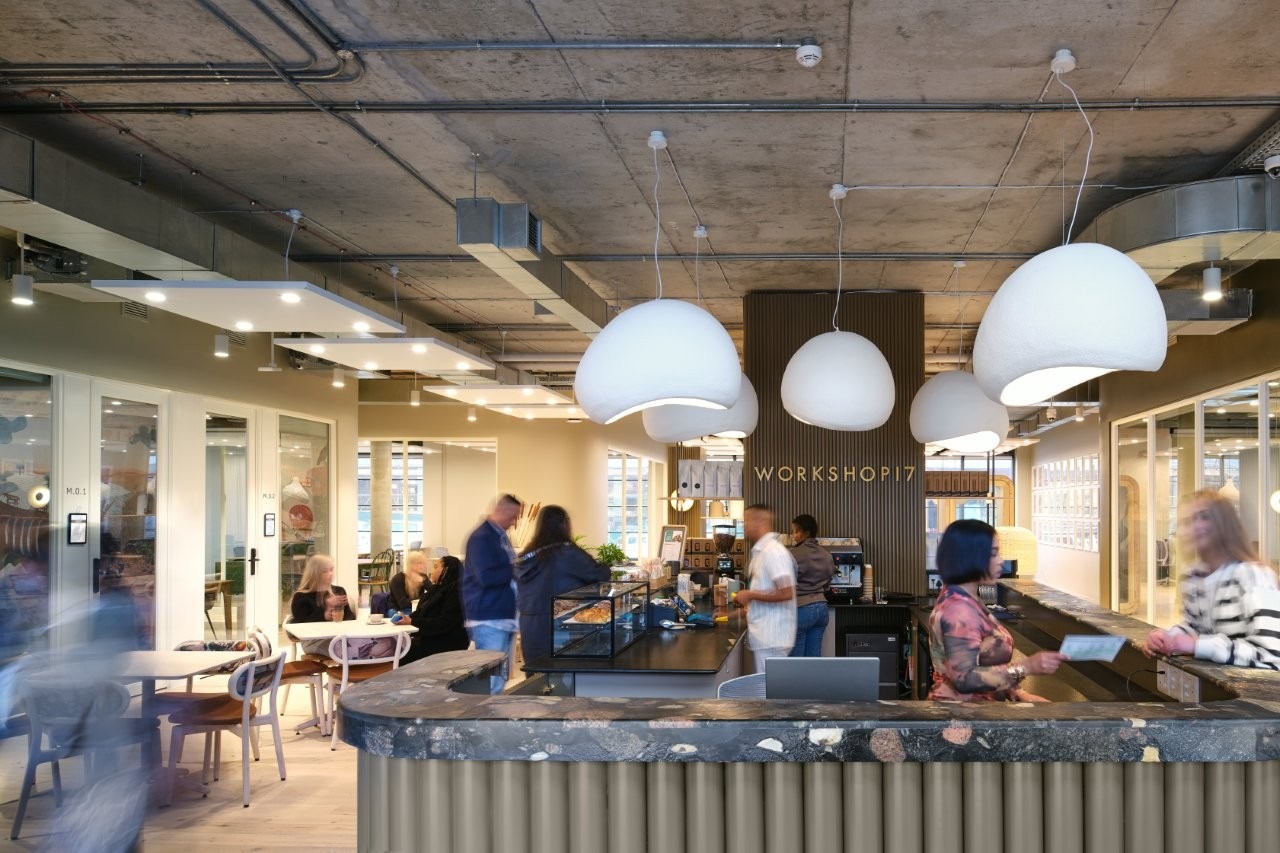
We’re already seeing this logic play out in South African nodes such as Newlands, Century City, Hyde Park Corner and Ballito, and in emerging hubs like Muizenberg. These places combine apartments, retail, hospitality, sport and transport in ways that make short local trips meaningful. At Workshop17 we place flexible, high-grade workspaces inside these residential-adjacent nodes so that professional standards — design, connectivity, services — are not sacrificed for proximity. The result: people access both professional credibility and personal convenience.
There are clear business and social benefits. Shorter commutes free time for family, rest and personal development — improving wellbeing and productivity. Localised working patterns drive spend into nearby businesses, strengthening neighbourhood economies. And from a climate perspective, reducing car dependency by enabling walking and cycling for daily work commutes materially lowers urban transport emissions.
This is not a vision that makes city centres irrelevant. Central business districts will continue to host major institutions, cultural anchors and large-scale collaboration. But a future city looks polycentric: many viable centres where people can live, work and play. It’s an inclusive model that spreads economic activity more evenly across metropolitan areas.
For business leaders the question is practical: do we design where work happens around people’s lives, or around legacy property assumptions? For urban planners it is: will we invest in mixed-use nodes that include professional infrastructure, or continue to reinforce single-purpose CBDs?
The tools are ready. Flexible workspace operators, local transport improvements, mixed-use zoning and strategic investment in suburban nodes all exist as options. The demand is obvious — families, freelancers, startups and established firms are asking for smarter proximity. What remains is the political and commercial will to act.
If South Africa embraces distributed workspace and the 15-Minute City model, the prize is significant: more resilient cities, healthier workers, stronger local economies and a more sustainable urban footprint. That shift requires rethinking not only how we design places, but how businesses plan operations — prioritising proximity, agility and human-centred infrastructure.
The question for leaders — in business, property and government — is simple: are we willing to think of work as something that should fit a life rather than a trip? The opportunity to build better cities for the people who live and work in them is on the table. Acting on it will define how well our cities perform — economically, socially and environmentally — for decades to come.
For more information, visit www.workshop17.com, email info@workshop17.co.za or call 021 205 9000.
Follow Workshop17 on social media:
Instagram: @workshop17za
Facebook: Workshop17
X: @Workshop17za
LinkedIn: Workshop17
YouTube: @workshop17