 In a country where millions of families continue to face impossible choices between food, transport, school fees and survival, South Africa’s hunger crisis remains one of the nation’s most urgent realities. But during World Hunger Month 2026, KFC Add Hope is proving that meaningful change does not happen in isolation. It happens when systems, partnerships and people come together with a shared purpose.
What began as a customer-driven meal donation initiative has evolved into one of South Africa’s most impactful child-feeding ecosystems. Now, through an unprecedented open-source approach, KFC Add Hope is reshaping how organisations, innovators and communities collaborate to tackle hunger at scale.
The results are already impossible to ignore.
In 2025 alone, Add Hope served an extraordinary 35,558,075 meals and supported 167,560 children across South Africa. Yet rather than protecting its model behind closed doors, KFC Add Hope chose to do something few large social impact programmes have attempted before: it opened the system to the public.
On World Food Day in October 2025, the organisation launched The Biggest Hunger Hack, inviting young innovators, businesses, NGOs and stakeholders to help improve and scale the Add Hope blueprint. Sixty Gen Z innovators stepped forward, bringing fresh thinking to one of the country’s oldest and most complex social challenges.
Six months later, those ideas are no longer theoretical.
One of the most impactful solutions, a prototype app designed to rescue surplus produce from farms and redirect it to food-insecure families, is now being implemented in partnership with FoodForward SA. The collaboration is already unlocking five tonnes of surplus food daily while significantly reducing produce costs for beneficiary organisations operating within the Add Hope network.
The ripple effect has extended far beyond food redistribution.
Since opening the blueprint, Add Hope has secured 10 new corporate partners, expanded integration into digital delivery platforms and entered ongoing discussions with the Department of Social Development around the creation of a national hunger heat map to better identify and target food insecurity hotspots across South Africa.
The Add Hope blueprint itself has now been downloaded 6,700 times, reflecting growing interest in collaborative, systems-based approaches to solving hunger.
For KFC Africa’s Head of Corporate Affairs, Andra Nel, the strategy was never about charity alone. It was about building infrastructure for long-term impact.
“Child hunger cannot be solved by one brand alone,” says Nel. “By opening up the Add Hope system, we’ve shown that transparency and collaboration can unlock innovation, efficiency and scale.”
The urgency behind the initiative is backed by deeply concerning national data.
According to FoodForward SA’s State of Household Food Insecurity report, the number of food-insecure South Africans increased from 14.25 million in 2019 to 17.8 million in 2023. Statistics South Africa reports that severe food insecurity rose from 6.4% to 8% over the same period, while moderate food insecurity climbed from 15.5% to 19.7%.
Even more alarming is the rise in child stunting — a devastating consequence of chronic undernutrition. The 2024 National Food and Nutrition Survey places South Africa’s child stunting rate at 28.8%, while the 2025 Global Hunger Index ranks South Africa 74th out of 123 countries.
“These aren’t just statistics,” Nel explains. “They’re communities trapped in cycles of poverty. Families making impossible choices about how to spend the little they have. Children who can’t concentrate in school.”
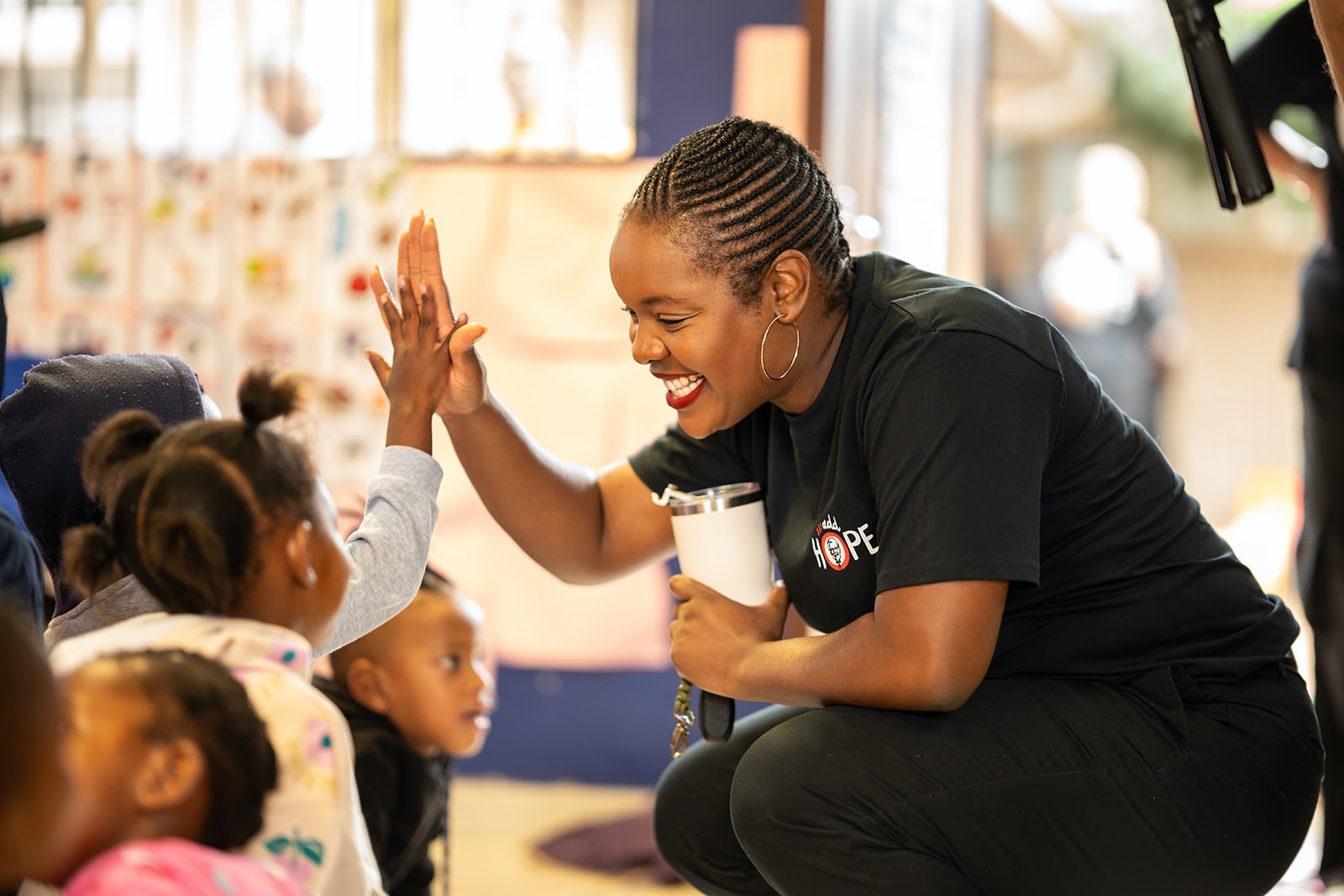
For 17 years, Add Hope has quietly built one of South Africa’s most effective feeding systems through a deceptively simple model. KFC customers add R2 to their orders, KFC supplements those donations, and the funds are distributed through 126 partner organisations operating more than 3,000 feeding centres nationwide.
But the open-sourcing of the blueprint marks a significant philosophical shift — moving the programme from a closed charitable initiative into shared social infrastructure that others can strengthen, adapt and scale.
The approach also aligns directly with South Africa’s national commitment to ending child stunting by 2030, a priority highlighted by President Cyril Ramaphosa during the 2026 State of the Nation Address.
“The Biggest Hunger Hack proved that when you trust young people with real problems and give them real systems to work with, they deliver real solutions,” says Nel.
“The impact our new partnerships have had in just seven months is beyond our wildest dreams, and this is just the start.”
At its core, Add Hope’s evolution reflects a broader truth about modern social impact: the most effective solutions are rarely built alone. They are built collectively, transparently and with the courage to invite others into the process.
As World Hunger Month shines a spotlight on food insecurity across the globe, KFC Add Hope’s open-source blueprint is demonstrating that South Africa’s fight against child hunger may ultimately depend not on competition between organisations, but on collaboration powerful enough to scale hope itself.