
What if fashion’s next big idea is already hanging in a wardrobe, sitting in a resale pile or waiting to be thrown away?
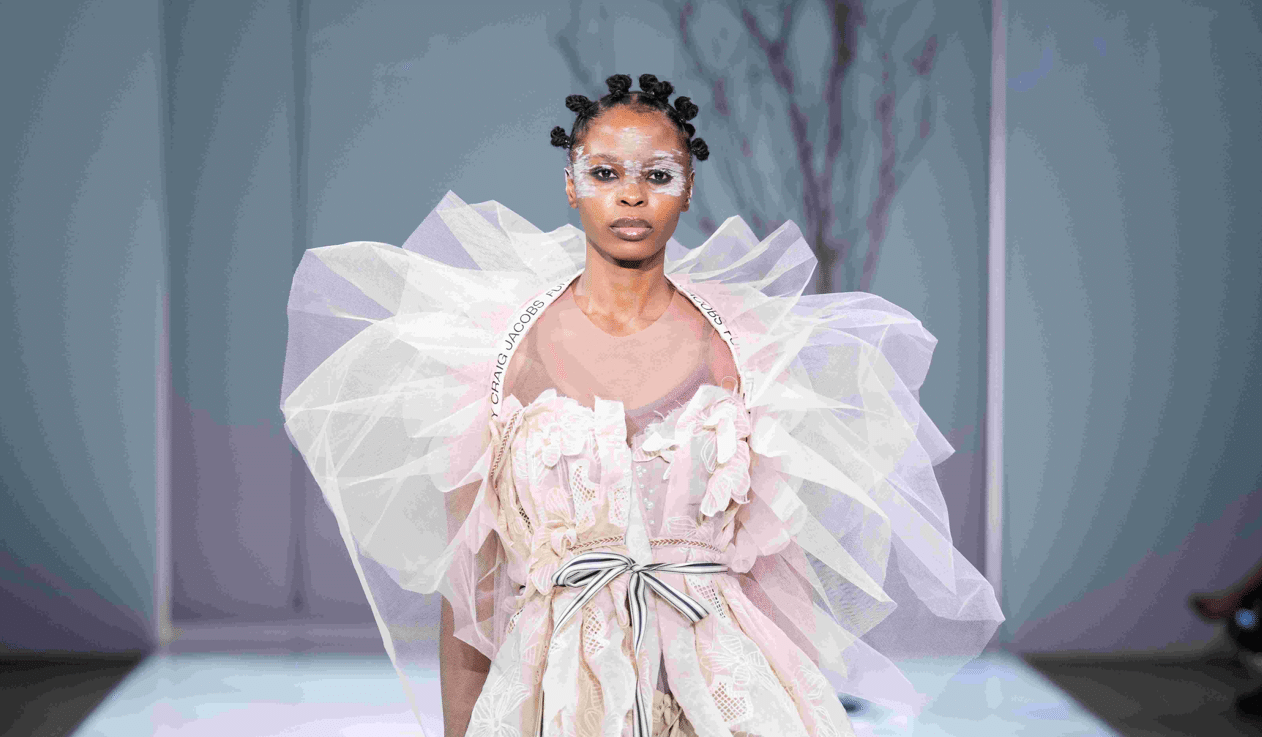
With THE NEW EARTH, Fundudzi designer Craig Jacobs brought that question to the runway at South African Fashion Week at Hyde Park Corner Shopping Centre. His transeasonal 2026/27 collection explored how clothing that can no longer be sold, or exists in excess, can become the foundation for something new.
Rather than starting with new materials, Jacobs looked at what already exists. Through dismantling and reconstruction, garments often discarded in Western markets were given another opportunity to become something meaningful.
The result is a collection that places creativity at the centre of a bigger conversation about waste, consumption and the value we assign to clothing.
 Looking at discarded clothing differently
For Jacobs, THE NEW EARTH is about more than reworking garments. It challenges the assumption that clothing loses its value when it is no longer wanted or commercially viable.
“Rather than treating existing garments as the end of their useful life, we worked through a process of dismantling and reconstructing what others, mostly in the West, discard to explore new possibilities in materials that might otherwise be overlooked,” said Jacobs.
The approach asks an important question of an industry driven by constant production: must fashion always begin with something new?
By working with pre-owned, surplus and discarded clothing, the collection explores how existing materials can inspire fresh design possibilities. It also highlights the role designers can play in questioning established production and consumption habits.
Inspired by the landscapes of Southern Africa
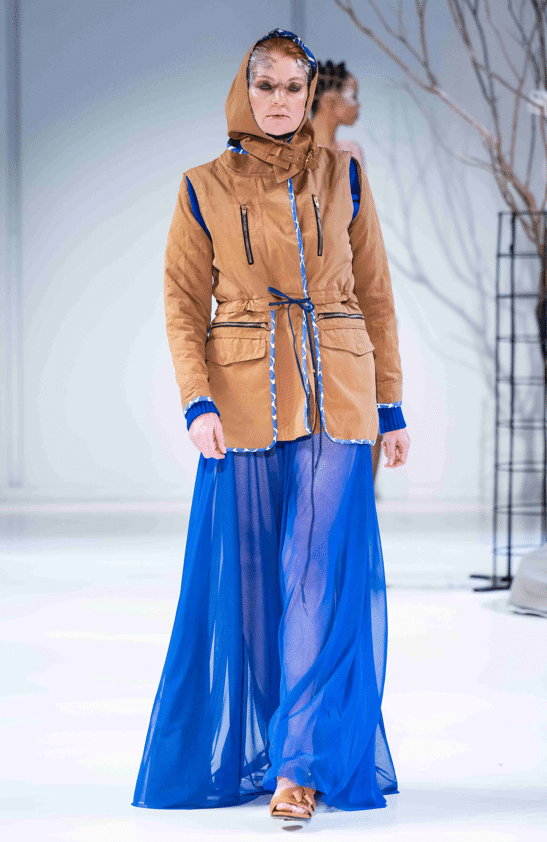
The collection draws inspiration from Southern Africa’s geological landscapes, bringing together muted tones associated with earth, stone and weathered terrain.
Tailoring, denim, knitwear and sheer layers form part of the collection’s visual language. These elements move between everyday dressing and more expressive silhouettes, showing different ways that existing materials can be reimagined.
Rather than treating sustainability as a limitation on creativity, THE NEW EARTH uses the process of reconstruction as a starting point for design.
Each garment offers a different perspective on what clothing can become when designers look beyond its original purpose.
A challenge to fashion’s culture of excess
From fast fashion to luxury, the industry operates within a cycle of production and consumption that can leave little room for longevity.
THE NEW EARTH questions that cycle by focusing on the possibilities within clothing that already exists. Its message is not that reworking garments will solve textile waste on its own. Instead, the collection shows how design can contribute to a wider conversation about resourcefulness, value and more considered approaches to fashion.
It also challenges consumers to think differently about the clothes they own.
A garment does not necessarily have to be discarded simply because its original purpose has changed. With imagination and thoughtful design, existing materials can offer new possibilities.
A creative collaboration behind the collection
Formative parts of THE NEW EARTH were produced at Ananse Studios Johannesburg, located in Rosebank’s Design District.
The collection was made possible through a generous donation from Mr Alan Ford, a television producer and patron of the creative industries.
Luxity served as the collection’s Official Accessory Partner, providing the footwear.
These contributions formed part of the work presented by Fundudzi at South African Fashion Week.
Fundudzi’s commitment to African stories
Jacobs founded Fundudzi in 2004 with a commitment to telling African stories through cloth in an ecologically sensitive way.
That foundation is reflected in THE NEW EARTH, where material choices and the process of reconstruction become part of the collection’s wider message.
The work invites audiences to reconsider the relationship between fashion, resources and creativity. It also reinforces the idea that design can carry meaning beyond appearance, prompting conversations about how clothing is made, valued and used.
For Jacobs, sustainability begins with a change in perspective as much as a change in production.
Creativity does not always demand new materials. Sometimes, it begins by recognising the potential in what we already have.
At South African Fashion Week, Fundudzi’s THE NEW EARTH offered a compelling reminder that fashion’s future may depend not only on what designers create next, but also on what they choose to see differently.