
What happens when technology advances faster than our ability to understand its consequences?
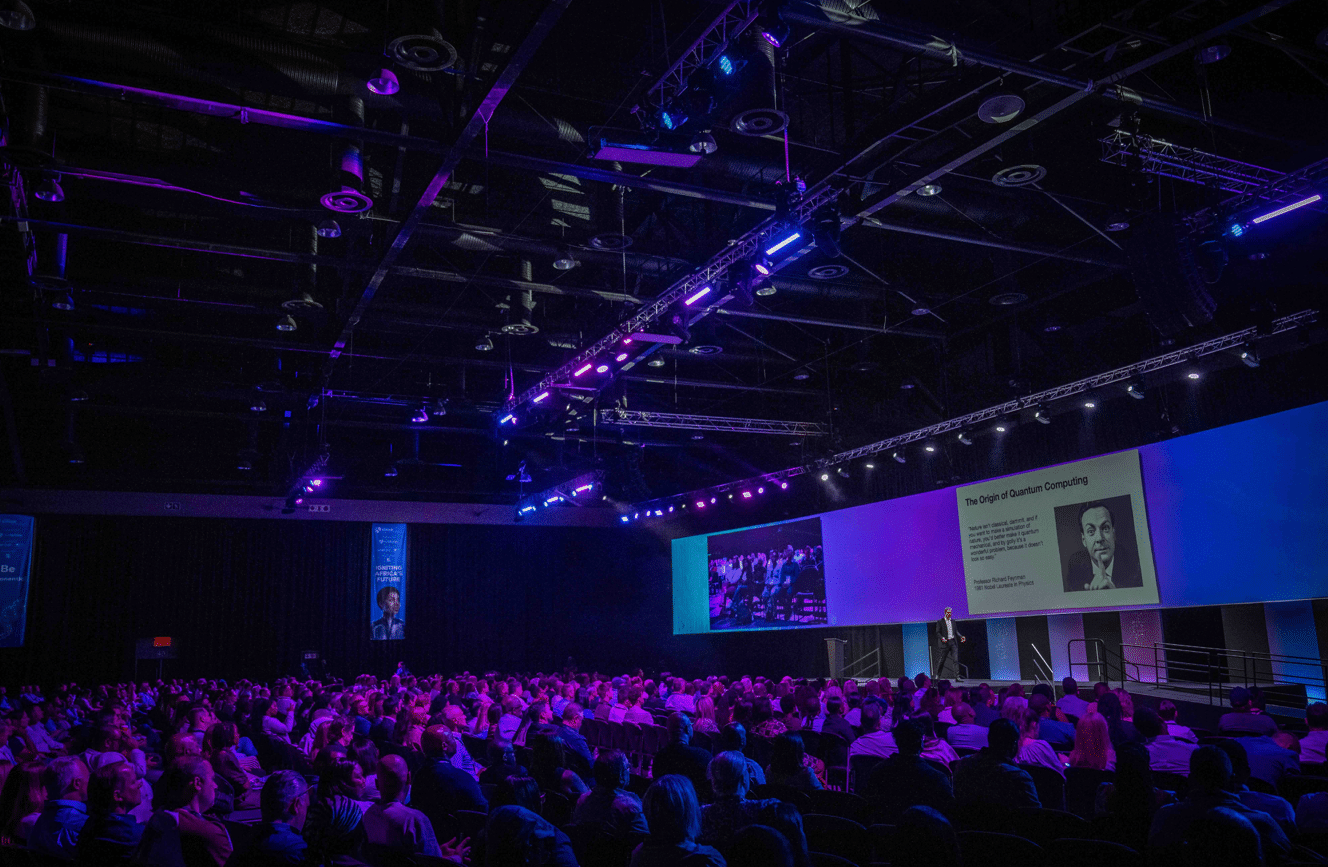
That question ran through Day 2 of the Singularity Summit South Africa 2026 at the Sandton Convention Centre in Johannesburg. World-renowned thought leaders explored breakthroughs that could reshape how we treat disease, build cities, educate children, protect businesses and manage wealth.
The discussions covered everything from quantum computing and emerging cancer treatments to AI-powered learning, cybersecurity and human performance.
Yet one message stood out. Innovation is not simply about what technology can do. It is also about how responsibly we use it, who benefits from it and what it means for humanity.
Hosted in collaboration with Old Mutual, with Google Cloud and the Industrial Development Corporation (IDC) as event sponsors and UBU as metaverse partner, the summit brought together experts examining the opportunities and risks of an increasingly connected, technology-driven world.
 Here are the key insights from Day 2.
Quantum computing could change the rules
Dr Mark Jackson | The Quantum Frontier
Quantum computing is advancing rapidly, and businesses may need to prepare sooner than they think.
Dr Mark Jackson, Senior Quantum Evangelist at Quantinuum, explained how quantum computers differ fundamentally from conventional machines. Their potential lies in tackling certain complex problems that today’s most powerful supercomputers cannot solve efficiently.
The possible applications are far-reaching. Drug discovery could become faster and less expensive, while agriculture, financial modelling and energy could also benefit from new computational capabilities.
Jackson highlighted the relationship between quantum computing and artificial intelligence. Quantum technology could generate scientific data that AI systems then analyse, creating new opportunities for discovery.
But this progress also comes with a serious warning.
Powerful quantum computers could eventually break much of the encryption protecting today’s digital systems. Jackson urged businesses to investigate quantum applications, develop internal expertise and begin moving towards quantum-resistant encryption.
The message was clear: organisations should not wait until the threat becomes a reality before preparing for it.
Could we move beyond longevity to our personal peak?
Dr Cathy Davies | From Healthspan to Peakspan: Peptides, Exosomes and Everything in Between
Living longer is one thing. Maintaining our ability to perform at our best is another.
In a discussion moderated by Kim Hulett, CEO of Next Biosciences, longevity specialist Dr Cathy Davies challenged delegates to think beyond lifespan and healthspan.
She introduced the idea of peakspan: the ability to perform at our personal best for as many years as possible.
The discussion explored emerging developments in cellular rejuvenation, including exosomes, which act as messengers between cells, and peptides, which are attracting attention for their potential applications in healing, regeneration and longevity.
However, Davies also highlighted the risks associated with unregulated treatments. New approaches require proper medical oversight, and promising research should not be mistaken for established clinical benefits.
Her most practical reminder was refreshingly straightforward. Advanced medical interventions cannot replace the foundations of good health.
Sleep, nutrition, exercise and maintaining muscle mass remain essential to healthy ageing.
Can sound waves help transform cancer treatment?
Dr Martin Zschornak | The Frequency of Life: How Sound Is Rewriting the Future of Cancer Medicine
Could precisely targeted sound waves become another tool in the fight against cancer?
Radiation oncologist and musician Dr Martin Zschornak introduced delegates to research exploring how sound waves, electrical fields and radio frequencies may be used to target or disrupt cancer cells.
One technology he discussed was histotripsy, an ultrasound-based treatment that uses precisely focused sound waves to destroy tissue. The treatment has been authorised in the United States for certain liver tumours and offers an approach that does not rely on surgery, radiation or heat to destroy the targeted tissue.
Zschornak also explored the role of music in helping cancer patients manage anxiety and fatigue. He distinguished these supportive benefits from emerging research into whether sound can directly affect tumours.
Looking ahead, he sees potential for AI to help researchers identify distinctive frequency signatures associated with different cancers and develop more precise treatments.
For Africa, these developments could be particularly important. Access to radiotherapy remains limited in many countries, making research into additional treatment options significant.
However, the potential of these technologies must be considered alongside the evidence available for each treatment and its specific clinical application.
Pushing the boundaries of human performance
Brandon Birchak | The Oxygen Frontier
Former Cirque du Soleil performer and human performance specialist Brandon Birchak brought a different perspective to the summit: what happens when we challenge conventional assumptions about the body’s capacity to recover and perform?
Drawing on his personal experience of surviving serious injuries, Birchak discussed his work exploring oxygen exposure, breathwork and changes in pressure.
His approach examines how carefully managed environments may influence lung function, endurance and recovery. He also shared observations from his work with elite athletes, including Olympic competitors and UFC champions.
The presentation encouraged delegates to reconsider what might be possible when the body is exposed to carefully designed conditions that promote adaptation.
Some of the medical and longevity applications discussed still require further independent scientific validation. Even so, his broader challenge was thought-provoking: progress may require us to question the assumptions that define human potential.
A practical breathing session
Birchak later returned to the stage to lead delegates through a practical breathing session.
He demonstrated controlled nasal breathing, measured breathing cycles and breath holds. He explained how these techniques are intended to influence the nervous system and the body’s response to stress.
The session also highlighted the relationship between physical responses, concentration and relaxation.
Rather than focusing only on changing our thoughts, Birchak encouraged delegates to pay attention to how they breathe and how their bodies respond under pressure.
It offered a practical counterpoint to the summit’s technology-heavy discussions, reminding attendees that human performance also involves understanding the systems within our own bodies.
AI’s next decade: Are businesses focusing on the right things?
Amanda Manna and Dr Mark Nasila | What’s Next in AI?
Artificial intelligence is attracting enormous investment. But are businesses turning that investment into meaningful results?
Amanda Manna, Vice President of Strategic Relations at Singularity, joined Dr Mark Nasila, Chief Data and Analytics Officer at FNB, to examine where AI is heading and what organisations should do now.
Their central message was that businesses must focus on measurable value instead of adopting technology simply because it is available.
They argued that organisations often struggle to achieve meaningful financial returns when they introduce AI without first identifying the problems they need to solve. AI should strengthen an existing business strategy, rather than become a separate strategy in its own right.
The speakers also outlined possible changes over the next decade.
- By 2028: Managing AI agents could become as commonplace as managing employees.
- By 2031: Organisations could become flatter as AI takes over routine tasks. This raises questions about how younger employees will gain the experience needed for senior positions.
- By 2036: Affordable AI advisers could expand access to education, healthcare and business expertise across Africa.
Realising these opportunities will depend on addressing challenges such as electricity, connectivity and support for local languages.
The discussion also raised concerns about a potential AI investment bubble. It reinforced the need for human judgement, strong governance and responsible implementation.
The takeaway for businesses? The value of AI will depend not only on the technology itself, but also on how well organisations use it to solve real problems.
Is AI changing the future of education?
Mic Mann | The End of Education: The Future of Learning
What if education were designed around how each learner understands a subject, rather than how quickly an entire class is expected to move?
Mic Mann, Co-CEO of Singularity South Africa, challenged the traditional model of education, which often organises learning around fixed timetables rather than individual understanding.
He explored how AI-powered personalised learning could help change that approach.
One example was Alpha School in the United States, where learners spend two hours a day on adaptive academic learning. This frees up time for creativity, problem-solving and practical life skills.
Mann also highlighted African initiatives demonstrating how technology can expand access to quality education without relying entirely on conventional classroom structures.
However, he warned that AI should help people develop understanding rather than simply supply answers.
That principle applies in the workplace, too. Organisations must invest in reskilling employees instead of merely giving them access to AI tools.
His challenge to delegates was simple: spend just 15 minutes a day learning a new skill over the next 30 days, and encourage their teams to do the same.
It was a practical reminder that preparing for the future does not always require a dramatic overhaul. Consistent learning can be a place to start.
AI, crypto and the future of wealth
Raoul Pal, Ran Neuner and Hywel George | Investing in the Exponential Age: AI, Crypto and the New Architecture of Wealth
What happens when AI agents become participants in the economy?
Raoul Pal, Co-Founder and CEO of Real Vision Group; Ran Neuner, Founder of Crypto Banter; and Hywel George, Director of Investments at Old Mutual Investments, explored how AI could reshape the investment landscape.
The panel discussed the possibility of an emerging machine economy in which billions of AI agents could independently conduct transactions, purchase services and manage financial activities.
Blockchain and cryptocurrency technologies could provide infrastructure for some of these transactions, creating potential opportunities for related technologies and assets.
However, the speakers also recognised the risks of speculative valuations and market volatility. The discussion was not simply about identifying opportunities, but about understanding which technologies and assets might remain relevant as the economy evolves.
One particularly interesting idea concerned the value of human attention.
As intelligence and routine work become increasingly automated, genuine human interaction and personal experiences could become more valuable.
For Africa, the panel highlighted the importance of developing local AI capabilities, retaining control of data and infrastructure, and ensuring that the continent benefits economically from the technologies shaping its future.
Cybersecurity in the age of AI
Dr Melanie Rieback | Cybersecurity in the Age of AI
AI is giving businesses new capabilities. It is also creating new opportunities for cybercriminals.
Dr Melanie Rieback, CEO and Co-Founder of Radically Open Security, outlined how attackers are using AI to identify vulnerabilities, automate attacks, generate convincing phishing messages and create sophisticated deepfakes.
As the cost of launching cyberattacks falls, organisations of all sizes face potential risks.
Rieback also warned that AI systems can themselves become targets. Attackers may manipulate autonomous agents, compromise the information they rely on or exploit their access to business systems.
This is especially important as companies introduce agentic AI systems that can carry out tasks independently.
Her advice was to keep cybersecurity central to AI adoption.
Strong authentication, restricted access and independent verification of suspicious requests remain essential. Businesses must also test AI tools and models continuously and understand exactly which data and systems they can access.
The message was direct: cybersecurity cannot be an afterthought when organisations deploy AI.
Technology, uncertainty and the future of mental health
Dr Danielle Einstein | The Future Keys to Mental Health
Technology can provide reassurance at the touch of a button. But could our growing reliance on immediate answers make it harder to cope with uncertainty?
Clinical psychologist and researcher Dr Danielle Einstein examined the relationship between technology, uncertainty and the mental health challenges facing young people.
She argued that repeatedly turning to technology for answers, reassurance and solutions can reduce our ability to tolerate uncertainty, an important psychological skill.
Her examples included parents constantly tracking their children’s whereabouts and people repeatedly checking health apps for reassurance.
She also questioned the impact of social media business models designed to maximise attention and engagement, arguing that these systems can intensify insecurity, comparison and emotional distress.
Einstein emphasised that learning to live with uncertainty is an important part of developing resilience, particularly among children and adolescents.
She also offered practical ways to distinguish between hypothetical worries about future events and problems that require action now.
Her presentation raised important questions for parents, educators, technology developers and policymakers: how do we build a connected world without compromising mental wellbeing?
Building cities that work with nature
DaeWha Kang | The Future of Cities
The future of cities will depend on more than smarter technology. It will also depend on how we design the places where people live and work.
Architect DaeWha Kang explored how buildings can work with nature to improve wellbeing, reduce environmental impact and create more meaningful spaces.
Drawing on projects from London to South Korea, he discussed the potential of natural materials and biophilic design. One workplace example incorporated these principles and recorded significant improvements in employees’ calmness and anxiety levels.
Kang also challenged the industry’s reliance on demolishing buildings when their original purpose changes.
He argued for structures that can be adapted, dismantled and reused instead. With construction responsible for a substantial share of global carbon emissions, rethinking materials and building methods could have important environmental benefits.
AI could help architects identify existing materials across cities and find opportunities to reuse them.
His message to developers, investors and business leaders was to look beyond a building’s immediate function and consider its long-term environmental, social and human value.
South African AI Awards champion local innovation
Atenkosi Ngubevana | South African AI Awards: Driving Inclusive Socioeconomic Prosperity
South Africa must do more than adopt AI developed elsewhere. It must also create solutions that respond to local challenges.
Atenkosi Ngubevana introduced the South African AI Awards, which aim to recognise local innovators using artificial intelligence to create meaningful economic and social impact.
The theme for 2026 is inclusive socioeconomic prosperity, with a focus on ensuring that the benefits of AI reach young people, entrepreneurs and underserved communities.
Examples highlighted included AI-powered business automation, financial literacy tools and practical frameworks for responsible AI adoption.
Ngubevana explained that recognition can create visibility, helping innovators attract opportunities, investment and support to grow their work.
The awards also aim to connect innovators with investors, corporate customers and other opportunities.
The wider ambition is to help South Africa become a developer of AI solutions, not simply a consumer of technology created elsewhere. Local challenges and the country’s diversity could provide opportunities to develop solutions with global relevance.
The next decade could change everything
David Roberts | The Most Important Decade in Human History
The summit closed with a challenge to consider not only how quickly technology is advancing, but what humanity intends to do with that progress.
David Roberts, a global expert in disruption, innovation and leadership, argued that the next ten years could be the most consequential decade in human history.
He explored how developments in AI, biotechnology, robotics, energy and computing are increasingly reinforcing one another.
Together, these advances could transform healthcare, accelerate scientific discovery, expand access to education and fundamentally change how people live and work.
But Roberts also highlighted the risks, including large-scale job displacement, cyberattacks, climate instability, geopolitical conflict and the potential loss of control over advanced AI systems.
His central message went beyond technology.
Scientific progress is accelerating, but wisdom and compassion do not necessarily advance at the same pace.
Roberts challenged delegates to consider what meaningful progress should look like. The real measure of the coming decade, he argued, should not be how powerful technology becomes, but whether humanity uses that power to reduce suffering, expand opportunity and improve people’s lives.
The bigger message from Singularity Summit South Africa 2026
Day 2 brought together ideas that may initially seem unrelated: quantum computing, cancer medicine, personalised education, digital security, mental health and sustainable architecture.
Yet a common thread connected them all.
The technologies shaping the future bring extraordinary possibilities, but they also demand careful decisions. Businesses must implement AI responsibly. Healthcare innovation needs scientific evidence and proper oversight. Education must develop understanding, not dependence. And African countries must build the skills, infrastructure and local capabilities needed to benefit from technological change.
The summit offered a reminder that the future is not something we simply wait for. It is something we shape through the decisions we make today.
The question is no longer only what technology can achieve. It is whether we can use it wisely, inclusively and humanely.
Save the date: Singularity South Africa Summit 2027
The next Singularity South Africa Summit will take place on Wednesday, 20 October and Thursday, 21 October 2027, at the Sandton Convention Centre in Johannesburg.
Tickets are available through the official website: singularitysouthafricasummit.org.