There are moments in an industry when potential stops being a promise — and becomes proof.
This is one of them.
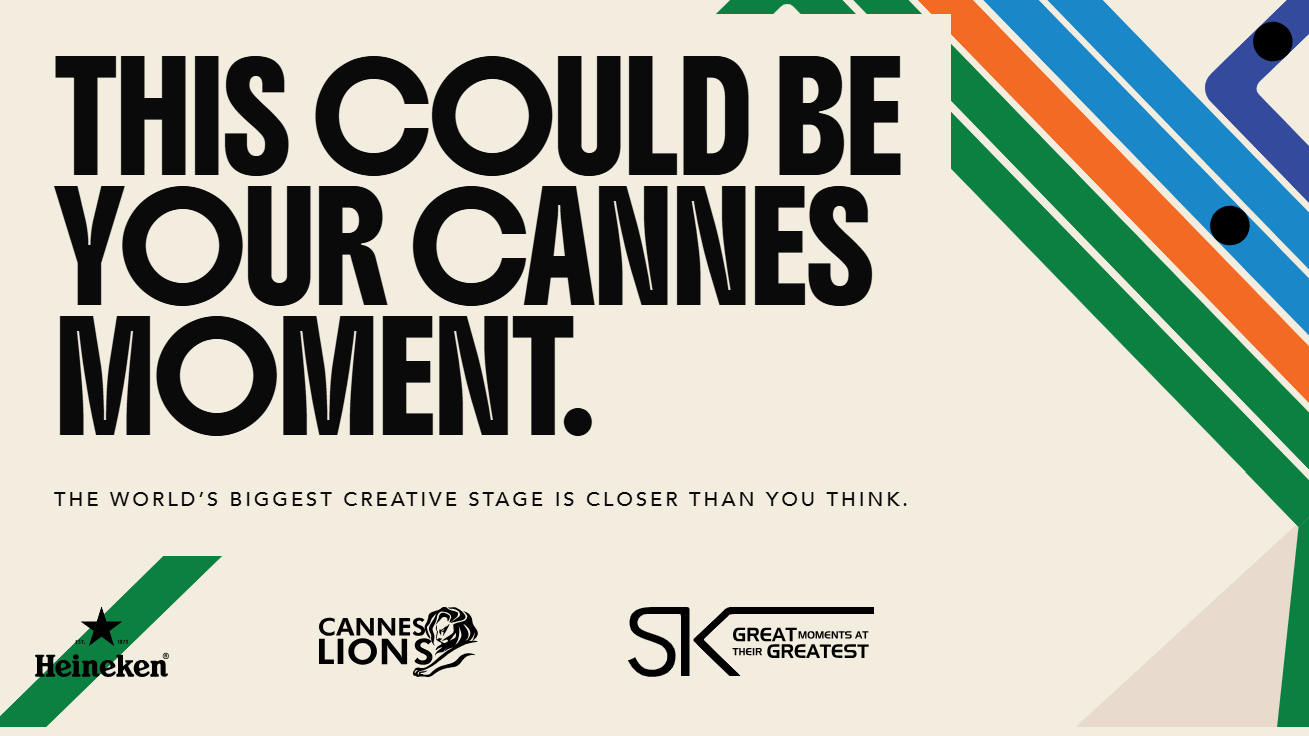
On 31 March 2026, South Africa’s creative pulse beat louder than ever as Ster-Kinekor, the official local representative of the Cannes Lions International Festival of Creativity, alongside Heineken Beverages, unveiled the winners of the Cannes Young Lions South Africa 2026 competition — a platform where raw talent meets global opportunity.
What emerged was not just a list of winners.
It was a statement.
South Africa’s next generation of creatives is not waiting for the future.
They are building it.
A Competition That Mirrors a Rising Creative Powerhouse
This year’s competition didn’t just grow — it surged.
With over 150 teams entering, the 2026 edition reached a new high, both in participation and in the calibre of ideas submitted. It was a clear signal that South Africa’s creative industry is not only expanding, but evolving — sharper, bolder, and more globally competitive than ever before.
But this is not a competition for the faint-hearted.
Participants were given just 48 hours — two days to conceptualise, strategise, and execute ideas that could stand shoulder-to-shoulder with the best in the world.
No second chances.
No extended timelines.
Just instinct, insight, and execution under pressure.
And from that crucible, two teams rose above the rest.
Film Category: Reclaiming the Magic of Cinema
In the Film category, the brief was deceptively simple: create a 45–60 second commercial that reminds young South Africans why cinema still matters.
In an era dominated by streaming platforms, where content is consumed in fragments between notifications, ads, and endless scrolling, the challenge demanded more than nostalgia.
It demanded truth.
And that truth came to life in Return to Cinema — the winning concept by Peter Maluleke and Rosemary Mabasa from TBWA.
Their insight was piercing in its simplicity: convenience has come at a cost.
Streaming may be accessible, but it is rarely immersive.
The modern viewing experience is fractured — interrupted by messages, alerts, and distractions that dilute storytelling. In contrast, cinema remains sacred. A space where stories unfold uninterrupted. Where attention is undivided. Where emotion is fully felt.
Return to Cinema didn’t just advertise film.
It defended the experience of storytelling itself.
Digital Category: Reimagining Johannesburg Through Connection
If the Film category looked inward at how we consume stories, the Digital category turned outward — toward the city itself.
Participants were tasked with reimagining Johannesburg’s inner city, transforming it into something aspirational, culturally relevant, and shareable in a digital-first world.
It was a challenge rooted in perception.
And the winning team answered it with innovation.
Jessica Babsy and Pippa Browning from VML developed Inner Circle — a concept that bridges the digital and physical worlds in a way that feels both intuitive and revolutionary.
Drawing inspiration from the familiar “Close Friends” feature on social media, the idea transforms Johannesburg into an exclusive, city-wide experience.
As curated stories go live online, out-of-home screens and venue facades mirror the same visual cues — creating a seamless connection between what people see on their phones and what they experience in real life.
The result?
A living, breathing network of curated urban moments — unlocking experiences tied to Heineken and turning the city into a shared, interactive story.
It’s not just marketing.
It’s city-making.
Judging Excellence in a Highly Competitive Arena
Selecting winners from such a competitive field was no easy task.
A panel of leading industry judges — each bringing years of expertise across strategy, storytelling, and creative execution — was tasked with identifying ideas that didn’t just meet the brief, but elevated it.
The consensus was clear: the standard of work this year was exceptional.
Not just in execution, but in thinking.
These were ideas rooted in insight, driven by relevance, and designed to resonate beyond borders.
From Local Brilliance to Global Recognition
For the winning teams, this is more than a victory.
It is a gateway.
They will now go on to represent South Africa at the Cannes Lions International Festival of Creativity in France this June — competing against the world’s best young creatives on one of the industry’s most prestigious stages.
Lynne Wylie, Chief Marketing Officer of Ster-Kinekor Theatres, expressed confidence in the Film category winners, noting their potential to represent both the brand and the country with distinction on the global stage.
Andrea Quaye, Marketing Director at Heineken Beverages, reinforced the significance of the platform itself — describing Cannes Young Lions as a powerful engine for unlocking talent and showcasing creativity as both a cultural force and a driver of commercial success.
More Than a Competition — A Career Catalyst
The Cannes Young Lions South Africa competition has always been about more than winning.
It is about visibility.
Opportunity.
Trajectory.
For many participants, it represents a defining moment — a chance to step beyond local recognition and into the global creative arena.
It is where emerging talent becomes industry leaders.
Where ideas become influence.
Where South Africa’s voice becomes impossible to ignore.
A Nation of Storytellers, Ready for the World
What this year’s competition ultimately reveals is something far greater than individual success.
It reveals a nation rich in perspective.
In creativity.
In fearless thinking.
From redefining the cinema experience to reimagining urban identity, these young creatives are not just responding to briefs — they are shaping conversations.
And as they prepare to take on the world stage in France, they carry with them more than just ideas.
They carry the weight — and the brilliance — of South Africa’s creative future.
And if 2026 is anything to go by, that future is not just bright.
It’s unstoppable.