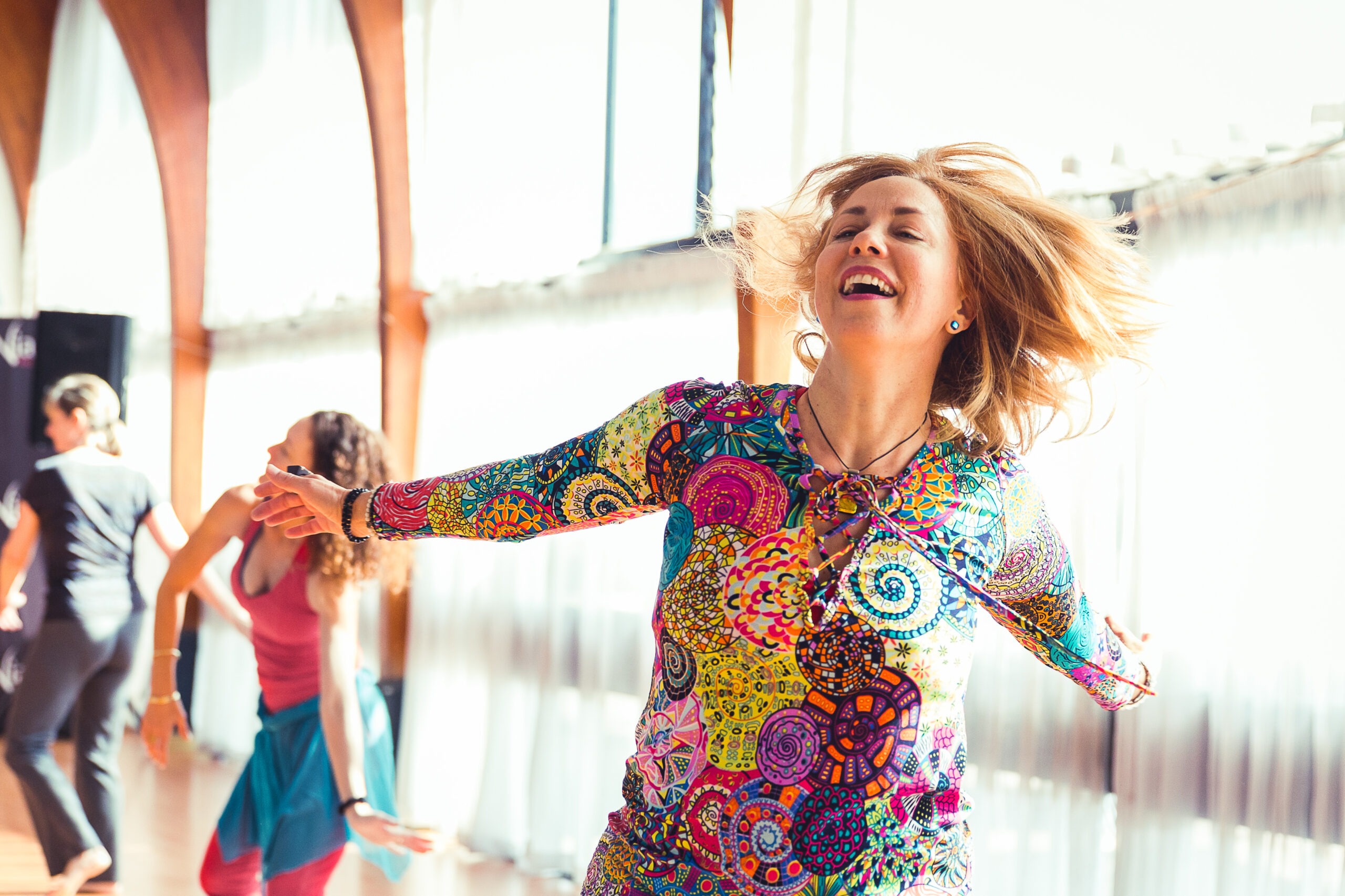
There is a moment, somewhere between the rhythm of music and the instinct of the body, where movement stops being exercise and becomes something else entirely. Not performance. Not routine. But expression.
This is where Nia lives.
In a world increasingly defined by structured workouts, performance metrics, and rigid routines, Nia offers something radically different — a return to movement that feels natural, intuitive, and deeply human. It is not just a fitness practice. It is a philosophy of motion, a celebration of the body as it is, and an invitation to reconnect with joy.
Where Fire Meets Flow
At first glance, Nia seems almost impossible to define. It draws from the fiery kicks and precision of martial arts, the expressive passion of dance forms like flamenco, the grounded stillness of yoga, and the spontaneity of freestyle movement. But what makes it powerful is not just the combination — it is the way these elements are woven together into something seamless.
Structured, yet never restrictive. Guided, yet deeply personal.
Participants often describe the experience in emotional terms rather than technical ones. Joyful. Freeing. Restorative. The kind of movement that doesn’t just work the body, but shifts the mood, clears the mind, and reconnects you to yourself.
At its core, Nia integrates nine movement forms across three disciplines: martial arts, dance arts, and healing arts. The result is a practice that engages strength, flexibility, coordination, and awareness — all at once.
A Journey That Begins with a Yes
For Susan Sloan, the journey into Nia began not with hesitation, but with instinct.
In 2003, she walked into her first class — and something clicked.
Within weeks, curiosity turned into commitment. She attended a workshop and soon enrolled in the intensive seven-day White Belt training to become an instructor. What she found was more than just a new discipline. It was a meeting point of everything she had explored before.
Her background spanned ballet, modern dance, jazz, yoga, Tai Chi, Qi Gong, and healing practices like Reiki. Nia did not replace these experiences — it unified them.
“It felt like a meeting point between discipline and freedom, where movement could be expressive, energising and healing at the same time,” she explains.
Today, that initial spark has grown into a thriving practice. Sloan now facilitates 14 classes per week alongside a team of eight teachers — a reflection not only of her dedication, but of the growing demand for a more holistic approach to movement.
The Body’s Way
At the heart of Nia lies a deceptively simple concept: the body already knows how to move.
The practice is built around 52 foundational movements designed to guide participants back to what practitioners call “the body’s way.” These movements are not about forcing the body into shape, but about unlocking its natural intelligence.
Over time, this approach can release stored tension, build strength and flexibility, improve posture, and deepen body awareness. But perhaps more importantly, it teaches something often overlooked in modern fitness culture — how to listen.
To sensation.
To breath.
To emotion.
Movement becomes less about control, and more about conversation.
Strength, Healing and Rediscovery
For Sloan, one of the most transformative aspects of Nia was discovering strength in unexpected places.
Through the Tae Kwon Do-inspired elements of the practice, she accessed a sense of power and fire that balanced the softer, more intuitive sides of her movement identity. It was not about becoming stronger in a traditional sense, but about embracing a fuller range of expression.
This transformation extended beyond the studio.
Concerned about her knees, Sloan found that Nia offered practical, physical benefits. Improved alignment, better posture, and increased coordination helped her move through daily life with greater ease. Walking, standing, even resting — all became more conscious, more supported.
It is this duality that defines Nia: it is both expressive and functional, emotional and physical, gentle and powerful.
The Joy That Lingers
But beyond the technique, beyond the structure, there is something else that keeps people coming back.
Joy.
Not the fleeting kind, but the kind that settles into the body and stays there. The kind that shows up in posture, in energy, in the way someone carries themselves long after the music has stopped.
Sloan has witnessed this transformation in her students time and again.
From improved mobility and muscle tone to clearer thinking, lighter moods, and renewed confidence — the changes are both visible and deeply personal. In many cases, the impact extends beyond the individual. Families notice. Friends notice. The energy shifts.
People return not just because they feel better during class — but because they feel different afterwards.
Movement for Every Body
One of Nia’s most powerful qualities is its accessibility.
There is no prerequisite. No expectation of fitness. No requirement to “keep up.” Whether young or old, experienced or new, every participant is invited to move in a way that feels right for their body.
It is not about perfection. It is about participation.
In a culture that often equates fitness with intensity, Nia offers a quieter, more inclusive alternative — one that prioritises connection over competition.
More Than Movement
Ultimately, Nia is not just about dancing. It is about rediscovering what it means to feel at home in your own body.
It is about reclaiming movement as something joyful, expressive, and deeply personal. It is about understanding that the body is not something to fix, but something to listen to.
And perhaps most importantly, it is a reminder that sometimes, the most powerful transformations begin not with a plan — but with a simple willingness to begin.
For more information on classes and the Nia journey, visit www.lifeasartwithsusan.co.za and follow @susansloan_nia.