
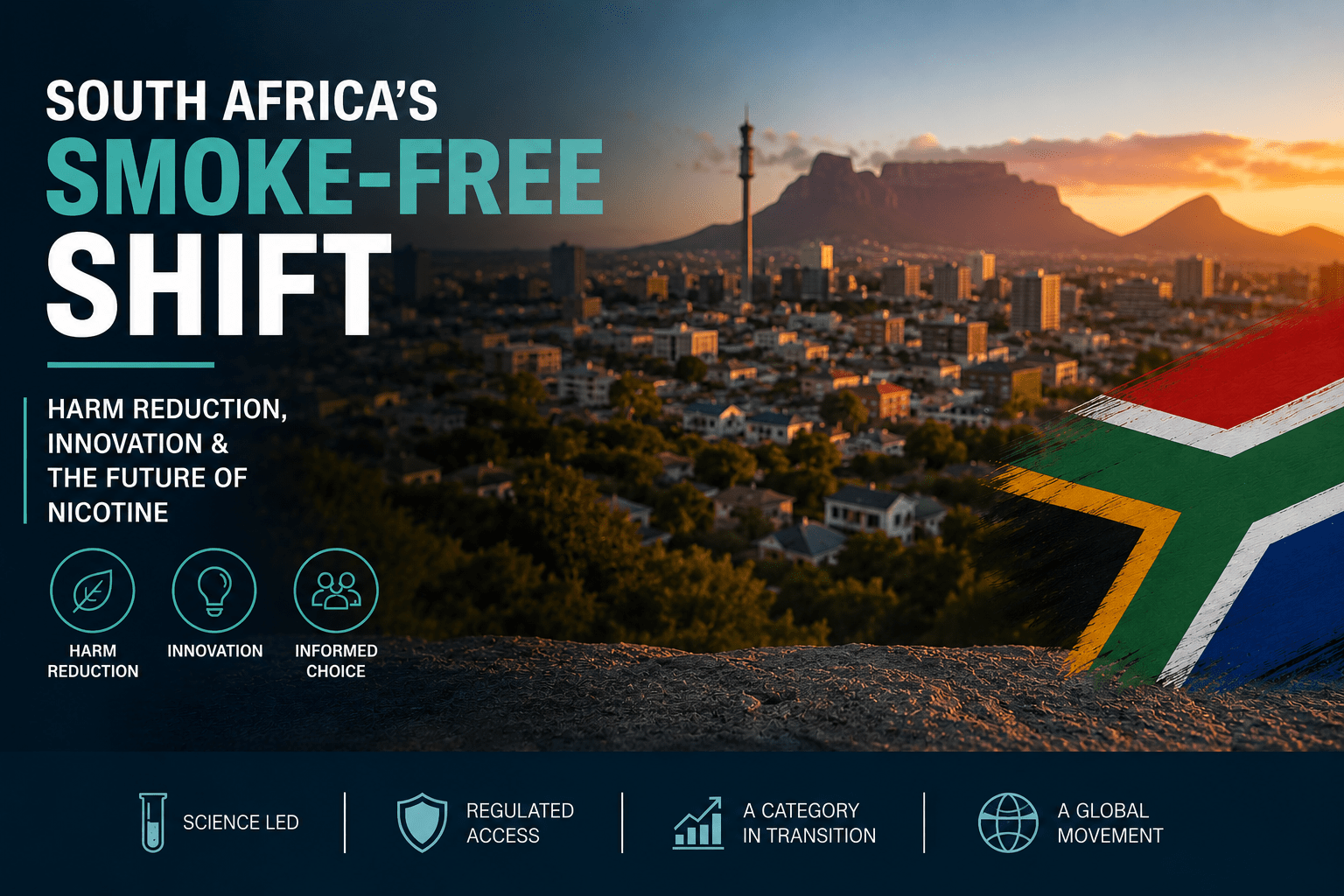
In South Africa, the conversation around nicotine is changing. Quietly, steadily, and sometimes controversially, a new generation of smoke-free alternatives is reshaping how adults think about nicotine consumption, public health, and personal choice.
While the country awaits the parliamentary outcome of the proposed Tobacco Products and Electronic Delivery Systems Control Bill, one thing is becoming increasingly clear: the future debate is no longer only about smoking. It is about harm reduction, innovation, regulation, and the growing number of adult consumers looking for alternatives to combustible cigarettes.
For decades, cigarettes dominated the nicotine landscape. But globally, technology and science have accelerated the emergence of smoke-free products — from nicotine pouches to vaping systems — creating a new category that positions itself not as risk-free, but as potentially less harmful alternatives for adult smokers who would otherwise continue smoking traditional cigarettes.
In South Africa, products such as ZYN nicotine pouches and VEEV electronic vaping devices are entering a market where awareness around smoke-free alternatives is growing, particularly among adult consumers seeking different experiences from conventional smoking.
The Bigger Global Shift
The rise of smoke-free alternatives is not happening in isolation. Around the world, governments, researchers, and public health experts continue debating the role harm reduction products could play in reducing smoking-related diseases.
Globally, cigarette smoking remains one of the leading causes of preventable illness and death. The World Health Organization continues to warn about the dangers of tobacco consumption, while governments simultaneously grapple with how to regulate newer nicotine delivery systems such as vaping products and oral nicotine pouches.
The debate has become especially intense because smoke-free products occupy a complicated middle ground. They are not harmless. Most contain nicotine, which is addictive. Yet many advocates argue that eliminating combustion — the burning of tobacco — may significantly reduce exposure to harmful chemicals commonly associated with smoking.
That distinction is now influencing policy discussions across multiple countries, including South Africa.
The proposed Tobacco Products and Electronic Delivery Systems Control Bill seeks to introduce stricter regulations around smoking, vaping, packaging, advertising, and electronic delivery systems. Among the proposals are plain packaging requirements, expanded smoke-free zones, and tighter controls over electronic nicotine products.
At the same time, recent discussions within Parliament and industry circles have highlighted growing conversations around differentiated regulation between combustible cigarettes and non-combustible smoke-free alternatives.
That distinction matters.
The Human Story Behind Harm Reduction
Beyond legislation and policy documents lies something more personal: real people trying to change long-standing habits.
For many adult smokers, quitting nicotine entirely remains difficult. Some succeed. Many struggle. Others continue searching for alternatives that better fit their lifestyles, social environments, or health goals.
This is where smoke-free products have started gaining traction globally.
Nicotine pouches such as ZYN, for example, are tobacco leaf-free oral nicotine products placed discreetly under the lip, producing no smoke, ash, or vapour. Vaping systems such as VEEV, meanwhile, heat liquid solutions into vapour rather than burning tobacco through combustion.
For some adult consumers, the appeal is convenience and reduced smell. For others, it is discretion in social spaces. And for many, it is part of a broader personal transition away from traditional cigarettes.
The shift is also cultural.
Smoking once symbolised sophistication, rebellion, or status. Today, younger adult consumers increasingly associate modern lifestyles with wellness, fitness, flexibility, and reduced disruption. Smoke-free alternatives are positioning themselves within that evolving identity — sleek, minimalist, tech-driven, and integrated into contemporary urban living.
Across Johannesburg, Cape Town, Durban, and beyond, conversations around smoke-free products are increasingly happening in lifestyle spaces rather than traditional tobacco environments. Cafés, creative communities, nightlife scenes, entrepreneurs, and digital-first consumers are becoming part of the evolving nicotine narrative.
Innovation Meets Regulation
Yet innovation rarely moves faster than regulation without friction.
South Africa’s proposed Tobacco Bill has become one of the country’s most closely watched public health legislative discussions in recent years. The Bill aims to strengthen tobacco control measures and regulate electronic delivery systems more comprehensively.
Supporters argue stricter regulations are necessary to protect public health, especially among young people.
Others argue the legislation should clearly differentiate between combustible cigarettes and smoke-free alternatives, particularly within harm reduction frameworks.
That debate reflects a broader international tension playing out across markets worldwide.
Countries continue asking difficult questions:
- Should all nicotine products be regulated equally?
- Should smoke-free alternatives be treated differently from combustible cigarettes?
- Can harm reduction coexist with strong youth protection policies?
- How do governments balance innovation, public health, consumer rights, and illicit trade concerns?
There are no universally agreed answers yet.
But one undeniable reality remains: adult consumers are increasingly aware that alternatives exist.
A Category in Transition
The smoke-free category itself is still evolving rapidly.
Globally, major companies are investing billions into smoke-free technologies and alternative nicotine products. Industry reports and international market activity continue showing strong growth in nicotine pouches and electronic nicotine delivery systems.
That growth is reshaping not only consumer habits, but also business strategies, retail environments, and public health conversations.
For South Africa, the coming months could prove pivotal as lawmakers continue evaluating the future framework governing tobacco and electronic delivery systems.
Regardless of legislative outcomes, the conversation around harm reduction is unlikely to disappear.
Because ultimately, this is no longer just a tobacco story.
It is a story about technology disrupting legacy industries.
About adults rethinking long-established behaviours.
About regulation trying to keep pace with innovation.
And about a society navigating the complex intersection between personal freedom, public health, and scientific evolution.
The smoke may be fading, but the debate is only getting started.