
Teenagers are often described as the future. Yet many are trying to build that future while navigating some of the toughest challenges South Africa has to offer.
From social media pressure and mental health struggles to poverty, violence, school dropout and limited economic opportunities, today’s adolescents are growing up in a world that can feel overwhelming. At the same time, these years represent one of the most important developmental periods in a person’s life.
Recognising both the challenges and opportunities that come with adolescence, Hold My Hand has launched a new free resource designed to help adults better support the teenagers in their lives.
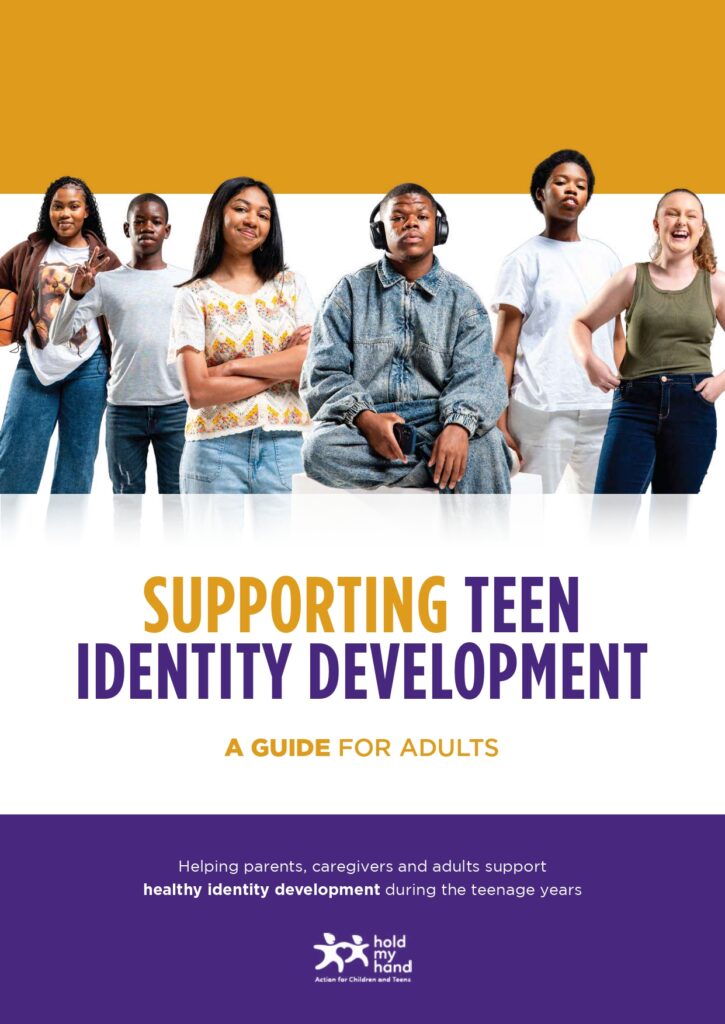
Supporting Teen Identity Development: A Guide for Adults provides practical, easy-to-understand guidance for parents, caregivers, teachers and mentors seeking to understand what young people experience as they transition into adulthood.
Written in accessible language, the guide explores key areas of adolescent development and equips adults with tools they can use immediately to strengthen their relationships with teenagers.
Why Identity Matters More Than Ever
Adolescents account for more than 17% of South Africa’s population.
Despite representing a significant portion of the country, this age group has often found itself overlooked in development planning. They are no longer children in need of early childhood services, yet they are still years away from participating fully in civic life through voting and other adult responsibilities.
However, experts continue to highlight adolescence as a critical window of opportunity.
These formative years are when young people begin building their identities, developing resilience, establishing meaningful connections and discovering a sense of purpose. They are also years marked by strong convictions and a willingness to act on those beliefs, something South Africa witnessed during the historic 1976 Soweto Uprising.
The choices, relationships and experiences encountered during adolescence can significantly influence future outcomes.
Helping Adults Understand the Teenage Journey
The newly released guide tackles some of the most important topics affecting young people today.
Readers will find information covering adolescent brain development, peer pressure, mental health challenges and the growing influence of social media.
Importantly, the guide goes beyond theory.
It includes practical tools, conversation starters and actionable prompts that adults can use immediately to create supportive environments where teenagers feel heard, understood and valued.
Rather than positioning adults as experts who must have all the answers, the guide encourages a more meaningful approach built on listening, learning and showing up consistently.
“Hold My Hand created the guide to give adults the tools to show up for the teenagers in their lives,” says Shirley Eadie, Lead Teen Identity at Hold My Hand.
“Teens don’t need the adults in their lives to have all the answers – they just need adults to be present, willing to listen and learn.”
A Growing Need in South Africa
The transition from adolescence to adulthood is challenging under any circumstances.
For many South African teenagers, that journey unfolds alongside additional pressures including poverty, violence, HIV, gangsterism, school dropout risks and uncertainty about future opportunities.
In such environments, developing a strong sense of identity becomes more than a personal milestone.
It becomes a protective factor.
Research and experience continue to show that teenagers who feel supported, connected and understood are more likely to make safer choices, remain engaged in education and build positive pathways for the future.
A strong sense of identity can help young people stay grounded, even when external circumstances are difficult.
Supporting a National Priority
The release of the guide also aligns with broader national efforts aimed at improving outcomes for children and adolescents.
Building teenagers’ identity, agency and connectedness forms one of the ten priorities of the National Strategy to Accelerate Action for Children’s (NSAAC).
The Presidency-led initiative calls on government, civil society, families and the private sector to work together in creating better opportunities for South Africa’s children and teenagers.
By providing adults with practical support and knowledge, Hold My Hand’s guide contributes directly to this important national objective.
 Continuing the Conversation
The launch of the guide is only part of a wider conversation about adolescent development in South Africa.
The topic will be explored further during an upcoming webinar titled “The Power to Be(come): Why Adolescent Identity Matters in South Africa”, taking place on Wednesday, 24 June at 3pm on Zoom.
Grounded in the NSAAC framework and drawing on new insights from the Human Sciences Research Council (HSRC), the discussion will examine what helps teenagers develop purpose, belonging and agency, as well as the barriers that stand in their way.
The webinar will feature Dr Rose September (DGMT), Dr Alude Mahali (HSRC), Dr Shahieda Jansen (Awehmagents) and Thando Nkosi (Hold My Hand), with facilitation by Dr Katlego Selikane (Keready).
For adults looking to better understand, support and empower the young people in their lives, the message behind both the guide and the webinar is clear: teenagers do not need perfection from the adults around them.
They need presence, connection and the confidence that someone is willing to walk alongside them as they discover who they are becoming.
Supporting Teen Identity Development: A Guide for Adults is available as a free download from Hold My Hand and is designed to be revisited as teenagers grow, change and navigate the journey to adulthood.