South Africans are being encouraged to rethink the way they manage waste as a new nationwide competition shines a spotlight on one of the country’s most pressing but often overlooked issues: the powerful connection between environmental health and child wellbeing.
The #WasteNot competition is inspiring people across the country to get creative about reducing, reusing and recycling, while demonstrating that even small actions can contribute to healthier communities and brighter futures for children.
The initiative is a collaboration between Create Change, an initiative of the DG Murray Trust (DGMT), and Hold My Hand, a national campaign supporting the National Strategy to Accelerate Action for Children (NSAAC). The strategy places children and teenagers at the centre of South Africa’s development goals while encouraging meaningful action to protect the environment and reduce pollution.
Why Waste Matters for Children’s Health
The competition arrives at a time when waste management remains an ongoing challenge in many parts of South Africa. According to the campaign, waste collection services remain uneven, with only around six in ten households receiving weekly waste collection, and some communities experiencing even less frequent services.
Where rubbish goes uncollected, many households resort to burning waste, releasing harmful pollutants into the air. Survey findings cited by the campaign indicate that 55% of South African households burn their waste weekly or every second week, exposing communities—particularly children—to harmful smoke.
Improper waste disposal also creates several other health risks. Accumulated rubbish contaminates water sources, attracts rodents and other disease carriers, and blocks stormwater drainage systems, increasing the risk of flooding during heavy rainfall.
The Environment Children Grow Up In Matters
Rahima Essop, Communications Director at DGMT, says the relationship between environmental conditions and children’s health is undeniable.
“The link between children’s health and environmental health is clear — when the environment is sick, our children suffer.”
Children living in informal settlements and rural communities often face greater exposure to these environmental hazards. They may play near illegal dumping sites or breathe in toxic smoke from burning waste, increasing their risk of illness.
Repeated infections can also affect children’s nutritional health.
According to Essop, children who experience frequent stomach infections while already suffering from malnutrition face a greater risk of stunting because their bodies struggle to absorb essential nutrients. Proper waste management, alongside effective water and sanitation systems, therefore plays an important role in protecting children’s long-term development.
 Small Everyday Actions Can Make a Difference
South Africa generates approximately 122 million tonnes of waste every year, including household waste, with most of it ending up in landfill sites that are rapidly reaching capacity.
The campaign recognises that solving the country’s waste challenges requires action from businesses, municipalities, civil society and individuals alike.
Companies are encouraged to reduce unnecessary packaging and minimise the production of disposable products, while municipalities are urged to improve waste collection services, particularly in underserved communities, and expand recycling infrastructure.
Currently, only 10.5% of households separate recyclable packaging from general waste, highlighting significant room for improvement.
At household level, simple actions can make a meaningful difference, including:
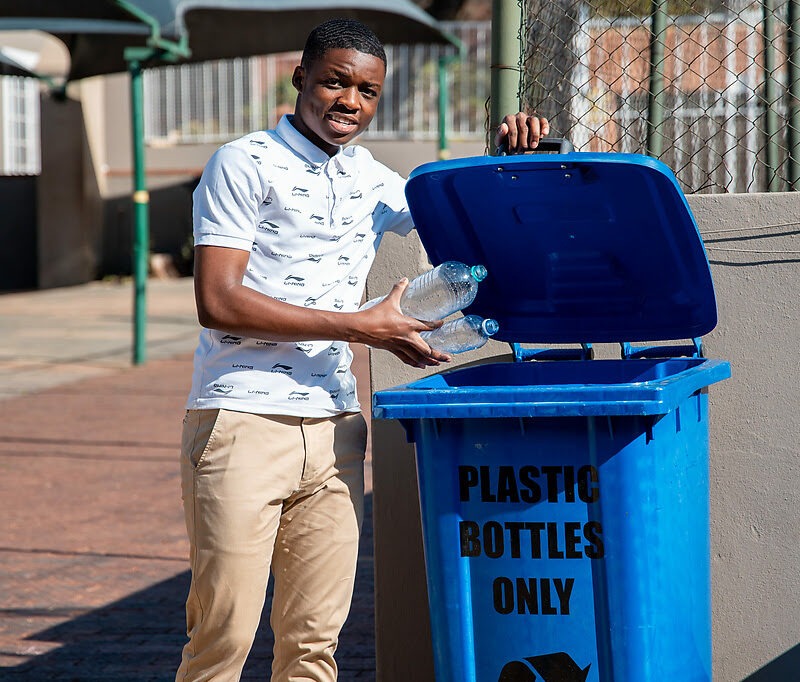
- Choosing reusable products instead of disposable alternatives.
- Recycling household waste wherever possible.
- Repurposing items before discarding them.
- Organising or participating in community clean-up initiatives.
- Encouraging neighbours and families to develop recycling habits.
Mesuli Kama, Social Mobilisation Lead at Hold My Hand, says these are exactly the types of practical actions the competition aims to celebrate.
Rather than placing blame on individuals, the campaign focuses on recognising positive community initiatives while encouraging more South Africans to become active participants in creating cleaner, healthier environments.
A Competition That Rewards Positive Action
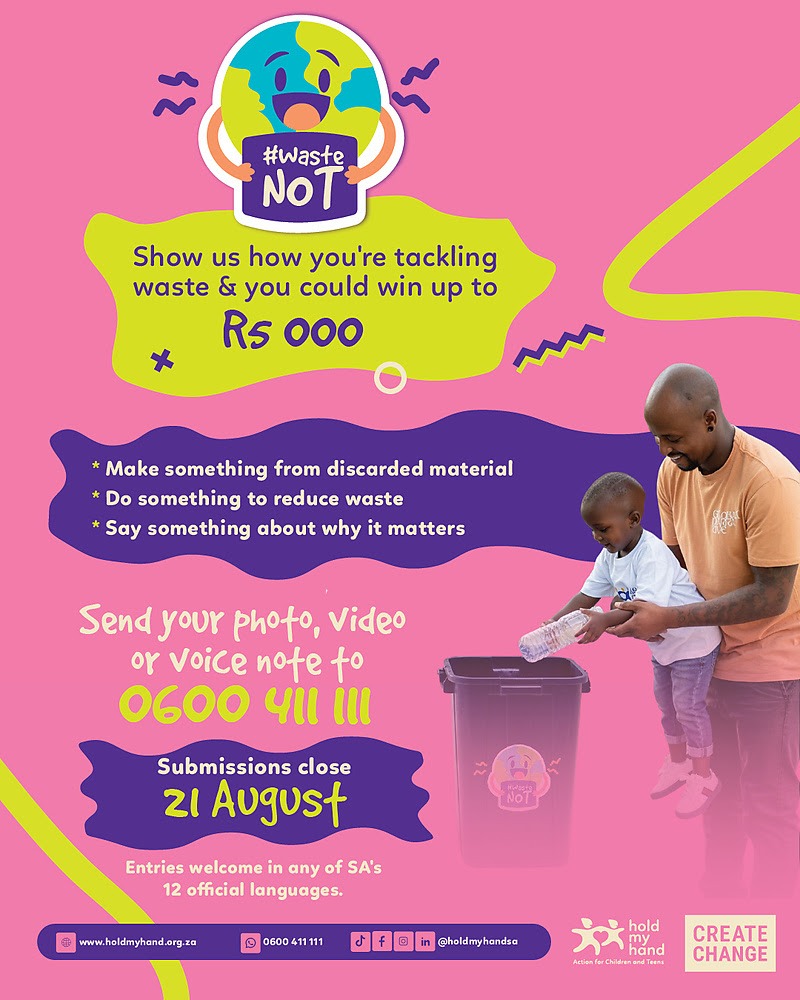
The Waste Not competition invites South Africans to showcase how they are helping reduce waste in their communities.
Participants can submit a photo or video demonstrating an activity or project focused on reducing, reusing or recycling waste, together with a short voice note or written explanation describing what they created or accomplished.
Competition Details
- Competition opens: 21 July 2026
- Closing date: 21 August 2026
- Who may enter: Any South African resident (entries involving minors require parental or guardian consent)
- How to enter: Send a photo or video via WhatsApp to 0600 411 111, accompanied by a short text or voice note explaining the project
- Prizes: Ten prizes ranging from R1 500 to R5 000
By encouraging practical action instead of assigning blame, the #WasteNot campaign hopes to inspire more South Africans to recognise that cleaner environments lead to healthier communities—especially for children.
Ultimately, the initiative reinforces a simple but powerful message: protecting the environment is also an investment in the health, wellbeing and future of South Africa’s next generation.