
What if your office could move with you?
A desk in the morning. A client meeting over lunch. A change of scenery in the afternoon. Perhaps a quick coffee, a grocery stop or a gym session before heading home.
In many parts of Johannesburg, that kind of day can mean getting back into the car again and again.
In Rosebank, it can be much simpler.
That is the thinking behind Workshop17’s two locations in the precinct: W17 The Bank and W17 Firestation.
Located only a few hundred metres apart, the two spaces give members the option to move between them during the day without leaving the Rosebank precinct.
It is a small distance.
But it can make a big difference to how a working day feels.
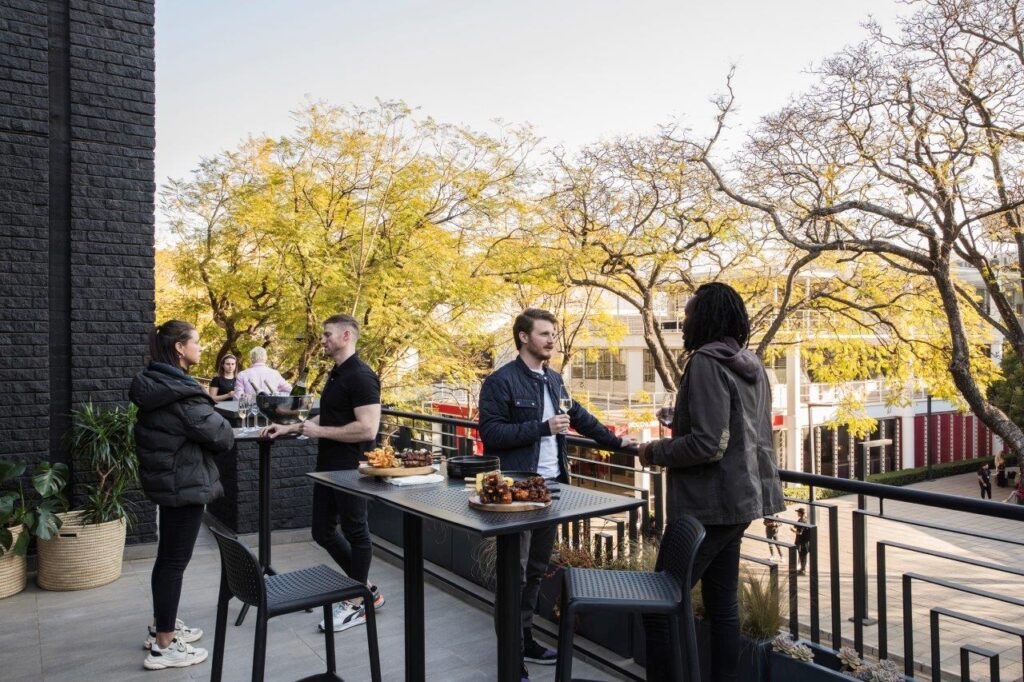 Two spaces. One neighbourhood.
W17 The Bank and W17 Firestation are not identical spaces, and that is part of the appeal.
They offer different environments while keeping members within the same neighbourhood.
The names themselves carry a piece of Rosebank’s history. Both locations take their names from what previously occupied their respective sites, reflecting Workshop17’s approach of repurposing existing buildings where possible and giving established spaces a new purpose.
At W17 The Bank, the experience begins with accessibility.
The location is a short walk from the Gautrain and spans three floors, bringing together workspaces, meeting rooms, a café and different areas where members can work or meet.
It suits the days when the calendar refuses to slow down.
There may be meetings, clients arriving, colleagues coming and going or a trip into Rosebank from elsewhere in Gauteng.
Then there is W17 Firestation.
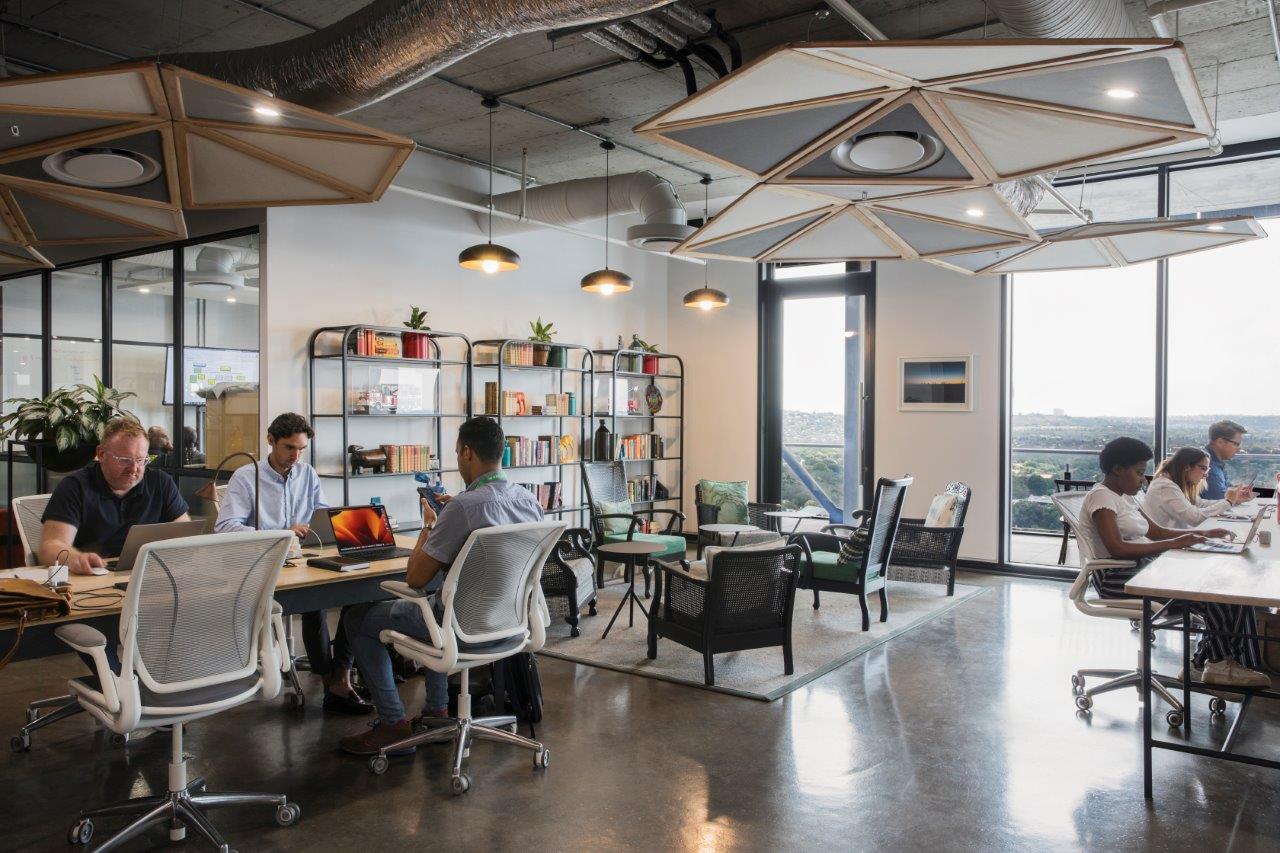
Located on the 10th floor, it offers a noticeably different atmosphere, with abundant natural light and broad views across Johannesburg.
The two locations are close enough to make moving between them practical, yet different enough to give members a genuine change of environment.
Sometimes that is all an afternoon needs.
Work does not always happen in one place
For Simon Manda, Managing Editor of Joburg Times and ThisAbility, having both locations nearby provides precisely that flexibility.
“Having two Workshop17 spaces within the same Rosebank precinct gives us the freedom to choose the environment that suits the day, while still having the facilities, accessibility and independence our teams need,” he says.
It is an idea that reflects a broader change in how people approach work.
The traditional working day often meant arriving at one office, staying there and leaving when the day was done.
Today, the working day can look very different.
A freelancer might need a focused desk in the morning and a quiet space for a video call later.
A business team might need a meeting room for an hour before returning to individual work.
A client meeting might take priority at lunchtime.
And sometimes, simply changing your surroundings can help reset the day.
Workshop17’s Rosebank offering is built around that flexibility.
Where work meets everything else
For Penelope Meniere, National Marketing Manager at Workshop17, the location is central to the concept.
“Most of us don’t spend our working days doing one thing in one place anymore,” she says.
“You might need a desk for a few hours, somewhere to meet a client and then a change of scenery for the afternoon.”
Rosebank makes those transitions easier.
The precinct brings together restaurants, shops, hospitality, residential spaces and cultural offerings, while the Gautrain provides a direct connection to other parts of Johannesburg and Gauteng.
That combination means work does not have to exist separately from everything else happening around it.
Need lunch?
Walk out.
Meeting finished?
Grab a coffee.
Want to change your working environment?
Move to the other Workshop17 location.
Finished for the day?
The rest of Rosebank is right there.
A walkable working day
Rosebank Management District Manager Mikhaela Donaldson describes the precinct as a place where “commercial, retail, hospitality, residential and cultural offerings come together within a compact, walkable area, supported by Gautrain access and strong connections to the rest of Johannesburg”.
That walkability is an important part of the proposition.
The value is not only having somewhere to work.
It is having somewhere to work that sits within a neighbourhood capable of supporting the rest of the day.
For people who spend much of their working lives moving between meetings, tasks and commitments, that can remove some of the friction from everyday life.
And in Johannesburg, where getting from one place to another can quickly consume valuable time, fewer unnecessary journeys can be a meaningful advantage.
Accessibility matters too
The experience is also about making the spaces practical for different users.
Manda highlights accessibility features at both Workshop17 locations, including inclusive toilets, lifts with accessible controls and safe parking.
Members can also book meeting rooms and manage services through the Workshop17 app.
These details may seem small.
But they are the kinds of practical features that can shape whether a workspace genuinely works for the people using it.
Your day, your way
There is no prescribed way to use the two Rosebank locations.
You could start the morning at The Bank because an early meeting makes its Gautrain proximity convenient.
You could step outside for lunch.
You could spend the afternoon at Firestation, swapping the busy energy of the lower floors for natural light and a Johannesburg view.
You could meet someone for a drink afterwards.
Or you could simply choose one location and stay there all day.
That flexibility is the point.
For freelancers, teams and businesses using Workshop17, Rosebank becomes more than somewhere they travel to work.
It becomes part of the territory in which they work.
The desk is there when they need it.
So are the meeting spaces, the coffee, the restaurants, the shops, the transport connections and the rest of the neighbourhood.
The office is no longer the whole story
The idea behind Workshop17’s two Rosebank locations ultimately speaks to a simple shift.
Work is still important.
But it does not have to occupy an isolated part of the day.
When a workspace sits within a connected, walkable neighbourhood, the boundaries between work and life become a little less rigid.
And perhaps that is the real appeal of Rosebank.
You can work.
You can meet.
You can eat.
You can run an errand.
You can change your surroundings.
And you can do much of it without repeatedly getting back into your car.
Two spaces. One neighbourhood. A working day with more room to move.
In Johannesburg, that is a proposition worth considering.
More information: Workshop17