
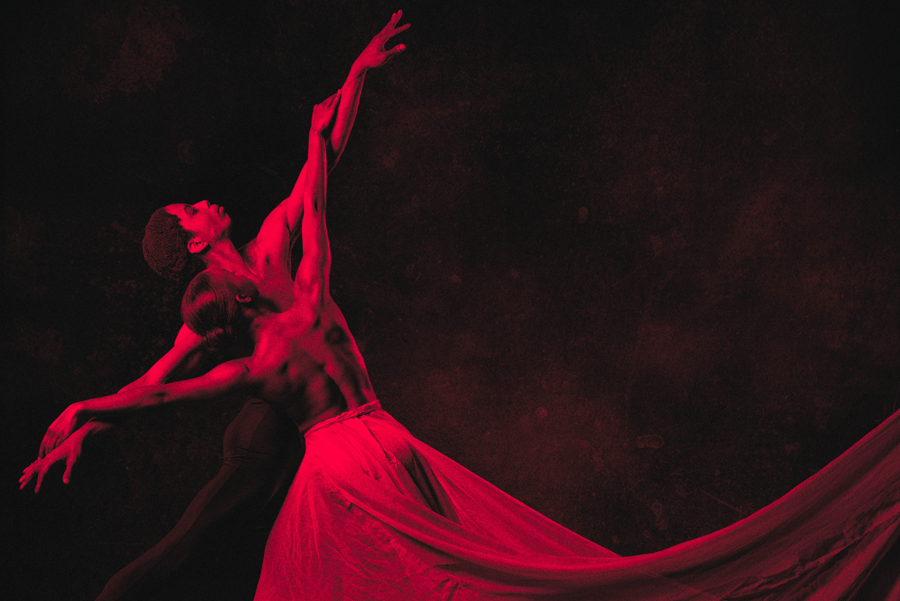
This July, one of the oldest tragedies ever written will arrive on a Johannesburg stage carrying an entirely new heartbeat.
Not Greek.
Not European.
But unmistakably African.
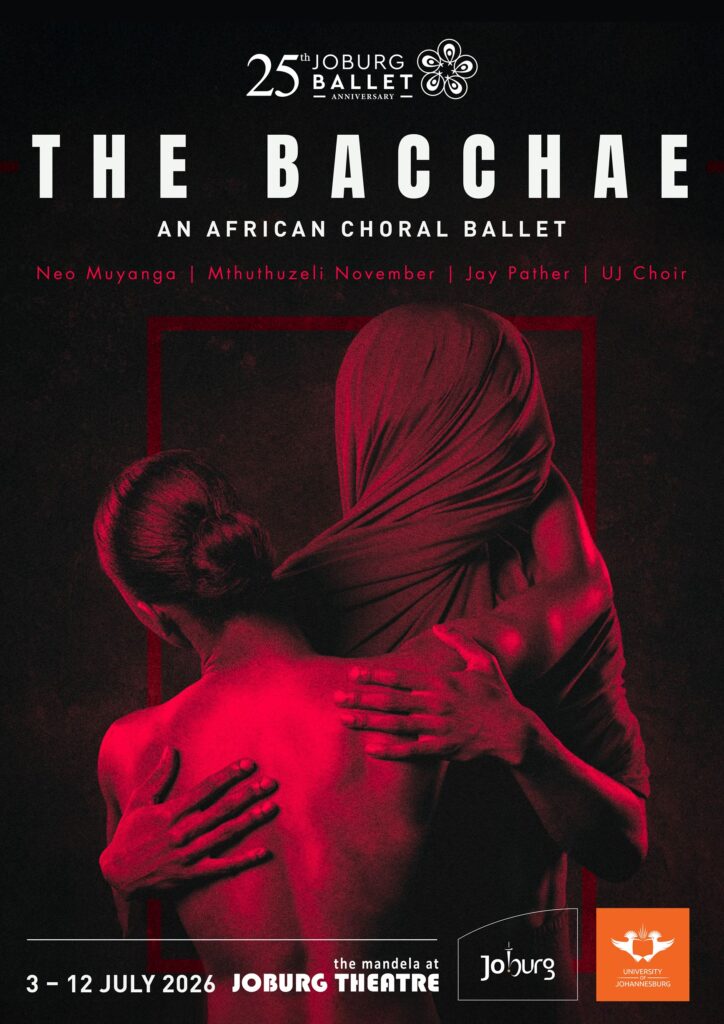
In a bold artistic collaboration between Joburg Ballet and UJ Arts & Culture, Euripides’ classical masterpiece The Bacchae is being transformed into something never before seen on the global stage: The Bacchae: An African Choral Ballet.
Premiering as part of Joburg Ballet’s landmark 25th Anniversary Season, the production will run from 3 to 12 July at Joburg Theatre — and it promises far more than a traditional ballet performance.
This is a collision of dance, theatre, ritual, live orchestration, choral power and African storytelling.
A reimagining that does not simply adapt a European classic, but interrogates it, reshapes it and roots it within contemporary South African realities.
And in doing so, it may mark one of the most ambitious multidisciplinary stage productions South Africa has seen in years.
A World-First Choral Ballet
At the heart of the production lies a groundbreaking artistic experiment: the creation of what the collaborators describe as a “world-first Choral Ballet.”
The work brings together an extraordinary collective of South African creative powerhouses.
Directed by visionary theatre-maker Jay Pather, choreographed by internationally acclaimed choreographer Mthuthuzeli November, and conceptualised and composed by celebrated composer Neo Muyanga, the production fuses ballet with the soaring force of the 80-member UJ Choir and a live chamber orchestra.
Together, these elements transform Euripides’ ancient tragedy into an urgent meditation on modern society, spirituality, power and excess.
“The Bacchae is a tussle between passion, excess, the irrational and allowing the irrational to run free, as opposed to order, moderation and restraint,” said Pather.
“That dynamic sets itself very well at this time in our history, where societies across the world are feeling that tension and that pull.”
It is difficult to hear those words without recognising echoes of the current global moment:
political instability,
social fragmentation,
identity struggles,
moral conflict,
and societies wrestling with the balance between freedom and control.
When Ancient Myth Feels Uncomfortably Modern
Originally written by Euripides more than 2,000 years ago, The Bacchae remains one of the most psychologically explosive works in classical theatre.
The story follows Dionysus — god of ecstasy, liberation and divine chaos — as he arrives in the city of Thebes promising spiritual awakening and freedom from rigid societal order.
As his influence spreads, women abandon convention and collective voices rise in ecstatic rebellion.
Standing against him is Pentheus, the city’s young ruler, determined to restore discipline and suppress the growing movement.
But the deeper Pentheus resists, the more dangerously he is drawn toward the very force he seeks to destroy.
In this African adaptation, those tensions become amplified through music, movement and collective choral energy.
Muyanga’s score drives the emotional intensity of the work through intoxicating rhythm, layered orchestration and vocal force that merges ancient ritual with contemporary African resonance.
Meanwhile, Joburg Ballet’s dancers embody the conflict physically, using movement not merely as choreography, but as emotional language.
The result is expected to be immersive, visceral and emotionally charged.
More Than Ballet — A Cultural Statement
For Elroy Fillis-Bell, the production represents far more than a performance within the company’s Silver Jubilee celebrations.
It represents artistic evolution.
“Joburg Ballet’s 25th Anniversary Season promises a monumental year of dance with a range of exciting productions that will showcase the company’s rich history, artistic vision and institutional growth,” he said during the launch of the season.
But The Bacchae: An African Choral Ballet may ultimately become its defining artistic statement.
“This landmark production holds enormous potential for South Africa and beyond,” Fillis-Bell added.
“With the collaboration of UJ Arts & Culture and the expertise of the incredible creative team, ballet, choral music, theatre and visual design have been woven into a tapestry that transcends artistic boundaries to create a truly immersive, multi-disciplinary experience.”
Importantly, the production does something increasingly significant within global arts conversations:
it reclaims a traditionally European text through African interpretation rather than imitation.
“It reinterprets a European classic through African creativity,” Fillis-Bell explained, “giving audiences a work of international calibre that reflects the richness of our voices and traditions.”
Creating Space for Young South African Creatives
Beyond its artistic ambition, the collaboration also carries educational significance.
Pieter Jacobs emphasised that the production creates opportunities for artistic exchange and professional development, particularly for students within the University of Johannesburg’s Faculty of Art, Design & Architecture.
“UJ Arts & Culture’s collaboration with Joburg Ballet reflects our commitment to fostering bold, interdisciplinary work that is both locally grounded and globally resonant,” Jacobs said.
The project brings together professional artists, composers, choreographers and emerging creatives within a shared process of innovation and learning.
For young South African artists working alongside established industry leaders, the production becomes more than a performance.
It becomes mentorship in motion.
Why This Production Matters Right Now
At a time when many arts institutions globally are struggling to redefine relevance, The Bacchae: An African Choral Ballet feels strikingly timely.
It challenges rigid artistic categories.
It collapses boundaries between classical and contemporary.
It merges African choral tradition with European dramatic structure.
And it positions South African creativity not as adaptation, but as reinvention.
In many ways, the production reflects the broader evolution of African arts itself:
deeply rooted in history,
yet unafraid of experimentation.
Because ultimately, this is not simply a ballet about Dionysus, ecstasy or ancient Greece.
It is about modern humanity’s ongoing struggle between control and freedom.
Order and chaos.
Tradition and transformation.
And through African rhythm, African voices and African artistic imagination, one of history’s oldest stories may finally discover a new language powerful enough to speak directly to the world we live in now.












Politically Aweh: Poll Dancing Brings Politics, Comedy and Facts to Cape Town