In today’s world, our smartphones know almost everything about us.
They carry our private conversations, confidential business deals, passwords, personal photographs, financial records, creative ideas, and even our emotions. The modern mobile device has evolved far beyond communication. It has become a digital extension of identity itself.
Yet while smartphones continue to become smarter through artificial intelligence, one question has quietly grown louder in the background: who else is watching?
With the introduction of Privacy Display on the new Samsung Galaxy S26 Ultra, Samsung appears determined to answer that question in a bold yet understated way. In an age where AI is reshaping mobile experiences at lightning speed, Samsung is reminding users that innovation without privacy is incomplete.
And in doing so, the tech giant may have just transformed one of the most overlooked frustrations of smartphone use into one of the most important conversations of the mobile AI era.
When Public Spaces Stop Feeling Private
Anyone who has opened a sensitive email on a flight, responded to a confidential message in a coffee shop, or reviewed work documents during a commute understands the subtle anxiety of public screen exposure.
The modern world is hyperconnected, but it is also increasingly intrusive.
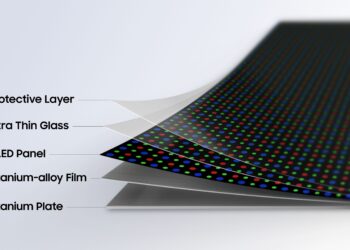
Samsung’s new Privacy Display feature aims to restore a sense of personal space by limiting screen viewing angles so that sensitive content remains visible only to the user. The concept may sound simple, but its real-world impact speaks directly to the changing realities of modern digital life.
Suddenly, the smartphone screen becomes personal again.
Whether handling contracts in an airport lounge, replying to messages in a crowded restaurant, or reviewing confidential scripts between television shoots, users can interact with their devices with a renewed sense of confidence and control.
It is not flashy innovation designed purely for headlines. Instead, it is intelligent technology designed for everyday peace of mind.
And that subtlety is exactly what makes it powerful.
Samsung Turns Influencers Into Real-World Test Cases
Rather than simply announcing the feature through technical specifications and marketing jargon, Samsung allowed South African creators and personalities to experience Privacy Display in real-life scenarios that millions of people encounter every day.
The campaign placed the Galaxy S26 Ultra into authentic environments where privacy genuinely matters, creating relatable demonstrations instead of scripted advertising.
Award-winning hitmaker Musa Keys showcased the feature in a playful yet highly relatable moment titled “For My Eyes Only.” Relaxing at home alongside friends, one of his buddies attempts to sneak a glance at what he is doing on his phone, only to realise the screen remains protected from curious eyes.
The response from followers was immediate. Many praised the feature as essential for creatives and professionals who value control over their work, ideas, and personal space.
Model and actor Maps Maponyane approached the feature from a different angle, digitally creating an identical twin sitting beside him to demonstrate how Privacy Display works in practical everyday situations. The visual concept cleverly highlighted how even someone sitting close by may struggle to view confidential content.
Television presenter Chanley Wong brought perhaps one of the most relatable demonstrations of all. Constantly moving between public environments, she showed how Privacy Display could protect sensitive communications while living life on the go. From receiving scripts at the gym to reviewing confidential contracts over dinner, the feature became less about technology and more about modern lifestyle protection.
Collectively, these moments helped achieve something many tech campaigns struggle to accomplish: making innovation feel human.
PRESS PLAY BELOW: Chanley Wong
Privacy Is No Longer a Luxury Feature
What makes Privacy Display particularly interesting is its versatility.
It is not built exclusively for executives, celebrities, or corporate professionals. Its usefulness cuts across lifestyles, industries, and everyday situations.
From students studying in libraries to entrepreneurs working remotely, from travellers navigating airports to creatives protecting unfinished work, the feature naturally integrates into the routines of ordinary users.
That universality may ultimately become its greatest strength.
For years, smartphone innovation has largely focused on speed, cameras, display quality, and AI-powered convenience. Samsung’s approach signals a shift toward something more emotionally relevant: trust.
As artificial intelligence continues to make devices more intuitive and interconnected, users are becoming increasingly aware of how exposed their personal information can feel in public spaces.
Samsung’s Privacy Display enters the conversation at precisely the right moment.
It quietly acknowledges a truth many consumers already understand: privacy is no longer optional in the digital age.
The Future of AI Must Also Feel Personal
The Galaxy S26 Ultra’s Privacy Display may not be the loudest feature in Samsung’s AI-powered ecosystem, but it could become one of the most meaningful.
In a world where digital visibility has become unavoidable, Samsung is attempting to give users something increasingly rare: control.
And perhaps that is the real evolution happening here.
Artificial intelligence may continue making smartphones smarter, faster, and more predictive, but Samsung is signalling that the future of mobile technology should also feel safer, more personal, and more respectful of human boundaries.
Because in a world where almost everything is shared, exposed, streamed, or observed, true innovation may simply be the ability to keep something for your eyes only.