

When South Africans hear the term “financial literacy,” many immediately think about savings accounts, investment portfolios, debt management, or retirement planning.
Yet for millions of households across the country, financial literacy begins somewhere far more familiar.
It begins in the kitchen.
It begins in the supermarket aisle.
And it begins every time a parent decides what food to place on the family table.
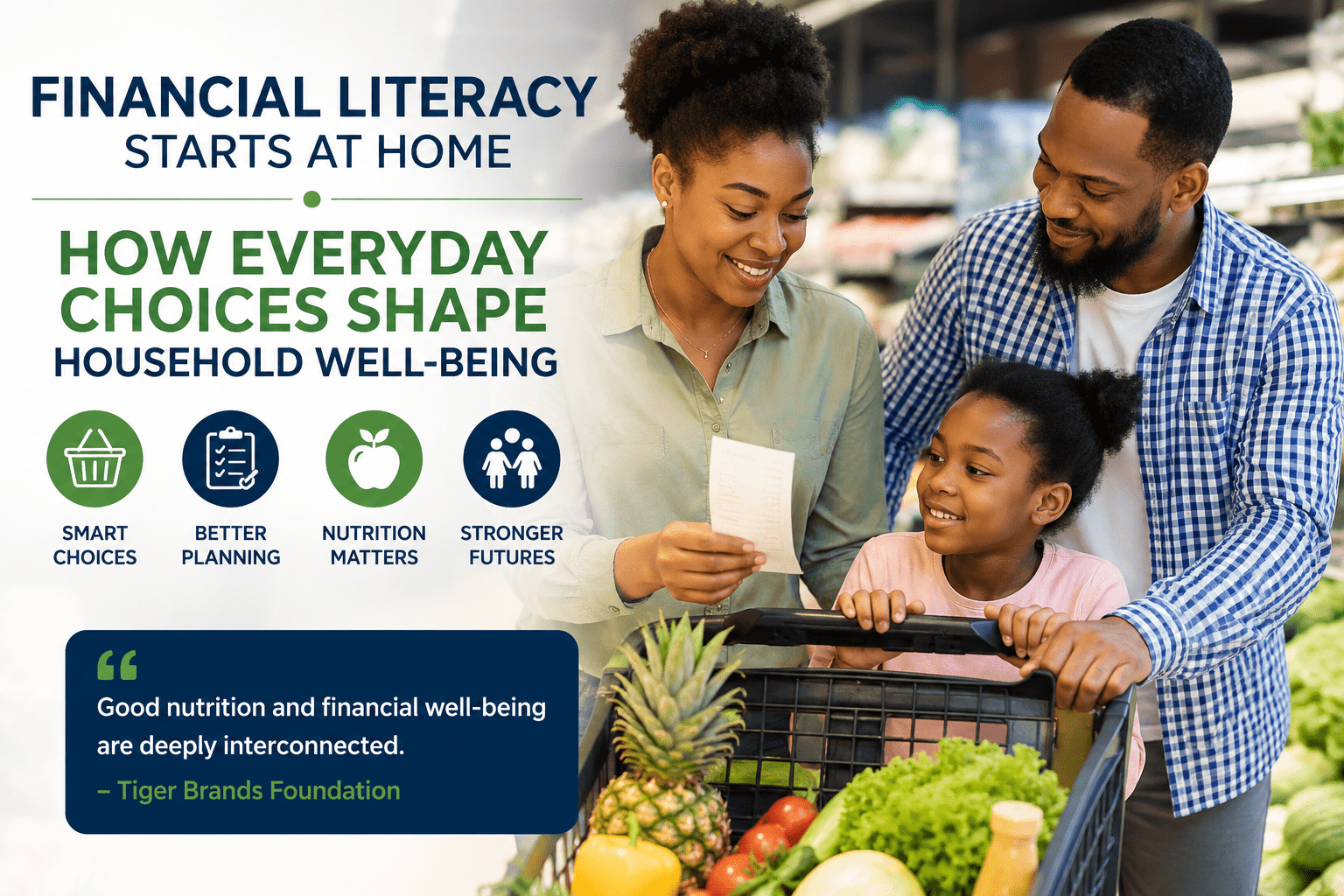
As the cost of living continues to place pressure on households, the Tiger Brands Foundation (TBF) is encouraging South Africans to rethink what financial literacy truly means. Beyond spreadsheets and banking terminology, the Foundation believes financial literacy is deeply connected to the everyday decisions families make about food, nutrition, and household well-being.
In a country where food often consumes a significant portion of monthly household budgets, particularly within low-income communities, these decisions have become some of the most important financial choices families make.
They are not simply purchasing decisions.
They are decisions that influence health, education, productivity, resilience, and future opportunities.
The Financial Decisions We Make Every Day
For many South Africans, balancing household finances has become increasingly challenging.
Rising food prices, transport costs, and broader economic pressures have forced families to carefully evaluate every rand they spend. The result is a constant balancing act between affordability, convenience, nutritional value, and long-term household needs.
These choices may appear routine, but they represent financial literacy in action.
Comparing prices between products, reading nutritional labels, planning meals ahead of time, reducing waste, and maximising the value of a food budget are all practical financial skills that directly affect household stability.
Financial literacy, therefore, extends far beyond understanding financial products or calculating interest rates.
It is about making informed decisions with the resources available.
And nowhere is that more evident than in the choices families make around food.
Why Nutrition Is Also a Financial Issue
The connection between nutrition and financial well-being is often overlooked, yet it plays a significant role in shaping quality of life.
What families eat influences far more than physical health. It affects children’s ability to learn, adults’ ability to work productively, and households’ ability to manage healthcare costs and long-term well-being.
According to Tiger Brands Foundation Director Eugene Absolom, understanding this relationship sits at the heart of the Foundation’s mission.
Through its in-school nutrition programme, the Foundation provides nutritious meals to learners every school day, helping ensure that children receive the nourishment they need to participate fully in their education.
For the Foundation, the impact goes beyond addressing hunger.
Nutritious meals help support concentration, classroom participation, and improved learning outcomes while simultaneously easing financial pressure on families who may already be struggling to meet household needs.
“This daily intervention does more than address hunger; it supports better learning outcomes, reduces the financial pressure on families and reinforces the importance of nutritious food as a foundation for long-term well-being,” says Absolom.
The programme demonstrates how nutrition, education, and financial resilience are interconnected rather than separate challenges.
Building Financial Resilience Through Knowledge
The Tiger Brands Foundation believes that financial literacy should be understood as part of a wider ecosystem of support, information, and access.
When communities are empowered with practical knowledge about nutrition, value-driven purchasing, and meal planning, they are better equipped to stretch limited resources while still supporting healthy lifestyles.
Similarly, when children receive meals at school, families gain greater flexibility to allocate household budgets toward other essential needs.
The result is a stronger foundation for financial resilience.
“At the heart of this approach is the simple truth that good nutrition and financial well-being are deeply interconnected,” explains Absolom.
“A child who eats well is more likely to perform well academically. A family that understands how to maximise the value of its food budget is better positioned to withstand economic shocks. A community that has access to reliable information and nutritious food options is more resilient, more informed and more empowered.”
These insights highlight an important reality: financial literacy is not only about increasing income. It is also about making informed choices that maximise the value of available resources.
Redefining Financial Literacy for South African Families
For many years, financial literacy conversations have largely focused on formal financial systems, banking products, and long-term wealth creation.
While these remain important, the Tiger Brands Foundation is encouraging a broader understanding of financial capability — one rooted in the realities of everyday life.
For parents deciding how to feed their children, educators supporting learners, and communities navigating economic uncertainty, financial literacy often reveals itself through small, intentional decisions made consistently over time.
Those decisions may involve choosing nutritious foods, planning meals more effectively, reducing unnecessary spending, or prioritising long-term well-being over short-term convenience.
Collectively, they can have a profound impact on household stability and future opportunities.
Small Decisions, Lifelong Impact
The Tiger Brands Foundation continues its work at the intersection of nutrition, education, and community development, helping families better understand how everyday choices influence broader financial outcomes.
Its message is both practical and powerful.
Financial literacy is not confined to boardrooms, balance sheets, or investment seminars.
It is a daily habit.
It is found in the choices households make about food, health, education, and resource management.
And while those decisions may seem small in the moment, their impact can extend across generations.
As Eugene Absolom concludes, “The Tiger Brands Foundation urges South Africans to view financial literacy as a practical, everyday skill. By making informed choices, particularly about what we eat, we can strengthen our households, support our children’s futures, and build more resilient communities. Financial literacy begins with the decisions we make today, and its impact can last a lifetime.”