A new South African femtech startup is asking women to look at an everyday reality from a different angle: what if the money women already spend simply because they are women could become a source of financial power?
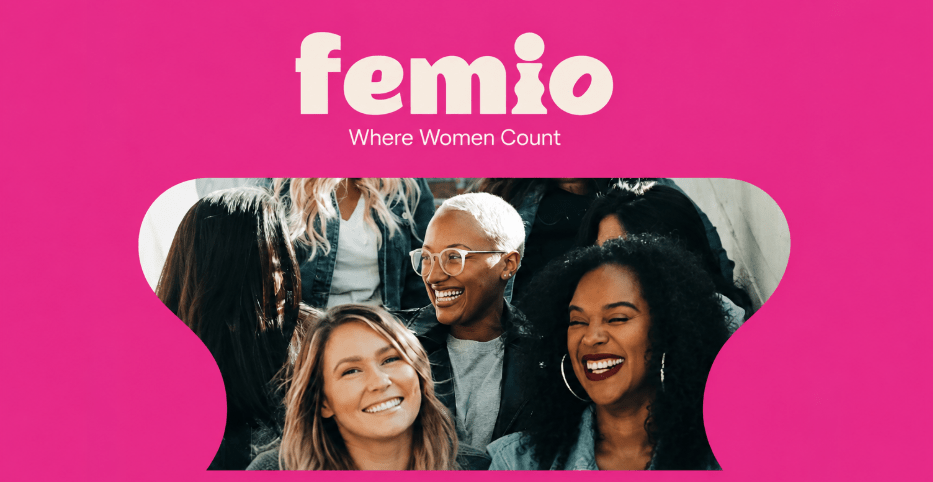
That is the question behind Femio, a new mobile app launching during Women’s Month with a mission to help women understand the true financial cost of being a woman and turn their collective spending power into tangible rewards and greater agency.
Founded by entrepreneur Monalisa Zwambila, Femio is built around a straightforward observation. Women spend money throughout their lives on products and services connected to their biology, health and safety. Yet, according to Femio, the cumulative financial impact of those costs has not been adequately captured in data or addressed through policy.
The startup aims to change that.
Putting a number on the cost of being a woman
Femio’s core feature, FemTracker, allows women to calculate what being a woman costs them.
Early FemTracker data estimates that gender-specific expenses can amount to approximately R900 per month per woman. Femio stresses that this is an early estimate and that the figure will vary between individuals as more usage data is collected.
But the company argues that looking at the cost month by month only tells part of the story.
Over an illustrative 28-year reproductive lifespan, R900 spent every month would amount to R302,400.
Femio also calculates that if the same R900 had instead been invested monthly at a modest 5% average annual compound interest rate over those 28 years, it could grow to approximately R657,000.
These figures are illustrative and are based on early product data and standard compound-interest assumptions. They are intended to demonstrate the potential long-term opportunity cost associated with recurring expenses.
And that is where Femio’s proposition becomes bigger than a budgeting tool.
The startup wants women to see their spending not simply as money leaving their pockets, but as part of a collective economic force.
The financial inequality behind everyday spending
Femio’s launch comes against a backdrop of persistent gender inequality.
According to the figures cited by the company:
- 42.4% of South African households are headed by women, based on Statistics South Africa’s General Household Survey.
- South African women earn 23–35% less than men for the same work, according to the World Economic Forum’s Global Gender Gap Report.
- At the current global pace of progress, full gender parity is still 123 years away, according to the World Economic Forum’s Global Gender Gap Report 2025.
- Women account for 80% of supermarket purchases, according to the figures cited by Femio.
Femio argues that gender-specific spending adds another layer to this existing financial disadvantage.
These are costs that can arise regardless of whether a woman is employed, earning a salary or financially independent.
From spending to rewards
The app’s proposition goes beyond helping women calculate their expenses.
Through FemTracker, users can identify the financial cost of being a woman while gaining access to rewards from Femio’s retail, banking, education and healthcare partners.
Femio is also building a marketplace connecting users with women-owned businesses, creating another pathway for women to direct their spending power towards female entrepreneurs.
Then there is FemUp, a hub of tools and resources designed to help women act on the financial power identified through the platform.
Together, these elements form the foundation of Femio’s wider ambition: to build what the company describes as infrastructure for women’s economic power.
Built from lived experience
For Zwambila, the idea is personal.
The Femio founder and CEO says her experience as a single mother helped shape the company’s mission and its understanding of the financial pressures many women face.
“I’ve lived the reality of so many women of being a single mother, working hard and still not having enough at the end of the month. Femio comes from that experience.”
She says the goal is not simply to give women information, but to give them meaningful support and the agency to act on it.
“The app is about giving women meaningful support and the agency to use it, so that when it comes to who benefits from being a woman, the answer is finally: women do.”
From communications to femtech
Zwambila’s entrepreneurial journey adds another dimension to Femio’s launch.
She is also the Founder and CEO of Riverbed, a female-owned communications agency that she built into the first women-owned agency to rank at the Loeries and to scale revenue beyond R100 million in an industry that has long been dominated by men.
Femio represents her move into technology and femtech, an area where women founders remain the exception rather than the rule.
The company has been entirely self-funded through its pre-seed phase.
Following the launch of its minimum viable product, Femio plans to begin raising a seed round to accelerate its growth and expand its partner network across retail, banking, education, healthcare and lifestyle.
A new kind of Women’s Month conversation
Femio launched on 6 August 2026, bringing its proposition to the market during Women’s Month in South Africa.
Its premise is both simple and ambitious: women already possess enormous collective economic influence. The question is whether that influence can be organised in a way that creates greater value for women themselves.
By combining spending data, rewards, a women-owned business marketplace and financial resources, Femio is positioning its app as more than another lifestyle platform.
It is attempting to turn an unavoidable reality—the cost of being a woman—into a conversation about economic agency, collective spending power and who ultimately benefits from it.
The app will be available to download through the App Store and Google Play from 6 August 2026.
Femio. Where women count.