South Africa’s education crisis does not begin in high school classrooms or matric exam halls. It begins much earlier—often before a child can even hold a pencil.
As the country continues to wrestle with persistent challenges in Early Childhood Development (ECD), experts are urging a critical shift in thinking: access alone is not enough. The focus must move decisively toward impact, because the foundations of academic success, emotional resilience, and lifelong learning are laid long before formal schooling begins.
From birth to the age of five—and extending into Grade R—the early years represent the most formative period of human development. During this time, children are not simply “preparing” to learn. They are actively building the brain architecture that will determine how they learn, relate, and adapt for the rest of their lives.
The science is clear: early experiences shape everything
Research from Harvard University’s Center on the Developing Child underscores what educators have long observed in practice: brains are built from the bottom up. Simple neural connections form first, followed by increasingly complex circuits. Crucially, the strength of early connections determines the quality of those that come later.
In other words, a strong start creates a strong future.
“Our early experiences shape our brain architecture, which provides the foundation for all future learning, behaviour, and health,” Harvard researchers note. The implications for education systems—and families—are profound.
“The early years are a golden window for building cognitive, emotional, and physical skills that influence future success in school and beyond,” says Desiree Hugo, Executive: ADvTECH Schools Academics. “Igniting curiosity in children and supporting their optimal development during these years has a lifelong impact.”
A national conversation gaining momentum
Hugo welcomes the renewed national focus on early learning, pointing to recent statements by Minister of Basic Education Siviwe Gwarube, who emphasised the need for greater attention to early learning, and Minister of Higher Education Buti Manamela, who described a renewed emphasis on ECD and foundational learning as not only welcome, but essential.
Their positions, Hugo says, align closely with ADvTECH’s long-standing commitment to early intervention and lifelong learning.
“We support the position of the ministers, which aligns with ADvTECH’s commitment to offering children opportunities to explore, create, and consistently inquire,” she says.
Why parents must look earlier—not later
For many parents, education planning begins with a familiar question: Which high school will give my child the best chance of success? But by the time that decision is made, much of the groundwork has already been laid.
“While parents often focus on finding the best possible high school, greater attention should be given to a child’s early years’ experience,” Hugo explains. “This includes both accessing high-quality early education and providing consistent developmental support at home.”
During early childhood, children develop essential building blocks such as language, inquiry, problem-solving, creativity, and self-regulation—largely through play-based learning. High-quality ECD programmes nurture curiosity and social interaction, which later translate into stronger reading, mathematics, and critical thinking skills.
ADvTECH’s internal data reinforces this link. “Our MAP results show that children who attend our early years programmes perform significantly better later on than those who did not,” Hugo notes.
The long-term consequences are stark. Children who receive strong ECD support are more likely to excel academically, display positive behaviour, and sustain performance throughout their schooling. Conversely, gaps in early development can persist into adulthood, affecting learning outcomes, confidence, and employability.
Building strong foundations—together
The good news is that supporting early childhood development does not require expensive tools or complex interventions. It requires intentionality, consistency, and collaboration between schools and families.
Practical ways parents and schools can support ECD include:
-
Encouraging play-based learning and creativity
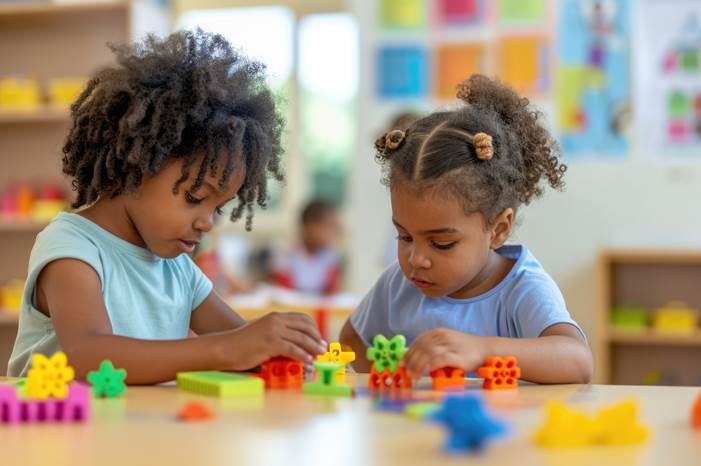
Provide blocks, puzzles, and art materials to spark imagination and fine motor skills. Aim for at least 30 minutes of unstructured play daily. Observational drawing—sketching real objects rather than colouring templates—builds planning skills and attention to detail. -
Reading together and storytelling
Daily shared reading builds vocabulary and listening skills. Make stories interactive by using different voices or asking questions. Encourage children to create their own stories using everyday objects, expanding language through descriptive words. -
Fostering social interaction
Supervised playdates and group activities help children develop empathy, communication, and sharing skills—starting with short, manageable sessions. -
Establishing routines
Consistent schedules for meals, naps, and bedtime promote self-regulation and security. Involving children in building routines—and ticking off completed tasks—strengthens independence. -
Limiting screen time
Digital exposure, including television, should be limited to under one hour per day, prioritising educational content and real-world experiences. -
Promoting physical activity
Outdoor play such as running and climbing supports gross motor development and overall health. Children should engage in at least 60 minutes of active play daily. -
Talking—and listening—actively
Meaningful conversations about a child’s day or feelings enhance language development and emotional intelligence. Parents are encouraged to listen to children’s ideas and theories, asking questions rather than simply providing answers. -
Monitoring developmental milestones
Tracking progress and consulting professionals when concerns arise ensures early support when it matters most.
An investment that shapes the nation
Prioritising Early Childhood Development is not simply an educational strategy—it is a societal imperative. By strengthening the earliest foundations of learning, South Africa can cultivate more confident students, more capable graduates, and ultimately, a more resilient and competitive society.
“By prioritising ECD, parents and educators lay a robust foundation that helps children thrive in an increasingly complex world,” Hugo concludes.
The future of education does not start in the classroom. It starts in the early years—where curiosity is ignited, confidence is formed, and lifelong potential begins.