
Beneath the ocean’s surface lies a world that science is only beginning to understand. From unexplored seafloors to fragile marine ecosystems facing rising temperatures, the need to discover, document and protect these environments has never been more urgent.
That mission takes centre stage in EXPEDITION: SAVING OUR SEAS, a one-hour National Geographic special following a team of Explorers and scientists as they investigate the world’s oceans across all five ocean basins.
Presented by the National Geographic Society in partnership with Rolex, and produced by Offspring Films, the documentary forms part of the National Geographic and Rolex Perpetual Planet Ocean Expeditions. This multiyear scientific research and storytelling initiative examines the impact of rapid environmental change, taking viewers from the shoreline to the seafloor and from pole to pole.
The special premiered on Monday, 16 November 2026, on National Geographic across Africa, with a broadcast slot of 18:50 on DStv channel 181 and StarTimes channel 220. It is also available to stream on Disney+ in South Africa, as announced in the release.
Narrated by ocean conservationist Auliʻi Cravalho, known for voicing Moana, the production brings together cutting-edge technology, scientific expertise and the knowledge of coastal communities. Its focus is not simply on what lies beneath the waves, but on the discoveries and solutions that could help protect ocean environments.
 Discoveries from the depths of Antarctica
Some of the expedition’s most remarkable findings emerge from the Southern Ocean, where a team of National Geographic Explorers investigates the basin’s icy surface and deep-sea environments.
Using SuBastian, a remotely operated vehicle aboard the Schmidt Ocean Institute’s research vessel Falkor (too), the team observes ocean depths approaching 13,000 feet below the surface.
The group includes oceanographer Dr Andrew Thurber, biological oceanographer Dr Kim Bernard and microbial oceanographer Dr Allison Fong.
Their work leads to three significant first-time discoveries: the most southerly deep-sea hydrothermal vent known on the planet, swarms of Antarctic krill carrying eggs at a depth of 3,000 feet, and the first-known live sighting of a giant Antarctic gonate squid.
These discoveries offer a rare glimpse into a part of the planet that remains largely out of reach, highlighting just how much there is still to learn about life in the deep ocean.
Understanding the Pacific’s changing ecosystems
The expedition also turns its attention to the Pacific Ocean, where researchers are investigating how rising temperatures are reshaping marine ecosystems.
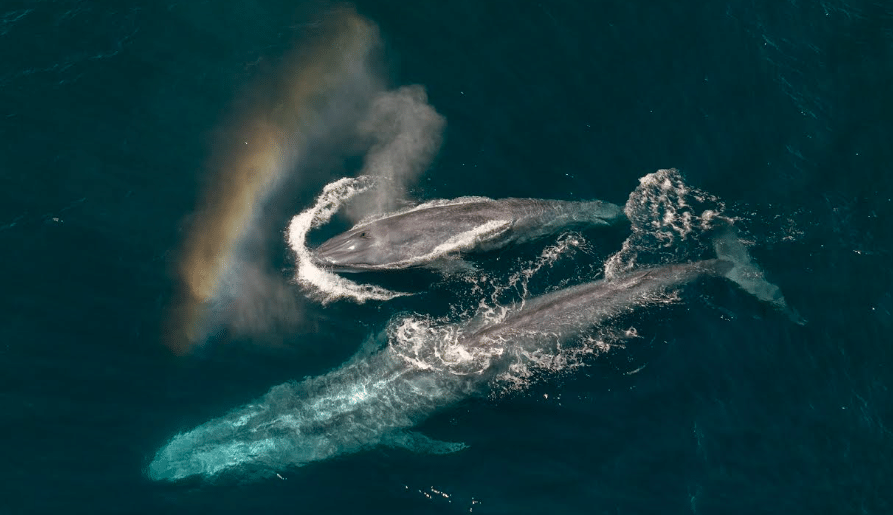
Dr Kim Bernard returns to the field alongside National Geographic Explorer and marine ecologist Dr Leigh Torres. Working with the local Māori community, they survey New Zealand’s South Taranaki Bight, tracking blue whales and the krill they depend on.
Meanwhile, fellow Explorer Dr Anya Brown puts coral through heat-tolerance tests in the Cook Islands. Her work aims to understand how coral responds to increasing temperatures.
The urgency behind this research is clear. As Brown explains: “If we lose them, we’re going to care a lot. So, we need to care now.”
Building knowledge of the deep Indian Ocean
More than 10,000 feet beneath the Indian Ocean, Explorer Sheena Talma is helping expand access to deep-sea research.
As the first deep-sea scientist from the Seychelles, Talma works with her Seychellois team off the coast of South Africa, training on deep-ocean camera lander systems.
The team plans to deploy similar landers in the Seychelles. The resulting data will support fisheries and marine protected area management, while strengthening the country’s ability to monitor its deep-ocean habitats.
The work also highlights the importance of building local scientific capacity, ensuring communities and researchers have better tools to understand the waters around them.
Protecting communities along the Gambian coast
In The Gambia, the threat is closer to home for communities living along the Atlantic coastline.
Nearly half a million people live along a stretch of coast threatened by rising sea levels. National Geographic Explorer Maiyai Taal Hocheimy, a leading coastal researcher and marine ecologist, is working with local students to measure ocean depth and currents.
She also joins Explorer Dr Angelo Bernardino to map and assess mangrove forests. These forests stand between the capital, Banjul, and the encroaching water.
Their research aims to better understand these coastal environments and the role they play as communities face the effects of rising seas.
Exploring an unseen Arctic seafloor
The Arctic Ocean presents another urgent research challenge. It is warming at four times the rate of the rest of the planet.
In Gjoa Haven, Nunavut, marine biogeochemist Dr Kristina Brown is invited by the Inuit community to study a secluded marine bay known as the Sherman Basin.
Working alongside Inuk elder Saul Aksalook Qirqniq (ᐊᒃᓴᓗᒃ) and community members, Brown undertakes the first-known scientific study of the area.
Together, they set out to chart a seafloor that no one has ever seen, combining scientific investigation with local knowledge.
Making deep-sea exploration more accessible
Connecting the different expeditions is deep-ocean scientist Dr Katy Croff Bell, founder of the Ocean Discovery League.
Bell is developing the Deep Ocean Research and Imaging System, known as DORIS. The lightweight, low-cost device is designed to make deep-sea exploration more accessible to communities that have not previously had access to research in their own deep-ocean waters.
The scale of what remains unknown is staggering.
“We’ve only seen about 0.001% of the deep Ocean, which covers about two-thirds of our planet,” says Bell. “Just imagine what we’re going to find in the other 99.999%.”
Her work points to a wider ambition behind the initiative: making ocean research more accessible while opening the door to discoveries that could deepen our understanding of the planet.
A wider look at our one connected ocean
The documentary is accompanied by National Geographic magazine’s single-topic November issue, which explores Earth’s one connected ocean.
Featuring a pull-out poster map of the planet’s five ocean basins, the issue follows Explorers and scientists involved in the National Geographic and Rolex Perpetual Planet Ocean Expeditions. It documents their discoveries and examines what those findings reveal about humanity’s relationship with the ocean.
Readers can also explore an immersive companion experience on natgeo.com. Through 3D cartographic visualisations, users can navigate ocean currents, the seafloor, human impact and protected waters around the world.
Together, these experiences bring the initiative’s central message into focus: the ocean is one connected system, and humanity’s actions help shape its future.
A mission with global significance
Directed by Katharine Arthy, EXPEDITION: SAVING OUR SEAS is executive produced by Sam Hodgson for Offspring Films; Vanessa Serrao and Kaitlin Yarnall for National Geographic Society; and Tracy Rudolph Jackson for National Geographic.
Produced as part of the National Geographic and Rolex Perpetual Planet Ocean Expeditions, the special brings together researchers, technology and communities to investigate the challenges facing marine environments.
From Antarctica’s hidden deep-sea life to the changing coastlines of The Gambia, the discoveries reveal how much remains unknown beneath the waves.
And with so much of the deep ocean still unexplored, the next breakthrough could be waiting somewhere no human has ever seen.