
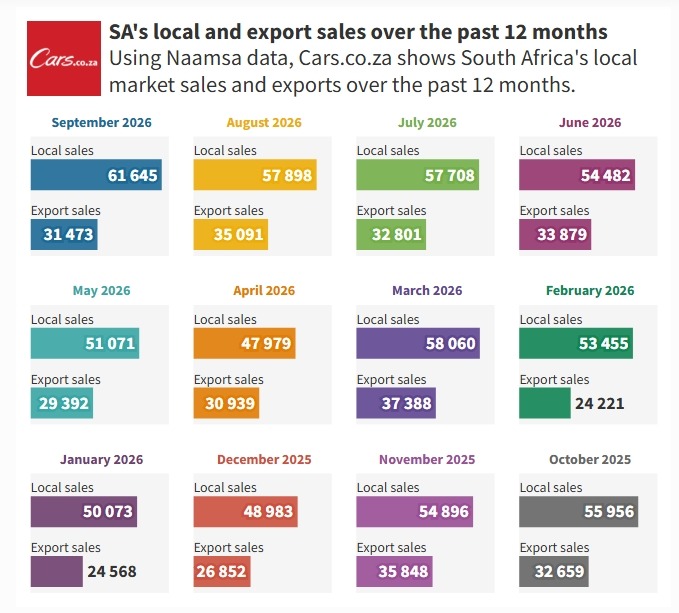
South Africa’s new-vehicle market has delivered a major September surge, recording 61,645 units sold and reaching a level the industry has not seen in several years.
According to industry data from Naamsa, September 2026 sales increased 12.7% year-on-year. The result also surpassed the previous 2026 monthly peak, set in March.
More significantly, the market crossed the 60,000-unit mark for the first time in several years.
The latest figures also extend a remarkable run of growth. September marked the market’s 24th consecutive month of year-on-year growth, meaning South Africa has now recorded two full years of uninterrupted annual growth.
 Demand remains resilient
The September performance comes against a challenging economic backdrop.
Consumers continue to face pressure from borrowing costs, fuel expenses and the broader cost of living. Yet demand for new vehicles has remained resilient.
Alan Quinn, Chief Innovation and Product Officer at Cars.co.za, said the September result highlights the strength of local demand while also pointing to a clear change in what motorists value.
“In September 2026 the new-vehicle market in South Africa surpassed the 60 000-unit mark and achieved its 24th month in a row of year-on-year growth.”
Quinn added that consumer preferences are increasingly shifting towards affordability and value across vehicle segments.
That shift is becoming increasingly important as buyers balance the cost of purchasing a vehicle with the cost of owning and running it.
Toyota breaks through 15,000 units
Toyota South Africa Motors delivered the standout performance among the country’s major automotive brands.
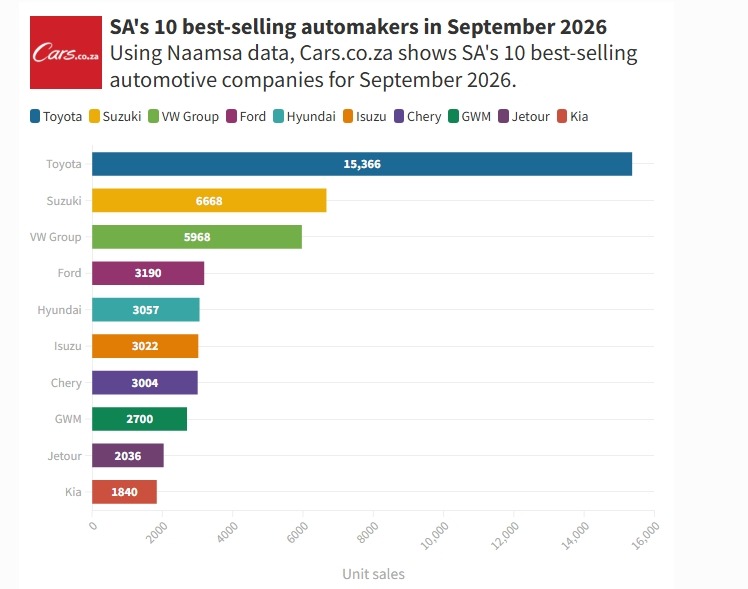
Including Lexus and Hino, Toyota sold 15,366 units during September.
The result pushed Toyota beyond the 15,000-unit barrier for the first time since March 2022.
It also gave the company a commanding 24.9% share of the market.
Toyota’s September sales increased 11.2% compared with August, reinforcing its position as South Africa’s leading vehicle manufacturer.
September’s top 10 automakers
| Position | Brand | Units Sold | Month-on-Month Change |
|---|---|---|---|
| 1 | Toyota | 15,366 | +11.2% |
| 2 | Suzuki | 6,668 | +2.5% |
| 3 | Volkswagen Group | 5,968 | +5.3% |
| 4 | Ford | 3,190 | -0.4% |
| 5 | Hyundai | 3,057 | +0.8% |
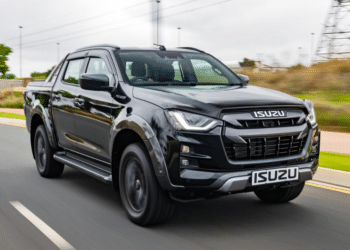
| 6 | Isuzu | 3,022 | +19.4% |
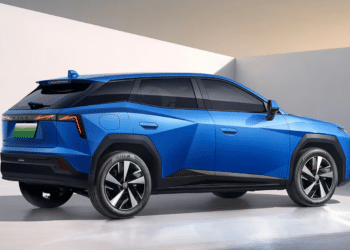
| 7 | Chery | 3,004 | +8.7% |
| 8 | GWM | 2,700 | +4.1% |
| 9 | Jetour | 2,036 | +4.3% |
| 10 | Kia | 1,840 | +3.2% |
Suzuki holds second place
Suzuki recorded its strongest sales performance of 2026 so far.
The manufacturer moved 6,668 units, representing a 2.5% increase month-on-month and keeping it firmly in second place.
Volkswagen Group followed with 5,968 units, while Ford remained fourth after selling 3,190 vehicles.
Hyundai completed the top five with 3,057 units.
Isuzu climbs as Chery passes 3,000
One of September’s notable movements came from Isuzu.
The manufacturer increased its sales by 19.4% month-on-month, reaching 3,022 units.
That jump saw Isuzu move ahead of both Chery and GWM to secure sixth place.
Chery also reached a significant milestone.
The brand crossed the 3,000-unit mark for the first time, recording 3,004 vehicles. Despite the milestone, it slipped to seventh position overall.
GWM followed in eighth with 2,700 units, while Jetour recorded 2,036 units. Kia rounded out the top 10 with 1,840 units.
Passenger vehicles lead domestic growth
The strongest growth came from passenger vehicles.
Sales climbed 14.7% year-on-year to 44,291 units.
Rental fleets accounted for approximately 18.4% of passenger vehicle sales during the month.
The light-commercial vehicle market also moved higher.
LCV registrations increased 9.6% compared with September 2025, reaching 14,361 units.
Together, the figures point to broad-based strength across important areas of the domestic new-vehicle market.
Exports tell a different story
While domestic sales continued to gain momentum, export performance moved in the opposite direction.
South African vehicle exports declined 18.8% year-on-year to 31,473 units.
The release attributes the decline to continuing global supply chain and demand pressures.
The contrast highlights an important split in September’s results: local vehicle demand strengthened, while international conditions remained more challenging.
 Dealers see a positive foundation
Brandon Cohen, Chair of the National Automobile Dealers’ Association (NADA), described the September results as “encouraging”.
Cohen said stronger performance during the third quarter had created a “positive foundation” for the final part of the year.
However, the focus now turns to ensuring that the vehicles available to customers, together with financing options, match what motorists genuinely want and can afford.
That balance could prove important as affordability remains a central consideration for South African consumers.
Economic pressure remains
Thanda Sithole, Senior Economist at FNB and WesBank, noted that demand has remained resilient despite higher borrowing costs and renewed pressure from fuel and living expenses.
Naamsa also cautioned that the macro-economic environment has become tougher in recent months.
Rising energy costs have placed additional pressure on household budgets. Even so, the organisation credits the resilience of the market to an increasingly competitive and diverse automotive industry.
A market that keeps moving
September’s 61,645-unit result is more than another monthly sales figure.
It marks a significant point in South Africa’s ongoing new-vehicle recovery, with the market crossing 60,000 units and extending its year-on-year growth streak to 24 consecutive months.
Toyota’s return above 15,000 units, Suzuki’s strongest sales of the year, Isuzu’s sharp climb and Chery’s first move beyond 3,000 units all added further momentum to an eventful month.
Yet the underlying story remains one of changing consumer priorities.
As economic pressures continue, buyers and the industry are increasingly focused on affordability, value and access to vehicles and finance that fit real household budgets.
With the final quarter now underway, September has given the South African automotive industry a strong platform from which to close out 2026.