

In a world increasingly obsessed with achievement, milestones and measurable outcomes, childhood itself is facing growing pressure. Parents want their children to excel, schools strive to prepare learners for a competitive future, and society often celebrates early academic success as a predictor of lifelong accomplishment.
But according to early childhood education experts, there is a critical question worth asking: What if the key to future success is not accelerating learning, but protecting the very experiences that allow children to learn naturally?
At the heart of this conversation lies something deceptively simple — play.
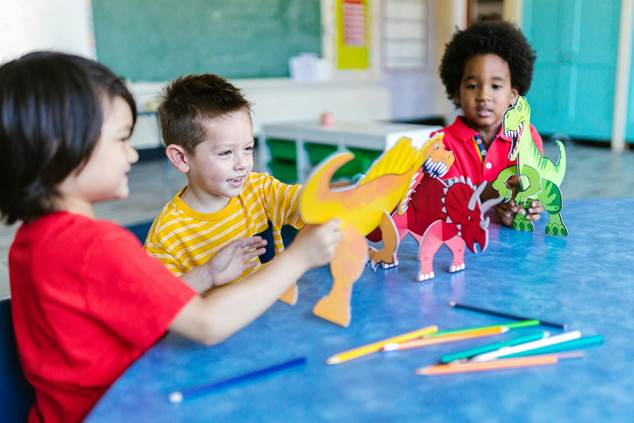
Far from being a distraction from learning, play is one of the most powerful ways young children make sense of themselves, build relationships and develop the skills they need to thrive throughout life.
“Play is not separate from learning, it is the medium through which learning becomes possible,” says Lynda Eagle, Advtech Schools Specialist: Early Years Phase.
She warns that an increasing focus on formal academics in the earliest years can come at a cost.
“Early learning that prioritises performance over understanding risks weakening curiosity, motivation and wellbeing. Strong foundations are built not through acceleration, but through experiences that nurture thinking, communication, collaboration, and joy — conditions that sustain lifelong learning.”
Learning Through Discovery
Children are naturally curious. Long before they enter formal schooling, they investigate their surroundings, test ideas, ask questions and build understanding through exploration.
Play creates the environment where this process flourishes.
Unlike structured academic activities that often require children to work toward predetermined outcomes, play allows young learners to engage at their own pace and according to their unique interests and developmental needs.
This freedom is not without purpose. Through imaginative games, problem-solving activities, social interactions and hands-on exploration, children strengthen essential cognitive, emotional and social skills that form the foundation of future learning.
According to Eagle, play also supports emotional regulation and helps prepare children for more complex learning experiences later in life.
“It provides space for difference and diversity while offering opportunities for connection and shared experience,” she explains.
The Role of Responsive Adults
While play may appear effortless from the outside, creating meaningful play-based learning experiences requires intentionality from both educators and families.
Eagle says responsiveness is one of the most important factors in supporting children’s development.
“Responsiveness asks adults to understand the value of play and to reflect on their role within it: how they observe, when they intervene, how they extend thinking, and how they remain present without directing or interfering.”
This balance allows adults to gain deeper insight into children’s interests, strengths and emerging identities while supporting their growth in ways that feel natural and empowering.
Importantly, play helps children build many of the skills that are increasingly recognised as essential for success in the modern world.
Critical thinking, communication, collaboration, self-management and problem-solving are not simply taught through instruction. They are developed through repeated opportunities to explore, experiment, negotiate, adapt and persevere.
“When children play, they’re constantly exploring new ideas, testing their theories, inventing solutions, and figuring out how the world works,” says Eagle.
Along the way, children learn to manage challenges, take appropriate risks and develop resilience when things do not go according to plan.
Perhaps most importantly, they learn persistence — the ability to continue trying even when a task becomes difficult.
Why Families Matter
The responsibility for nurturing these experiences does not belong solely to schools.
Eagle emphasises that strong partnerships between educators and families play a central role in creating environments where children feel both supported and empowered.
Together, parents and teachers can establish learning experiences that offer a healthy balance between freedom and structure.
This balance helps children feel emotionally secure while learning to respect themselves, others and the world around them.
Such consistency creates fertile ground for developing empathy, resilience and perseverance — qualities that support lifelong wellbeing and success.
Within these environments, children gradually become independent learners. They learn to make connections between ideas, apply knowledge in new situations and move from concrete experiences toward more abstract forms of thinking.
Protecting What Matters Most
As conversations around education continue to evolve, Eagle believes it is important for adults to reflect carefully on the tension that can exist between ambitious aspirations for children and a genuine understanding of how young children learn best.
“When adults deepen their understanding of why play matters and how responsiveness supports learning, they are better positioned to guide children with intention and trust,” she says.
Ultimately, the goal of early childhood education extends far beyond academic achievement.
It is about nurturing curious minds, confident communicators, resilient problem-solvers and compassionate human beings.
And in a world that often encourages children to grow up too quickly, protecting the space to play may be one of the most valuable investments adults can make in their future.
Because childhood is not a race to the finish line — it is the foundation upon which everything else is built.