Every year on Freedom Day, South Africans pause to remember a defining moment in history — the transition to democracy and the restoration of dignity, voice, and agency to millions. But beyond remembrance, this day asks a more challenging question: what does freedom look like today?
In modern South Africa, freedom is no longer only political. It is deeply personal. It is reflected in the ability to make informed decisions about health, lifestyle, and wellbeing — including how adults choose to engage with nicotine in a rapidly evolving public health landscape.
A New Chapter in the Nicotine Conversation
Across the world, attitudes toward smoking and nicotine use are shifting. Decades of public health campaigns, regulation, and awareness have reduced smoking rates in many regions. Yet globally, the number of smokers remains significant, influenced in part by population growth.
In South Africa, the picture is equally complex. Data from a 2021 Global Adult Tobacco Survey shows that 21.2% of adults smoke daily, with an additional 4.6% smoking occasionally. That translates to millions of individuals — many of whom are not ready or willing to quit entirely, despite repeated attempts.
For Philip Morris International, this reality signals something deeper than statistics. It points to a shift in how adult consumers think about their health and choices.
“This signals a profound cultural and behavioural change,” says Daniel Gyefour. “It reflects not just stronger public health policy, but a meaningful transformation in how people think about their wellbeing.”
The Limits of a One-Dimensional Approach
For decades, tobacco control has focused primarily on cessation — encouraging smokers to quit altogether. While essential, this approach has its limitations.
Research shows that most smokers require multiple attempts before successfully quitting, with many relapsing within weeks or months. This cycle highlights a critical gap: what happens to those who continue to smoke?
This is where the concept of harm reduction enters the conversation.
Rather than a binary choice between smoking and quitting, harm reduction introduces a third pathway — one that supports adult smokers who would otherwise continue smoking to switch to less harmful alternatives.
Smoke-Free Alternatives and the Question of Freedom
At the heart of this debate lies a fundamental principle: informed choice.
Should adult consumers have access to information and alternatives that allow them to make decisions aligned with their lives, preferences, and readiness to change?
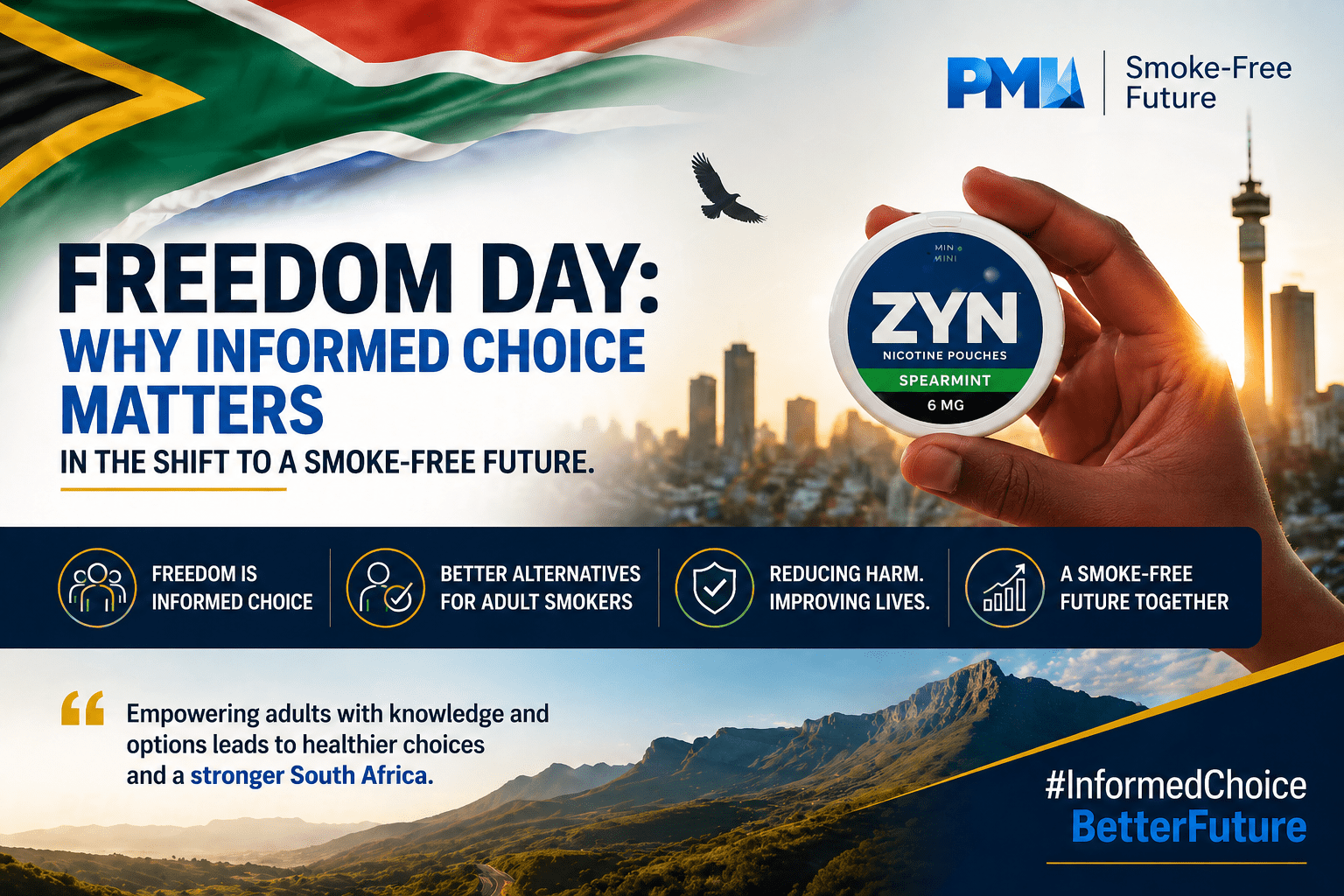
PMI believes the answer is yes — and has built its long-term strategy around that belief. The company has committed to a smoke-free future by 2030, investing billions into research and innovation to develop alternatives to traditional cigarettes.
Among these is ZYN nicotine pouches — a discreet, smoke-free option designed for adult users. Unlike cigarettes, it delivers nicotine without combustion, meaning no smoke, ash, or need to step away from social environments.
“Adult smokers are looking for options that fit their lifestyles,” Gyefour explains. “Harm reduction is not about telling people what to do. It’s about ensuring they have the knowledge and the freedom to choose.”
Balancing Risk, Reality, and Responsibility
It is important to be clear: smoke-free products are not risk-free. However, they are positioned as better alternatives for adults who would otherwise continue smoking — particularly because they eliminate combustion, the primary source of harm in traditional cigarettes.
This distinction is critical in public health discussions. It shifts the narrative from perfection to progress — from ideal outcomes to realistic, incremental change.
In a country where an estimated 64% of pregnancies are unplanned and broader healthcare challenges persist, the need for nuanced, practical solutions across all health sectors — including tobacco harm reduction — becomes increasingly evident.
Freedom as Access to Information
Freedom Day reminds South Africans that rights are only meaningful when supported by access — access to education, to opportunity, and to accurate information.
In the context of nicotine use, this means ensuring adults understand:
- The risks of continued smoking
- The challenges of quitting
- The alternatives available to them
It is not about promoting one choice over another. It is about enabling informed decisions.
A Future Defined by Choice
As South Africa continues to navigate its public health priorities, the conversation around smoking is evolving from control to empowerment.
Freedom, in this sense, is not about removing responsibility — it is about expanding it. It is about trusting individuals with information and options, while continuing to prioritise health outcomes at a national level.
More than three decades after democracy, the meaning of freedom continues to unfold. And in spaces as personal as health and lifestyle, it is increasingly defined by one simple but powerful idea:
The right to choose — informed, aware, and supported.