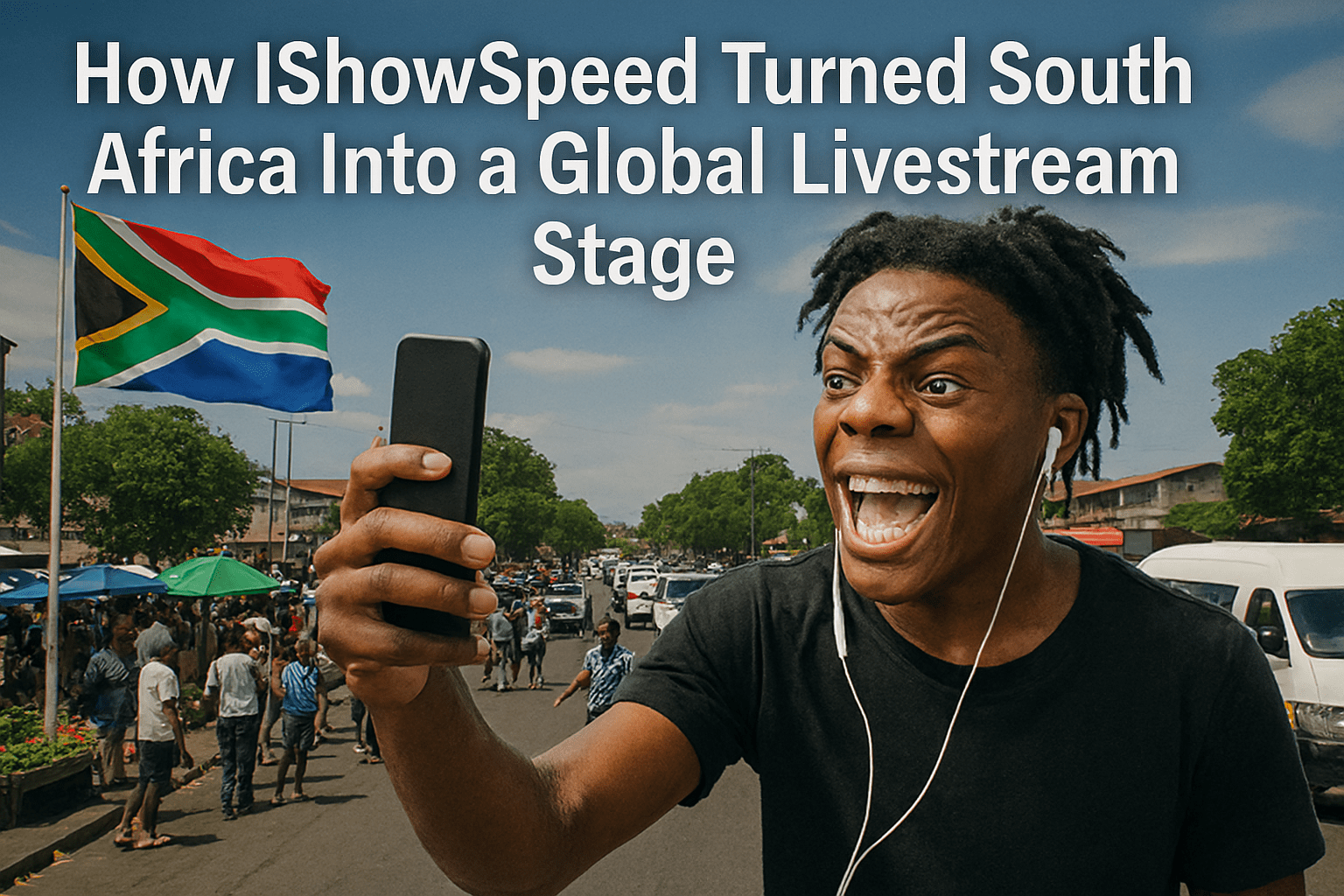
When American YouTube star IShowSpeed arrived in South Africa, there were no official press briefings, no polished tourism ads, and no celebrity handlers steering the narrative. Instead, there was a phone, a livestream button, and an unpredictable curiosity that turned everyday South African life into global entertainment — watched live by millions.
Speed, whose online persona thrives on chaos and authenticity, didn’t “tour” South Africa in the traditional sense. He wandered it. And in doing so, he accidentally achieved what expensive nation-branding campaigns often fail to do: he made South Africa feel human to the rest of the world.
From the moment he stepped into public spaces, it became clear that this wouldn’t be a sanitised influencer visit. Traffic noise, street vendors, spontaneous conversations, and cultural misunderstandings were not edited out — they were the content. South Africans weren’t backdrops; they were collaborators.
What unfolded on livestream was a raw, unscripted exchange between cultures. Taxi drivers explaining local slang. Young fans teaching dance moves. Passers-by correcting misconceptions in real time. It was messy, loud, funny — and deeply authentic.
For global viewers, many of whom had never seen South Africa outside of headlines or documentaries, this was a revelation. The country appeared vibrant, humorous, opinionated, and complex — not frozen in crisis narratives. Viewers saw joy alongside struggle, wit alongside hustle.
The most powerful aspect wasn’t Speed himself — it was how South Africans responded to him. They weren’t starstruck. They were confident, playful, and assertive in telling their own stories. That dynamic flipped the usual influencer-audience relationship on its head.
Cultural commentators have noted that this kind of digital exchange represents a new form of storytelling — one where national identity is shaped by ordinary citizens, not institutions. In this moment, South Africans controlled the narrative simply by being themselves.
The impact was immediate. Social media clips went viral. International viewers expressed surprise, admiration, and curiosity. Tourism pages noticed spikes in engagement. And perhaps most importantly, young South Africans saw themselves reflected on a global stage without filters or permission.
Speed didn’t set out to change perceptions — but by letting the country speak for itself, he did exactly that.