
In anticipation of the Johannesburg Cap Classique, Champagne & Bubbles Festival happening on 17 & 18 May at the Inanda Polo Club in Sandton, here are 10 things you should know about Champagne.
- Only wines made within a specific northeastern French region can use the labelling term Champagne. Geographical boundaries aren’t the only thing that defines the wine, though; the region also enforces strict appellation laws. Grape-growing and winemaking practices are closely controlled, affecting everything from the grape varieties used, to vineyard and press yields, and the methods by which the wine gains its bubbles.
- When making Champagne, secondary fermentation, the process that adds bubbles to wine, must take place in the bottle. Known as the method Champenoise or méthode traditionnelle, the process requires that winemakers start fermentation after they add a mixture of yeast, wine, and sugar, called liqueur de tirage, to the still base wine. The process releases carbon dioxide, making the wine bubbly. When fermentation ends, yeasts die and become lees, remaining in contact with the wine until they’re later removed by the winemaker.
- Champagne winemakers can use seven varieties of grapes in their blends. The list includes five white grapes – Chardonnay, Petite Arbanne, Petit Meslier, Pinot Blanc, and Fromenteau as well as two red grapes – Pinot Noir and Pinot Meunier. Most commonly, Champagne blends include a combination of Pinot Noir, Chardonnay, and Pinot Meunier, though other examples abound. Wines made exclusively with white grapes are called blanc de blancs, and less-common blanc de noirs contain only red grapes.
- Non-vintage (NV) Champagnes are the most common (and affordable) style of the wine. Producers use grapes and grape must from multiple vintages to create a specific flavour profile, or “house style.” The process helps maintain consistency from year to year. Vintage Champagnes contain grapes from just one harvest. Like standard wine bottles, the vintage denotes the year of harvest. Vintage Champagnes appear only in the best years, which are selected by the Champagne house’s chef de cave, or cellar master.
- Many Champagnes smell like bread because the wine’s contact with lees adds texture, richness, and complexity, including yeasty aromas and flavours. Appellation laws dictate the duration of time Champagne stays in contact with lees. Non-vintage bottles must remain for a minimum of 12 months, and vintage Champagne requires three years. In practice, most Champagnes age for much longer, with an average of two to three years for non-vintage wines and four to 10 years for vintage Champagne.
- Sugar is a vital ingredient in Champagne production and can be added a total of three times during the winemaking process. The first addition helps raise the alcohol level during primary fermentation if grapes don’t achieve enough ripeness in the vineyard. The next starts the secondary, bubble-adding fermentation. The third time sugar is added, called the dosage, determines the sweetness of the wine. Champagne’s sweetness ranges from bone-dry brut nature, which contains less than three grams per litre (g/l) of residual sugar, to sweet doux, which contains upwards of 50 g/l.
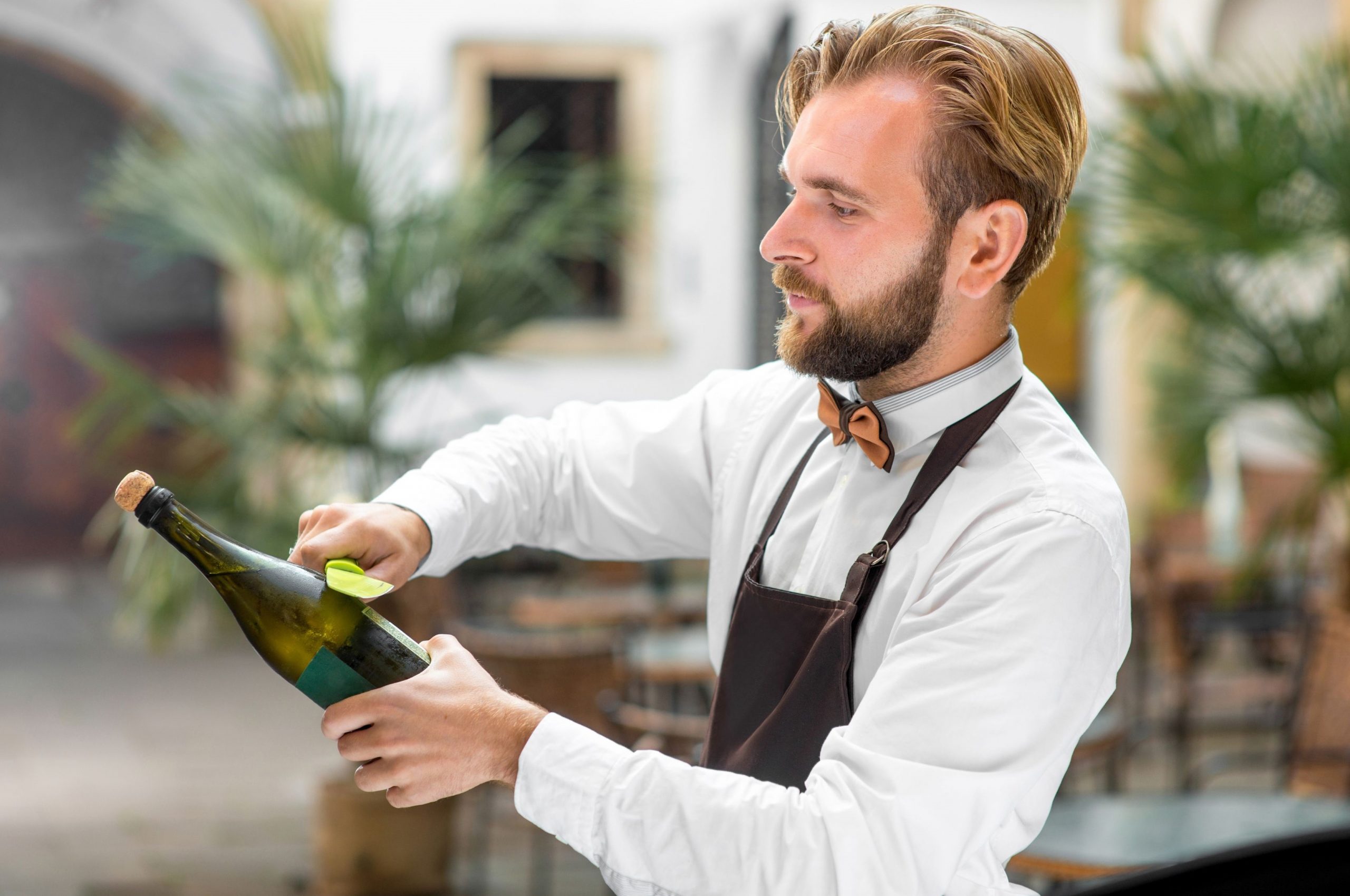
- The average bottle of Champagne is bottled with a pressure of five to six atmospheres. That’s approximately double the pressure in your car’s tires. A few key tips can help release the cork safely without losing precious wine. After removing the bottle’s foil and wire cage, keep a thumb firmly pressed on top of the cork, and slowly twist the base of the bottle. The cork will loosen gradually until it’s finally released, emitting a soft hiss or faint pop. If the cork or your hand contain moisture from bottle condensation, use a clean, dry dishcloth to help keep a steady grip. Chilling the bottle also helps avoid any buildup of extra pressure. Alternatively, you can go big, and sabrage the bottle to impress your friends. This is less dangerous than it looks but does involve glass and a sharp knife, so practice carefully before attempting it at home.
- When not serving Champagne, keep the open bottle sealed to prolong its effervescence. A high-quality Champagne stopper is essential for this and a well-sealed, refrigerated bottle of wine will keep its bubbles for three to five days.
- Champagne pairs very well with food. It’s delicious with canapés as an aperitif, and surprisingly versatile when it comes to meal pairing. The wine’s high acidity cuts through rich foods, and its savoury, yeasty character balances sweetness. A crisp, refreshing finish leaves the palate feeling clean. Champagne can also provide an excellent high-low pairing, as it works particularly well with dishes like fried chicken and pizza.
- The Champagne flute is the traditional glass. Its tall, skinny form preserves the sparkling wine’s bubbles, but it is by no means the only glass for serving Champagne. A quality white wine glass helps pronounce Champagne’s intense aromas and is preferred by many industry professionals for that reason. The tulip is a tall, but wide-bodied, happy medium.
The Johannesburg Cap Classique, Champagne & Bubbles Festival takes place at the Inanda Polo Club in Sandton on Friday May 17 from 18h00 to 20h00 and on Saturday May 18 from 11h00 to 16h00. Bubbly producers that will have stands at the festival include Amari, Anthonij Rupert Wyne (L’Ormarins), Bon Courage Estate, Boschendal, Graham Beck, Imvula Wines, JC le Roux, Khulu Fine Wine, Kleine Zalze Wines, Nanola Wines, Perdeberg Wines, Pongracz, Taittinger, Ultimate Provence, Veuve de Vernay, Villiera Wines and WCellar, with more brands to be announced over the coming weeks.
Tickets are available from Webtickets at: https://www.webtickets.co.za/v2/Event.aspx?itemid=1542929697