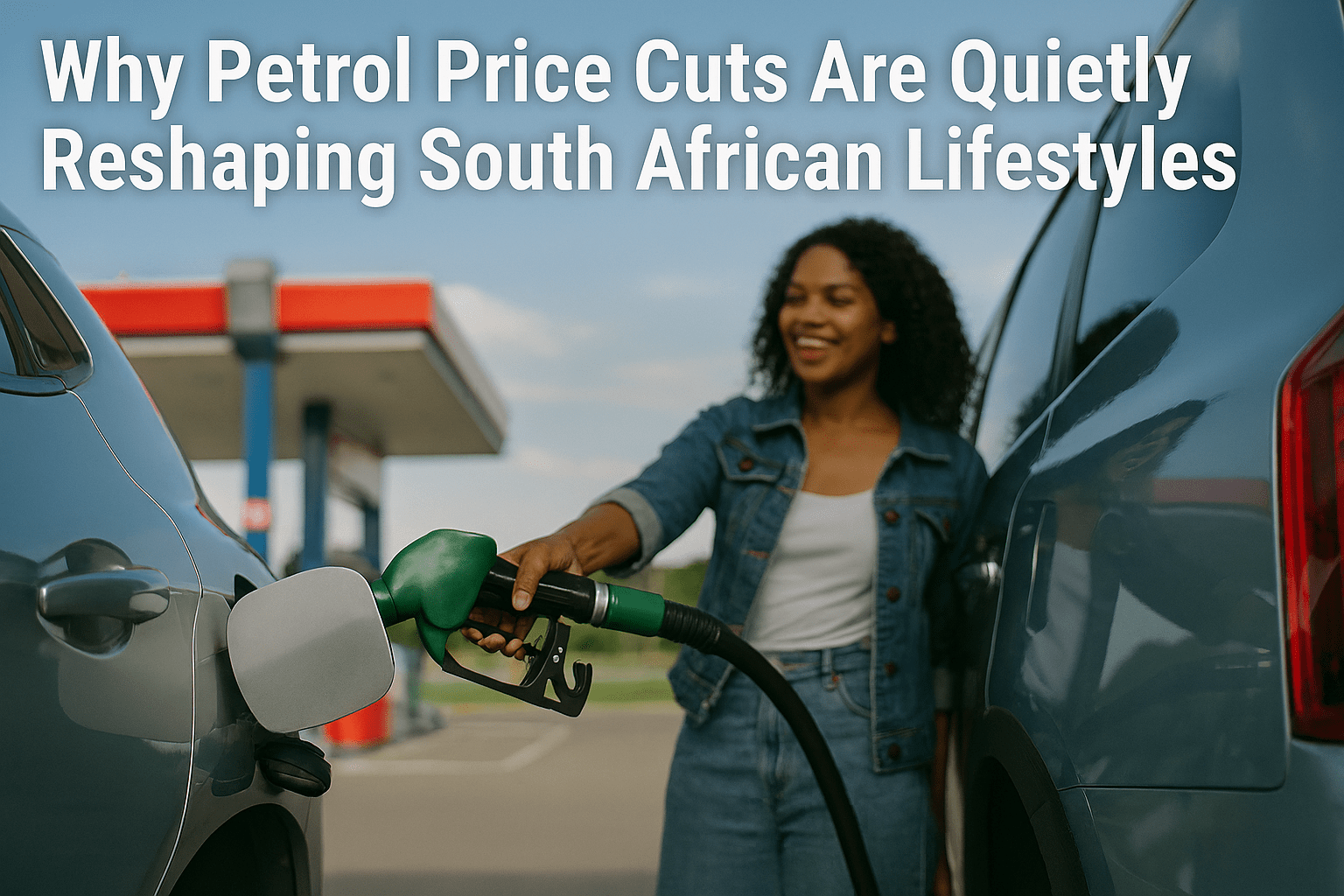
In South Africa, petrol prices are never just about fuel. They are about freedom, proximity, survival, and choice. They dictate where people live, how often families gather, whether a job opportunity is feasible, and if a small business can keep its doors open another month. That is why news of petrol price cuts — even modest ones — lands with such weight across the country. It speaks not only to economics, but to lived reality.
For many South Africans, fuel is the single most underestimated expense in the household budget. It doesn’t arrive as a bill with a due date. It creeps in daily — a swipe here, a top-up there — until it quietly shapes the entire month. When prices rise, life contracts. When they fall, life expands.
And that expansion is now being felt.
The Invisible Line Item That Controls Everyday Life
Fuel costs sit at the intersection of almost every lifestyle decision. A higher petrol price doesn’t just mean spending more at the pump — it means reconsidering school choices, declining social invitations, delaying medical visits, or turning down work opportunities that are “too far.”
For households already stretched by food inflation, electricity costs, and rising interest rates, fuel becomes the pressure point. People don’t talk about it loudly, but they adjust everything around it. Routes change. Visits become less frequent. Leisure disappears first.
So when fuel prices drop, the relief is subtle but profound. It’s not celebrated with fireworks — it’s felt in breathing space.
Mobility as a Measure of Dignity
In a country as geographically spread out as South Africa, mobility is not a luxury — it is a necessity. Cities are fragmented. Affordable housing is often far from economic centres. Families are separated by provinces. Opportunity frequently sits kilometres away from where people can afford to live.
Cheaper fuel restores movement. And movement restores dignity.
Suddenly, commuting doesn’t feel like punishment. Visiting family in another town becomes realistic again. Weekend travel — once the first thing to be cut — re-enters the conversation. Even something as simple as taking children out without calculating every kilometre feels like a small victory.
This is not about indulgence. It’s about access.
Small Businesses Feel It First — and Deepest
While consumers notice fuel prices weekly, small businesses experience them daily. For informal traders, delivery drivers, mobile service providers, and township entrepreneurs, petrol costs can determine profitability overnight.
A fuel price reduction means margins widen slightly. Delivery fees become competitive again. Routes that were once too expensive reopen. Some businesses can finally say yes to work they were forced to decline when fuel costs were high.
In sectors like food delivery, catering, construction, agriculture, and informal logistics, fuel is not a background expense — it is a core input. When that input becomes cheaper, the entire ecosystem breathes easier.
The Ripple Effect: How Fuel Prices Touch Everything
Economists often describe fuel as a multiplier cost. This means its impact spreads far beyond transport alone.
When fuel prices drop:
-
Food distribution becomes cheaper, slowing price increases on staples.
-
Public transport operators face less cost pressure, stabilising fares.
-
Ride-hailing services adjust pricing, making urban mobility more accessible.
-
Tourism becomes more attractive, especially domestic road travel.
-
Logistics and supply chains regain efficiency.
These changes don’t happen overnight, but they accumulate quietly — easing inflationary pressure across multiple sectors.
In this way, petrol price cuts act like a pressure valve in the economy. Not dramatic, but essential.
The Emotional Impact No One Talks About
Beyond economics, fuel prices carry an emotional weight. High prices create a sense of being trapped — geographically, financially, psychologically. People begin to shrink their worlds without realising it.
Cheaper fuel does the opposite. It restores possibility.
People begin to plan again. They consider visits, short trips, spontaneous drives. They feel less isolated. Less constrained. More in control.
In a country where stress levels are already high, this sense of regained agency matters more than policymakers often acknowledge.
Road Trips, Reconnection, and the Return of Movement Culture
South Africa has a deep road-trip culture — from long family drives to holiday destinations, to short weekend escapes that restore balance. Rising fuel costs had quietly eroded this culture, turning travel into a calculated risk rather than a source of joy.
With fuel prices easing, there is a noticeable return to movement. Local tourism picks up. Small towns see more visitors. Families reconnect across distances that once felt too expensive to cross.
This kind of movement strengthens social fabric. It keeps money circulating locally. And it reminds people that life doesn’t have to be confined to survival mode.
Not a Solution — But a Moment of Relief
It is important to be clear: petrol price cuts do not solve South Africa’s structural challenges. They do not fix unemployment, inequality, or infrastructure failures. But they do provide something equally valuable in difficult times — relief.
Relief creates space. And space allows people to make better decisions, emotionally and financially.
For households, businesses, and communities that have been operating under constant pressure, that space is not trivial.
Why This Moment Matters
Petrol prices rarely inspire optimism. They are usually a source of frustration, anger, and anxiety. That is why a price cut — even a temporary one — resonates so deeply. It represents a rare moment where the cost of living loosens its grip, however slightly.
In a country where distance often separates opportunity from access, cheaper fuel does something powerful: it reconnects people to possibility.
And sometimes, that quiet shift is enough to change the rhythm of everyday life.