As fuel prices surge to an unprecedented R26.60 per litre, the financial pressure on South African households is becoming impossible to ignore.
For millions of commuters, small business owners and working families, fuel is not a luxury expense. It is the cost of getting to work, transporting children to school, running deliveries, keeping businesses operational and simply maintaining daily life.
Every increase at the pump quietly reshapes household budgets — reducing money available for groceries, healthcare, school fees and essential living costs.
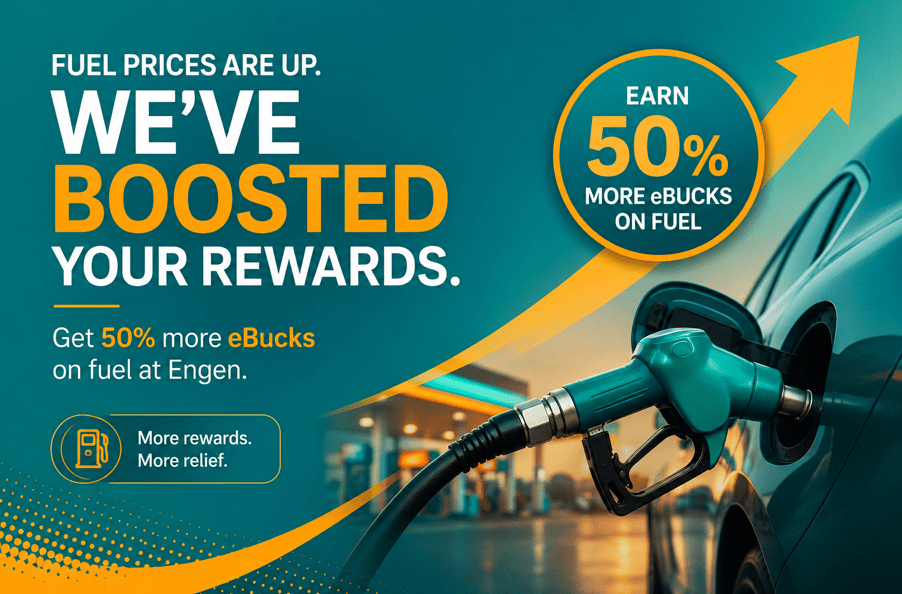
Now, in response to the latest fuel shock, eBucks has announced a limited-time Fuel Boost campaign aimed at easing some of that pressure for motorists across South Africa.
A 50% increase in fuel rewards
Running from May through June 2026, the campaign offers customers a guaranteed 50% increase in eBucks earn on fuel purchases at Engen, on top of their standard monthly fuel rewards.
At a time when consumers are scrutinising every rand spent, the campaign focuses on something immediate and practical: reducing the real-world impact of rising fuel costs through everyday spending behaviour people are already locked into.
Rather than asking customers to drastically change spending habits, the initiative rewards a necessity — simply filling up at the pump.
“This is about providing relief now”
According to Pieter Woodhatch, the campaign was developed specifically to respond to the financial strain consumers are currently facing.
“Fuel is an essential expense for most South Africans,” he explains.
“When prices rise, customers feel it immediately. So, by giving customers an extra 50% back in eBucks on fuel, we are helping to soften that impact by putting real value back into their hands, at a time when it matters most.”
“This is about providing relief now and not promising benefits later.”
How the Fuel Boost works
To qualify for the additional guaranteed 50% fuel earn, customers need to:
- Meet their standard monthly eBucks qualifying criteria
- Spend a minimum of R450 on fuel at Engen during the campaign period
The structure is intentionally simple — a decision Woodhatch says was deliberate.
“Customers don’t need to rethink their spending or jump through hoops,” he says. “They just need to fuel up as they normally would. That’s what makes the benefit practical and impactful.”
Up to R12 back per litre
For qualifying high-tier customers, the value can become substantial.
A Private Banking customer on eBucks Level 5, who also meets the WesBank and insurance qualifying criteria, currently earns R8 back per litre in eBucks on qualifying fuel purchases.
During the Fuel Boost campaign, that earn increases by an additional 50%, equating to:
- An extra R4 back per litre
- Up to R12 back per litre during the campaign period
In an environment where fuel prices continue to climb, that level of cashback can create meaningful relief for households already navigating rising living costs.
Fuel rewards becoming a financial survival tool
Over the past year alone, eBucks customers unlocked a combined R418 million in value at Engen.
That figure includes:
- R241 million earned back in eBucks rewards
- R177 million spent directly in eBucks to offset fuel costs
More than 850,000 customers are already using the programme to cushion rising transport expenses.
The growing popularity of these rewards reflects a broader consumer shift: loyalty programmes are no longer viewed as luxury perks or aspirational extras. Increasingly, they are becoming part of household financial survival strategies.
A changing relationship with rewards
According to Woodhatch, the role of rewards programmes is evolving beyond lifestyle incentives into something more functional and economically relevant.
“Our role goes beyond rewards; it’s about making our customers’ lives easier,” he says.
“That means recognising the real pressures people are under and responding in ways that are simple, practical, and genuinely helpful.”
Whether through fuel, groceries, data or everyday essentials, he says the focus is increasingly on helping consumers preserve cash flow and manage rising costs more sustainably.
Why this matters now
The timing of the campaign is particularly significant.
With transport costs feeding into broader inflation pressures across food, logistics and household spending, fuel price increases affect far more than motorists alone. They ripple across nearly every part of the economy.
For many South Africans, the question is no longer whether fuel prices are high — it is how to survive them without compromising other essential needs.
Initiatives like the Fuel Boost campaign will not erase the broader economic pressures facing consumers.
But for households trying to stretch already strained budgets, practical relief at the pump can make a meaningful difference.
And right now, every litre counts.