South Africa’s youth unemployment crisis has become one of the country’s defining challenges. Now, corporate leaders, volunteer organisations and technology innovators are joining forces with a clear message: creating jobs for young people requires more than skills training—it demands collaboration, mentorship and meaningful pathways into the economy.
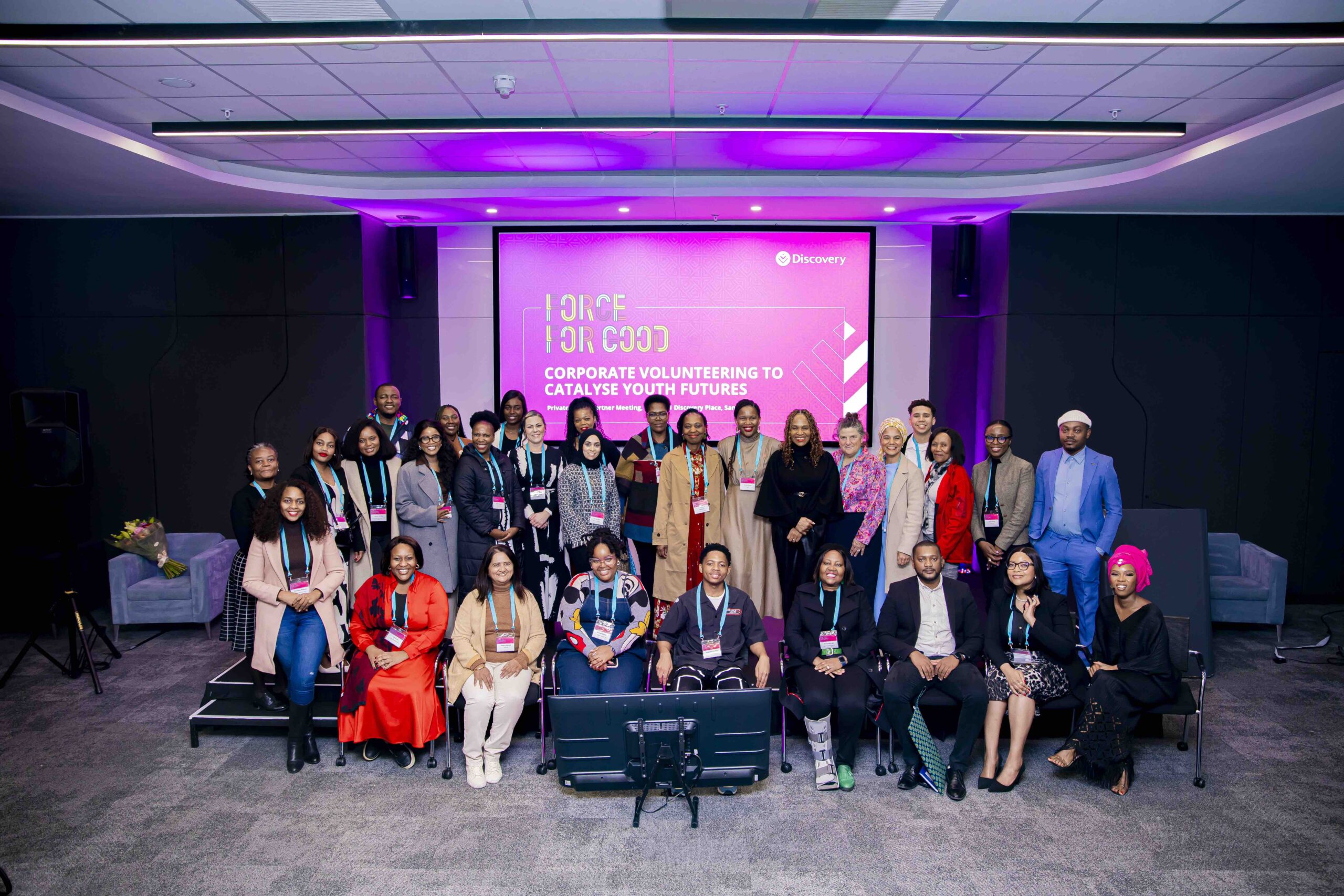
That vision took centre stage at Discovery’s Sandton headquarters, where corporate executives, youth development practitioners, global volunteer organisations and technology partners gathered for Force for Good: Corporate Volunteering to Catalyse Youth Futures.
Hosted by Discovery in partnership with the International Association for Volunteer Effort (IAVE), the high-level strategic dialogue explored how corporate volunteering can evolve into a coordinated and scalable solution for youth employability.
A Call for Corporate Leadership
Opening the event, Barry Swartzberg, Co-founder of Discovery Limited, challenged the business community to play a stronger and more collaborative role in shaping South Africa’s future workforce.
The urgency of that responsibility was reinforced by Andronica Mabuya, Head of Corporate Social Investment (CSI) at Discovery Limited.
She described youth unemployment as a “pandemic” confronting South Africa and highlighted that around 2 million young people are unemployed.
“The purpose of this platform is to co-create and ideate solutions for young people,” Mabuya said.
She stressed that many unemployed young South Africans are not without talent but without access to clear opportunities that connect them to the world of work.
“As corporates, we need to step up and take shared responsibility—not only within our own sectors, but by working together to find meaningful, scalable solutions. If we continue to operate in silos, we will not achieve the necessary impact or realise the true return on investment in youth initiatives.”
Throughout the discussions, one message remained consistent: online learning alone cannot solve youth unemployment.
Young people also need mentorship, practical workplace experience, human connection and visible opportunities that lead to sustainable employment.
Global Volunteerism Inspires Local Action
Providing an international perspective, Nichole Cirillo, Executive Director of IAVE, shared insights from the organisation’s Call to Action for the Future of Volunteering.
Developed through contributions from nearly 14,000 stakeholders across 164 countries and published in eight languages, the framework encourages governments, businesses and civil society organisations to strengthen support and recognition for volunteers as part of achieving sustainable development.
Cirillo also highlighted growing momentum around the United Nations International Year of Volunteers for Sustainable Development (IVY 2026), positioning South Africa as an important example of how volunteerism can strengthen employability, resilience and economic inclusion.
Technology Creating Real Opportunities
The event showcased practical programmes already delivering measurable results across Africa.
IBM presented its global IBM SkillsBuild initiative, a free education platform that provides training in artificial intelligence, cybersecurity, cloud computing, data science and workplace readiness.
The programme equips learners with internationally recognised digital credentials and practical skills designed for the future of work.
Building on that foundation, IAVE’s Reskilling Revolution Africa (RRA) initiative—delivered in partnership with IBM SkillsBuild and local implementation partners—has already supported more than 54,000 learners across Africa.
To date, participants have earned more than 2,000 digital credentials while completing over 153,000 learning hours.
Communities Must Shape the Solution
One of the day’s most impactful presentations came from Langelihle Gumede of Lungelo Youth Development, who shared firsthand experiences from communities in KwaZulu-Natal.
Her presentation highlighted the challenges many young South Africans continue to face, including limited access to digital devices, poor internet connectivity, scarce mentorship opportunities and uncertainty about career pathways.
“Not just skills. We need real pathways. Internships, learnerships, a first job. Without that visible destination, the journey feels pointless,” Gumede told delegates.
Her message reinforced the importance of designing youth development programmes with communities rather than simply for them, ensuring that mentorship, facilitator support and local realities remain central to long-term success.
Innovation Driving Measurable Social Impact
Technology platform Zlto demonstrated how digital innovation is helping transform volunteering into measurable economic participation.
Its platform rewards young people for completing community projects, learning programmes and entrepreneurship activities while providing corporate partners with verified impact data and engagement insights.
The platform has already achieved significant scale, registering nearly 1.5 million users, facilitating more than 3.3 million transactions, and tracking approximately 2.7 million volunteer and learning hours across multiple initiatives.
Building the Future Together
The strategic dialogue concluded with participants identifying practical opportunities for greater collaboration between corporate South Africa, volunteer organisations, technology partners and youth development practitioners.
A shared vision emerged: corporate volunteering has the potential to become a powerful driver of youth employability when it is intentionally linked to digital inclusion, mentorship, workplace pathways and long-term partnerships.
The discussions also laid important groundwork for future collaboration aligned with IVY 2026, positioning volunteerism not simply as community service, but as a practical mechanism for expanding economic participation, strengthening resilience and creating sustainable opportunities for South Africa’s next generation.