
The future is moving fast. And if the opening day of Singularity Summit South Africa 2026 is anything to go by, the biggest question is no longer whether technology will change the way we live and work, but how ready we are to shape that change.
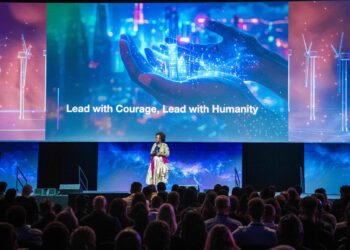
Held in Johannesburg, the first day welcomed a full house of more than 1,400 delegates. Presented in collaboration with Old Mutual, the Summit features Google Cloud and Industrial Development Corporation (IDC) as event sponsors, with UBU as its metaverse partner. More than 40 speakers from around the world are taking part in this year’s programme.
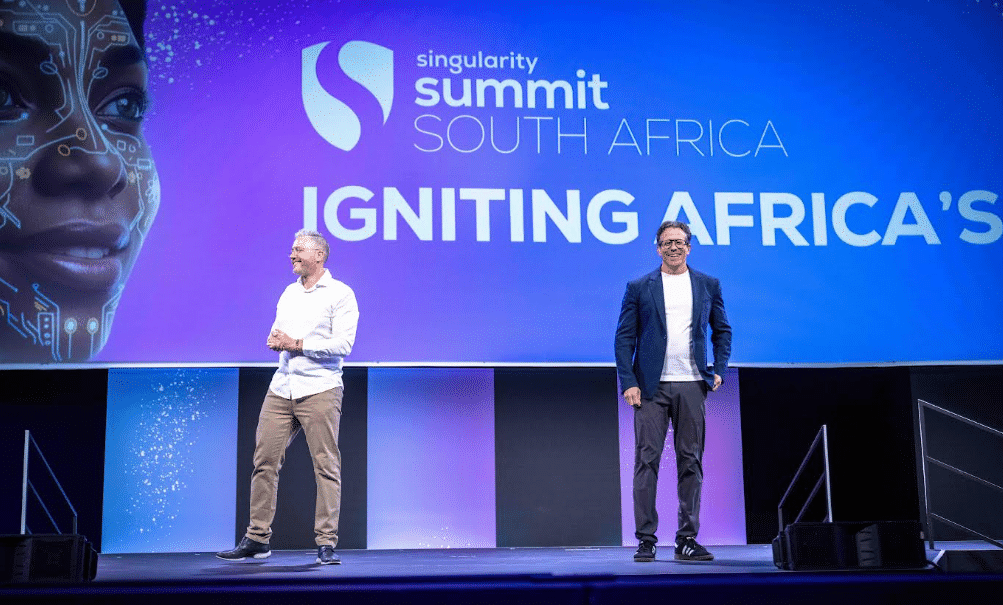
Following a welcome from Singularity South Africa Co-CEOs Mic Mann and Shayne Mann, and a video message from Singularity founder Peter Diamandis, global expert David Roberts opened a day of discussions that challenged conventional thinking about artificial intelligence, business and the future.
From digital colleagues capable of completing complex tasks to robots operating in the physical world, the presentations offered a glimpse into emerging possibilities. But one message stood out: businesses and African economies cannot afford to treat this technological shift as business as usual.
AI Is Changing the Rules of Business
Opening the keynote programme, David Roberts urged business leaders to rethink how they prepare for disruption.
He argued that organisations often plan for the future by extending what they already know, rather than imagining what could become possible. AI, he explained, represents a different kind of technological revolution because it has the potential to scale intelligence itself.
Roberts distinguished between AI-augmented businesses, which use technology to improve existing operations, and AI-native businesses, which are designed around the availability of increasingly inexpensive intelligence.
His challenge to leaders was direct: instead of asking how AI can improve an existing business, they should consider what they would build if intelligence were almost free.
Technology futurist and innovation expert Cathy Hackl expanded the conversation beyond the familiar debate about whether AI will save or destroy humanity. She encouraged delegates to consider the different futures people can choose to create.
Her presentation explored autonomous AI agents making purchasing decisions, robots operating in physical environments, quantum sensing, advanced materials, longevity technologies and the growing space economy.
Hackl also highlighted opportunities for Africa to participate in emerging fields such as quantum sensing and communications. Her central message was that technology does not determine our future on its own. The decisions we make about how to develop and use it matter.
Africa Must Build Its Own AI Future
For Africa, the AI revolution presents both a challenge and an opportunity.
Ziaad Suleman, a technology and digital infrastructure leader at Cassava Technologies, argued that the continent must take greater ownership of its AI capabilities. Africa’s young population, he said, could be a significant competitive advantage.
He introduced the concept of an AI factory, where computing power, data and models work together to produce intelligence at industrial scale.
Suleman also highlighted the importance of digital sovereignty. This extends beyond where data is stored to include who controls the infrastructure, technology and economic value generated.
With Africa accounting for less than 1% of global data centre capacity despite representing approximately 20% of the world’s population, he pointed to a substantial investment opportunity.
The message was clear: if Africa wants to benefit fully from the next wave of economic growth, it must develop its own AI infrastructure and capabilities.
The opportunity to build rather than simply adopt technology also featured in Cathy Hackl’s presentation. Together, these perspectives placed African innovation firmly within the global conversation about what comes next.
From AI Assistants to Digital Colleagues
Artificial intelligence is moving beyond tools that respond to individual prompts. Increasingly, businesses are exploring systems that can complete tasks and work towards defined outcomes.
Maureen Costello, Google Cloud’s Vice President for the UK and Ireland, and Sub-Saharan Africa, outlined three stages in workplace technology: software that requires human input, AI assistants that respond to prompts, and autonomous AI agents that can be assigned an outcome to achieve.
A live demonstration brought the concept to life. An AI chief of staff identified a delivery truck breakdown, communicated with the driver in isiZulu, assessed the business implications and recommended a recovery plan for human approval.
The example highlighted how AI could support operations while keeping people involved in important decisions.
Costello’s broader lesson was that businesses stand to gain more when they redesign workflows around AI, rather than simply adding new tools to existing processes.
Felix Cheung, Founder and CEO of Bairong Group, offered another perspective on how digital workers could operate alongside human employees.
Drawing on Bairong’s experience in banking, telecommunications and customer service, Cheung explained how AI has progressed from analysing information and supporting decisions to agents capable of completing entire business processes.
At Bairong, approximately 200,000 AI agents already operate alongside around 1,000 human employees. These digital workers are assigned responsibilities, performance measures and reporting structures.
Cheung stressed that successful adoption should start with a genuine business problem. The objective, he argued, should be to complete work effectively, not simply to demonstrate impressive technology.
Complex Work Could Take Hours Instead of Months
The pace of AI development was also evident in a presentation by Dario Fanucchi, CTO of Isazi.ai.
Fanucchi demonstrated how multiple AI agents can reduce the time required to complete complex work. One example involved a major supply chain analysis that would traditionally have taken several months but was completed in 16 hours by two senior data scientists working with 20 AI agents.
He also showed how AI is accelerating software development and helping teams tackle problems that were previously prohibitively expensive or technically difficult.
For business leaders, the challenge is to look beyond automating existing tasks and identify ambitious projects that have only recently become achievable.
Barak Kaufman, Chief Strategy Officer at Wonderful.ai, addressed the next hurdle: moving AI from experimentation into meaningful organisation-wide implementation.
He identified fragmented technology decisions, incompatible systems and insufficient attention to change management as barriers to progress.
Using a business loan application as an example, Kaufman demonstrated how coordinated AI agents could reduce a process involving several departments and lengthy manual procedures to just a few hours, while retaining human oversight of important decisions.
His recommendation was practical. Businesses should select one complete workflow, begin with a small proportion of transactions, assess the results and expand what works.
Successful transformation, he argued, requires executive leadership and coordination rather than isolated technology projects.
Humanoid Robots Bring AI Into the Physical World
The future of AI was not limited to screens and software.
A live demonstration by Rajesh Pasungili and Shayne Mann brought humanoid robots Maximus and Marcy to the stage. Delegates saw how advances in robotics are enabling machines to balance, move and respond to their surroundings with increasing sophistication.
The presentation explored potential applications in manufacturing, healthcare and homes, while highlighting the importance of preparing young people to build and work alongside these technologies.
Resolute Education’s robotics initiative demonstrated how coding robots are already introducing South African schoolchildren to programming, problem-solving and engineering principles.
Delegates also learned that Cape Town will host the World Robot Olympiad International Final in 2028, bringing a major international platform for young robotics innovators to Africa for the first time.
The demonstration connected technological progress with a question that will matter long after the Summit: how can the next generation gain the skills to participate in this changing world?
A New Economic Era Is Taking Shape
Raoul Pal, Global Macro Investor and Co-Founder of Real Vision, explored the economic implications of several technologies advancing at the same time.
He argued that AI, robotics, renewable energy, biotechnology and space technologies are reinforcing one another, accelerating the pace of change and creating opportunities for new business models.
As the cost of computing and intelligence falls, Pal suggested, new markets could emerge. Autonomous AI agents may increasingly participate in economic activity as producers, consumers and decision-makers, while blockchain, tokenisation and digital currencies could provide infrastructure for machine-to-machine transactions.
For Africa, he highlighted the continent’s youthful population, abundant solar resources and potential to adopt new technologies without the constraints of legacy systems.
Pal also offered a thought-provoking view of human value in an increasingly digital world. As digital intelligence becomes more abundant, he suggested, authentic human experiences and interactions could become even more valuable.
The Human Qualities That Technology Cannot Replace
Despite the focus on advanced technology, several speakers returned to the importance of human judgement, leadership and creativity.
Kyle Hermans, CEO of Oxford Leadership and Be Courageous Research, challenged leaders to develop the courage needed to navigate constant disruption.
Through five principles of courage, he encouraged delegates to work backwards from the future they want to create, build new systems instead of continually repairing outdated ones, remain willing to learn and unlearn, innovate before change becomes unavoidable, and create workplaces where people feel safe to contribute ideas.
His message was that leaders must balance delivering results today with preparing their organisations for tomorrow.
Celiwe Ross, Group Chief Human Capital and Corporate Affairs Officer at Old Mutual, brought that challenge into the South African business environment.
Drawing on Old Mutual’s experience, Ross explained that AI can help employees work faster, but meaningful transformation requires organisations to rethink how work is done.
Examples involving fraud detection and an internal employee support agent showed why employees must be involved in designing AI solutions. In fraud detection, investigators helped shape the technology using their experience, allowing AI to identify emerging patterns while keeping important decisions in human hands.
Ross emphasised that leaders must understand AI, equip employees with relevant skills and recognise the continuing importance of human judgement, empathy and trust.
Christina Gerakiteys, CEO of UtopiaX and founder of IdeaSparx, explored another essential part of innovation: the willingness to fail.
She argued that fear of mistakes can stop individuals and organisations from experimenting with new ideas. Examples from business and aviation illustrated how setbacks can lead to unexpected opportunities.
One example was Slack, which emerged from the failure of an online gaming venture.
Gerakiteys urged leaders to create psychologically safe workplaces where people can test ideas, discuss mistakes and learn from them. In a world of rapidly advancing AI, she argued, experimentation and the ability to make unexpected connections remain important human strengths.
Building African AI Research and Skills
Professor Benjamin Rosman, an AI researcher and founder of the MIND Institute at Wits University, explored intelligence, adaptability and Africa’s role in AI research.
Drawing on his personal experience of living with cerebral palsy, Rosman explained how the brain’s ability to adapt to physical constraints shaped his understanding of intelligence as something broader than simply knowing the correct answers.
He also reflected on the growth of the Deep Learning Indaba, which began as an initiative to connect African AI researchers and has developed into a major continental network supporting research, collaboration and skills development.
Through the MIND Institute at Wits University, Rosman is working to strengthen Africa’s ability to contribute to AI development rather than simply consume technologies created elsewhere.
His message reinforced a recurring theme of the Summit: adaptability, collaboration and the ability to solve unfamiliar problems will be vital as technology evolves.
Bionic Technology Puts People at the Centre
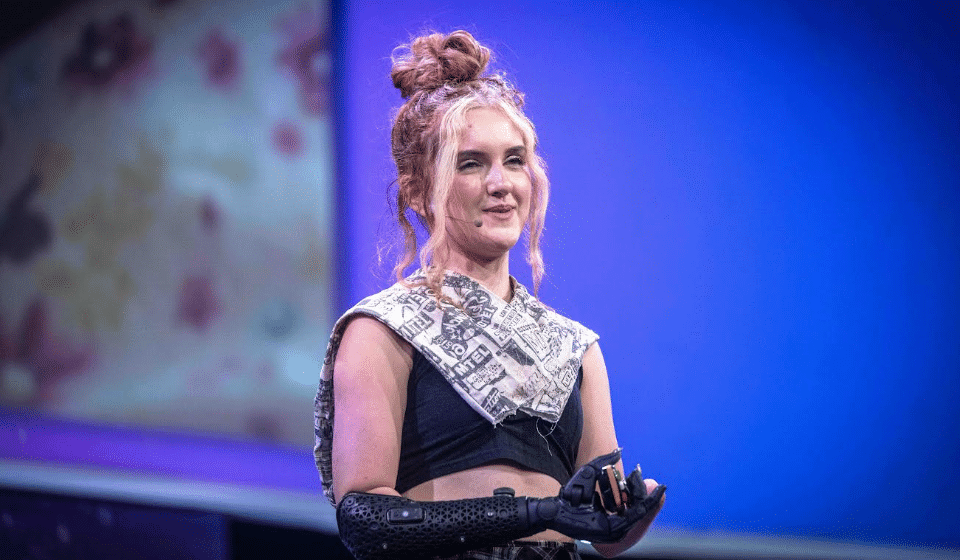
One of the day’s most personal perspectives came from Tilly Lockey, a bionic technology advocate and Open Bionics ambassador.
Returning to the Singularity South Africa stage seven years after her first appearance, Lockey shared how prosthetic technology has transformed her life.
After losing both hands to meningococcal septicaemia as a young child, she experienced the progression from basic prosthetic devices to sophisticated bionic arms that she helped design and test with Open Bionics.
Her experience highlighted the importance of involving the people who use technology in its development. She also explored how AI could make future prosthetics more intuitive, potentially anticipating intended movements and responding more naturally.
Lockey reminded delegates that while much of the global AI debate focuses on risk, technology is already helping people gain greater independence, mobility and opportunity.
She concluded by introducing South African engineering student and inventor Fana Shabane, whose development of a robotic assistant for his grandmother demonstrated how personal challenges can inspire practical innovation.
The Future Is Not Just About Technology
The first day of Singularity Summit South Africa 2026 offered a broad look at the forces reshaping business, economies and everyday life.
The presentations explored AI agents completing complex workflows, robots moving through physical environments, new opportunities for African infrastructure and research, and technologies that could change how people work and live.
Yet the strongest message was not simply that innovation is accelerating. It was that people, businesses and countries must decide how to respond.
For South Africa and the wider continent, the opportunity extends beyond adopting tools developed elsewhere. Building local infrastructure, developing skills, supporting research and creating environments where people can experiment will all play a role in determining who benefits from the next wave of change.
As the Summit continues, one question remains central: will Africa merely adapt to the future being built, or help build it?