Diepsloot, Johannesburg — 7 May 2026 — In a country battling soaring youth unemployment and growing food insecurity, a new farming pilot in Diepsloot is testing a bold idea: what if the solution to both crises could grow from the same soil?
Led by Afrika Tikkun and funded by E Squared Investments, the newly launched Green Acres Hydro-Coop programme is transforming unemployed youth into micro-farming entrepreneurs using sustainable agritech systems designed for South African realities.
The initiative is not simply teaching agriculture. It is building businesses.
And for many of the young people involved, it represents something even bigger: ownership, dignity, and the possibility of long-term economic independence.
A farming model built for modern South Africa
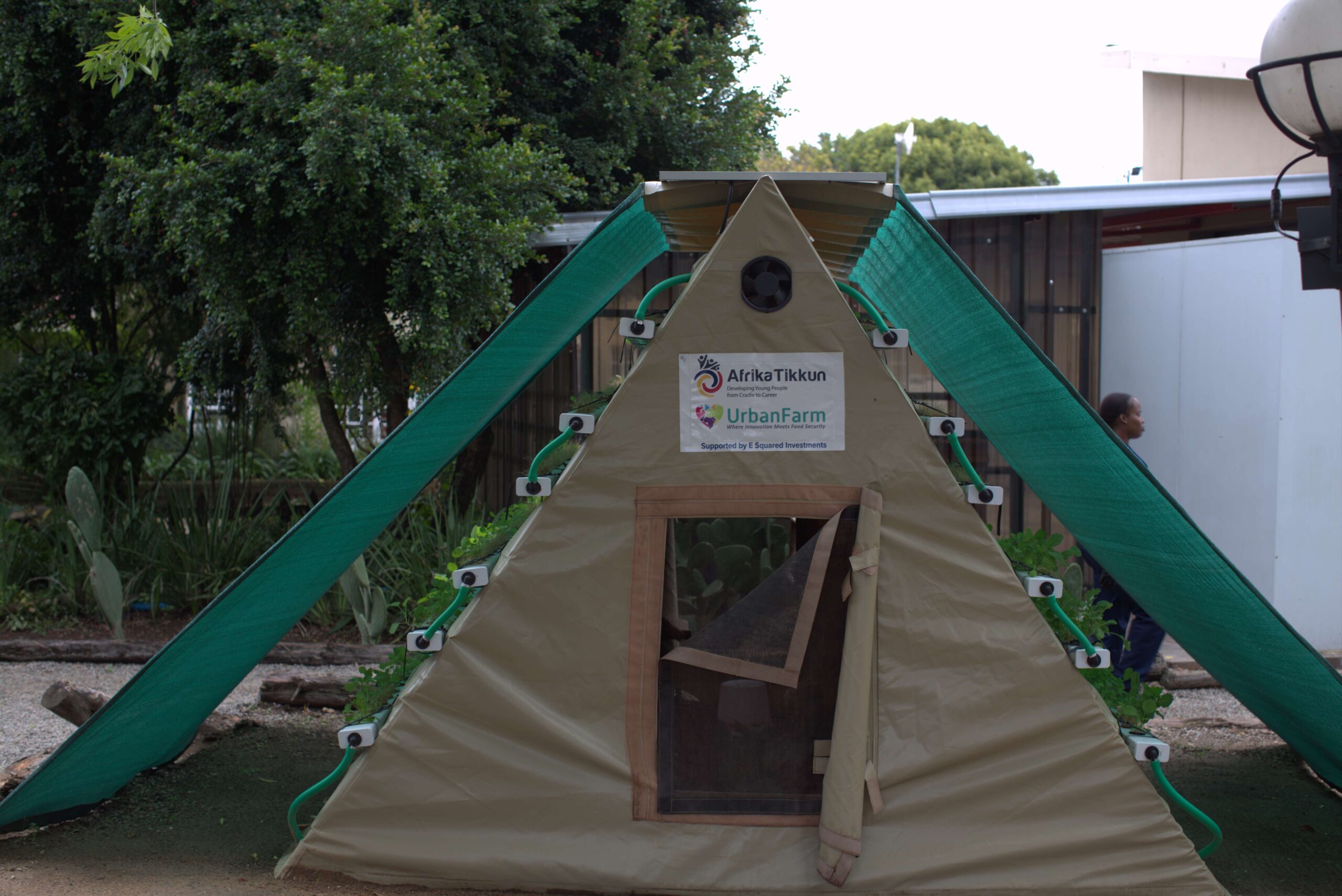
At the centre of the pilot are innovative Hydro-Coop units — compact, solar-powered smart farming systems that combine poultry production with hydroponic vegetable farming.
Unlike traditional farming models that often require large amounts of land, water, and infrastructure, these units are designed to function in urban, rural, and remote environments with limited resources.
The technology uses significantly less water than conventional agriculture while supporting biodiversity-friendly growing methods, making it particularly relevant in a country increasingly affected by climate and food security concerns.
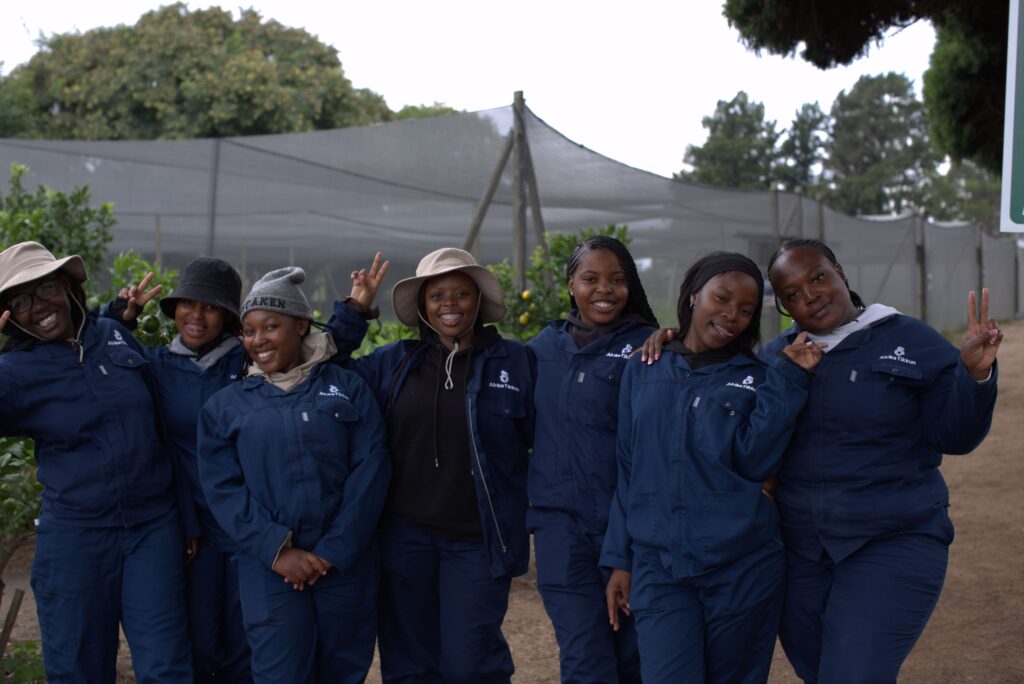
Launched earlier this week at Green Acres Farm, the pilot cohort includes 20 young entrepreneurs — notably made up of 19 women and one young man with a disability.
From unemployed youth to business owners
The programme officially began in February, combining practical agricultural training with live business operations across a 12-month development cycle.
Participants have already completed training in:
- Hydroponics
- Farm management
- Entrepreneurship
- Business operations
But unlike many short-term skills programmes, this initiative is structured around ownership rather than temporary placement.
Participants are actively building and running their own micro-enterprises while gaining direct access to markets.
From the farm to retail shelves
To help bridge the gap between production and income generation, Afrika Tikkun has partnered with Garden Fresh at Nine Yards and other retail spaces to sell produce grown through the programme.
Participants will also gain hands-on experience in customer engagement and sales through specially designed retail environments.
It is a deliberate shift away from survivalist farming toward market-ready entrepreneurship.
And the projected impact is significant.
If production targets are achieved, the 20 youth-owned enterprises are expected to produce annually:
- 22,400 chickens
- 60,000 vegetables
- Approximately 228,000 meals
- Up to 1.5 million litres of water savings
Why women are at the centre of the programme
According to Marc Lubner, the overwhelmingly female cohort was intentional.
Women — particularly younger women — continue to face disproportionately high unemployment rates, lower access to capital, and fewer entrepreneurial opportunities than men across South Africa.
“This focus reflects a wider economic reality,” Lubner explains.
“When skills development is combined with long-term mentorship, farming stops being just a chore and becomes a sustainable career. These youth aren’t just farming for today; they are building the businesses of tomorrow.”
Agriculture as a pathway to ownership
The programme forms part of Afrika Tikkun Agriculture, an initiative rooted in the organisation’s long-standing Cradle-to-Career development model.
Rather than separating education, entrepreneurship, and employment, the model integrates them into one ecosystem designed to create sustainable livelihoods.
“Agriculture can be a powerful engine for jobs, entrepreneurship and community growth,” says Lubner.
“By giving young people access to infrastructure, practical training and market opportunities, we are helping them build viable businesses and long-term income.”
A success story already taking root
One example of the programme’s long-term impact is Debra Dagada, who previously joined Afrika Tikkun’s agricultural learnership programme in Gauteng.
After completing an NQF Level 2 qualification in Plant Production, Dagada transitioned into entrepreneurship through Green Acres, launching her own farming operation with technical support, mentorship, and starter inputs.
She later secured her own land at Northern Farm — evolving from trainee to independent farmer.
Her journey represents the broader ambition of the programme: moving young people from dependency into ownership.
Scaling a model with long-term potential
Technology partner UrbanFarm Africa says it has already implemented 271 smart farming projects, trained more than 7,500 people, and helped participating farmers generate approximately R250 million over five years.
For Zakiya Khan, that scalability is exactly what makes the initiative compelling.
“We believe in backing solutions that are both practical and enduring,” she says.
“What stands out in this model is its focus on enabling young people to participate meaningfully in the economy — not just through skills development, but through ownership and the ability to generate income over time.”
Afrika Tikkun plans to introduce another cohort of 20 participants in 2027, with ambitions to expand the model into more communities across South Africa.
More than farming — a vision for economic transformation
At a time when South Africa’s youth unemployment crisis continues to deepen, the Green Acres Hydro-Coop programme offers something increasingly rare: a model grounded not in charity, but in sustainability, entrepreneurship, and long-term economic participation.
It is farming, yes.
But it is also infrastructure.
Skills development.
Food security.
Climate-conscious innovation.
And perhaps most importantly — ownership.
Because for these young entrepreneurs in Diepsloot, the future is no longer something they are waiting for.
It is something they are actively growing.