More than eight in ten employees are currently at risk of burnout, according to The Interview Guys, yet the solutions conversation continues to orbit the same high-altitude fixes: better systems, bigger targets, smarter productivity frameworks. The assumption is that if work feels overwhelming, the answer must also be big.
But what if it isn’t?
What if the real fix is not found in scale, but in something far smaller… almost invisible?
We’ve become so fixated on milestones—the promotions, quarterly targets, performance reviews, and major wins—that we’ve quietly stopped noticing the actual texture of a working day. The in-between moments. The seemingly insignificant fragments that rarely make it into reports, dashboards, or productivity metrics.
And yet, it is precisely in these in-between spaces where most of working life actually happens.
The hidden weight of the working day
There is a particular kind of mental fatigue that builds when days are spent sprinting from deliverable to deliverable. The to-do list becomes less a guide and more a treadmill. Meetings blur into each other. Tasks get completed, but rarely absorbed.
Research cited by Wellhub suggests that more than half of employees end each working day feeling genuinely “used up.” In that state, the week stops feeling like something you experienced and starts feeling like something that simply happened to you.
This is not always dramatic burnout. Often, it is quieter. More ordinary. And that is what makes it harder to notice.
The case for micro-moments
What if the antidote isn’t another structural overhaul, but something much smaller?
A growing number of people are beginning to notice what can only be described as micro-moments. These are the almost-nothing instances that are so easily dismissed they barely register as meaningful—until you start paying attention.
A compliment given in passing that visibly shifts someone’s expression.
The long-lost key discovered just before panic sets in.
The final “send” on a report carried for weeks.
A voice note that makes you laugh so hard you have to pause what you’re doing.
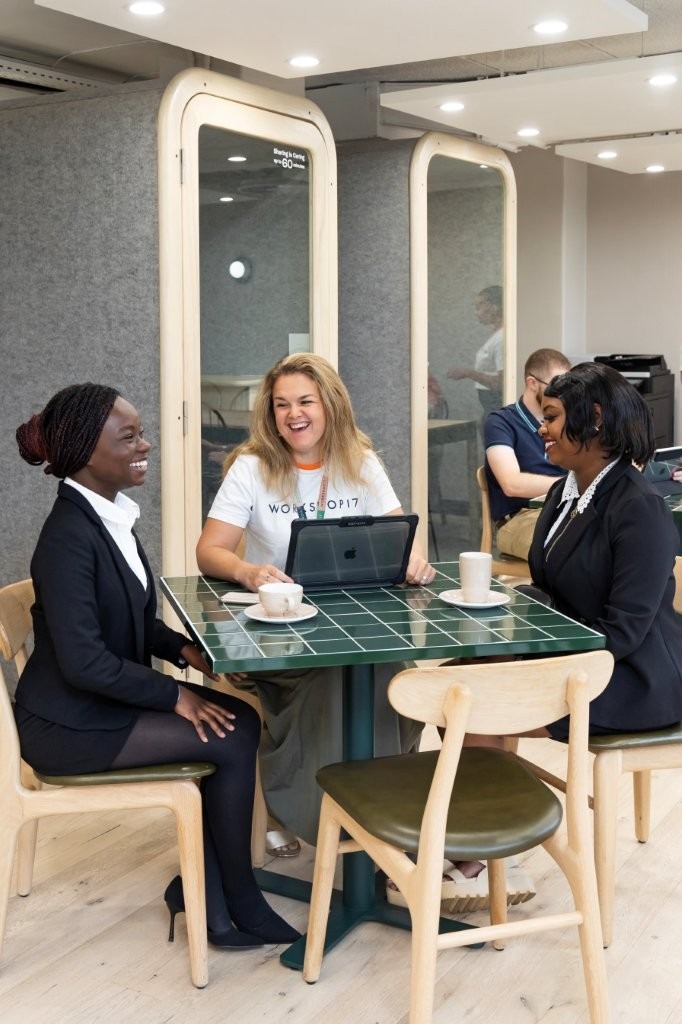
A shared lunch break in warm afternoon light that feels unexpectedly human.
None of these would qualify as productivity hacks. None belong in a corporate optimisation strategy. Yet collectively, they quietly shape whether a day feels unbearable or simply human.
Joy in the ordinary
The poet Harry Baker, reading Joy Chose You by Donna Ashworth, captures something essential about this idea. Joy, in this framing, is not something to be scheduled or earned. It arrives unannounced, embedded in ordinary moments—if attention is available to receive it.¹
That shift matters.
It is not about adding more practices, apps, or systems. It is about reorienting attention itself. When people stop running entirely on autopilot and start noticing the world they are already in, work changes shape. The day stops feeling like a conveyor belt and starts feeling like something inhabited.
It is in the warmth of a favourite chair. The worn stickers on a laptop that carry older versions of self. The reception desk roses that are passed every day but rarely truly seen.
These are not transformations of circumstance. They are rediscoveries of what was already there.
Not toxic positivity—something more grounded
This is not an argument for ignoring difficult days. Some weeks are genuinely heavy, and no level of mindfulness will erase structural pressure, workload strain, or organisational dysfunction.
But there is something quietly powerful about refusing to let small good moments go unnoticed.
It becomes a subtle resistance to a version of work that only values what can be measured. A refusal to let the day be flattened entirely into output.
The micro-moment does not fix macro burnout. It does not resolve systemic overload. But it does something more immediate and human: it interrupts the sense that you are only a function inside a system.
Even briefly, it returns you to yourself.
And sometimes, that is enough to keep going with more clarity than before.
Author Bio
Penelope Meniere is Marketing Manager at Workshop17, a network of collaborative workspaces across South Africa.