South Africa — April 2026 — As the cost of living tightens its grip on households across the country, financial pressure is no longer a distant concern — it is a daily reality. Rising electricity tariffs, increasing municipal rates, and surging fuel prices are reshaping household budgets, leaving little room to breathe.
And now, the consequences are beginning to show.
Applications for debt counselling have already risen significantly compared to the same time last year — a signal that many South Africans are reaching a breaking point. In this climate, Financial Literacy Month arrives not as a routine calendar event, but as a critical moment of reflection.
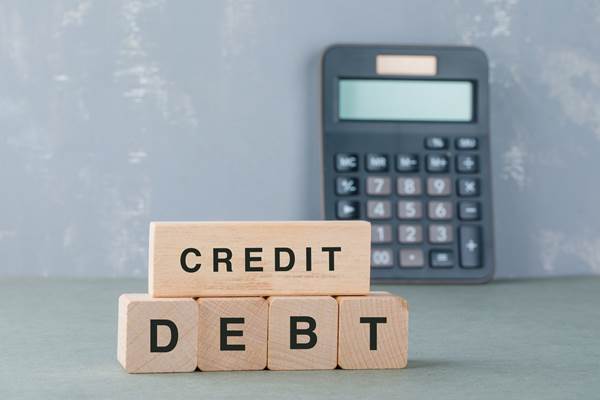
At the centre of the conversation is a concept often misunderstood, yet deeply consequential: the difference between ‘good’ and ‘bad’ credit.
Credit Is Not the Enemy — Misuse Is
According to René Moonsamy, chairperson of the National Debt Counselling Association (NDCA), credit itself is neither good nor bad. It is a financial tool — one that can either build stability or accelerate financial distress depending on how it is used.
“The reality is that we’re going to see people borrowing more,” she explains. “In this context, understanding debt and the distinction between so-called ‘good’ and ‘bad credit’ is important.”
Faced with mounting expenses, many consumers are left with limited options:
- Accessing additional credit
- Tapping into retirement savings through the two-pot system
- Seeking professional help through debt counselling
For some, it becomes a combination of all three — a delicate balancing act that can quickly spiral out of control.
What Defines ‘Good’ Credit?
‘Good’ credit is not about the product — it’s about the purpose, affordability, and management behind it.
It typically involves borrowing that is:
- Affordable relative to your income
- Well-managed, with consistent, on-time repayments
- Used for long-term benefit, such as building assets or improving earning potential
Examples include financing a vehicle to commute to work, investing in education, or funding home improvements that increase property value.
Used correctly, this type of credit does more than solve immediate needs — it builds your financial future. Timely repayments strengthen your credit profile, improving your chances of accessing better financial products and lower interest rates over time.
The Legal Safety Net — and Its Limits
South Africa’s National Credit Act places responsibility on lenders to ensure that credit is only extended when it is affordable. But this system depends on honesty.
When consumers misrepresent their income or understate expenses in an effort to secure approval, the system breaks down — and what may have seemed like a solution quickly becomes a burden.
When Credit Turns ‘Bad’
‘Bad’ credit is defined not by the loan itself, but by its impact.
It is typically:
- Unaffordable, stretching beyond what your income can sustain
- High-cost, often carrying steep interest rates
- Used for short-term consumption, offering no lasting financial value
- Poorly managed, leading to missed or late payments
Common examples include using credit to fund everyday living expenses or taking out new loans to repay existing debt — a cycle that often leads directly into a debt spiral.
“In simple terms, ‘good credit’ helps you acquire assets and achieve financial stability in the long term,” Moonsamy explains. “While ‘bad credit’ is usually unaffordable, often used for short-term consumption, and damages your credit record.”
The Debt Spiral — and How to Escape It
For many South Africans already caught in a cycle of debt, the distinction between ‘good’ and ‘bad’ credit may feel irrelevant. When survival is the priority, long-term financial strategy often takes a back seat.
But ignoring the problem comes at a cost.
Delaying action can:
- Further damage your credit score
- Increase the risk of asset repossession
- Limit your access to formal debt counselling solutions
This is where the NDCA plays a critical role. Established in 2017, the organisation represents some of South Africa’s most experienced debt counsellors and aims to uphold standards, improve the sector, and educate consumers.
Its members — including NDA, DebtBusters, Pioneer Debt Solutions, National Debt Counsellors, Meerkat, My Debt Hero, the Fix Fin Group, and DC Experts — collectively represent 50% of the debt counselling sector and have secured 12 out of 14 Debt Review Awards since 2014.
A Moment That Demands Financial Awareness
As Financial Literacy Month unfolds, the message is clear: credit is not inherently dangerous — but misunderstanding it can be.
In a time where financial pressure is intensifying, the ability to distinguish between credit that builds and credit that breaks becomes more than knowledge. It becomes protection.
Because in today’s economy, the difference between ‘good’ and ‘bad’ credit is not just financial.
It’s the difference between stability — and a spiral.