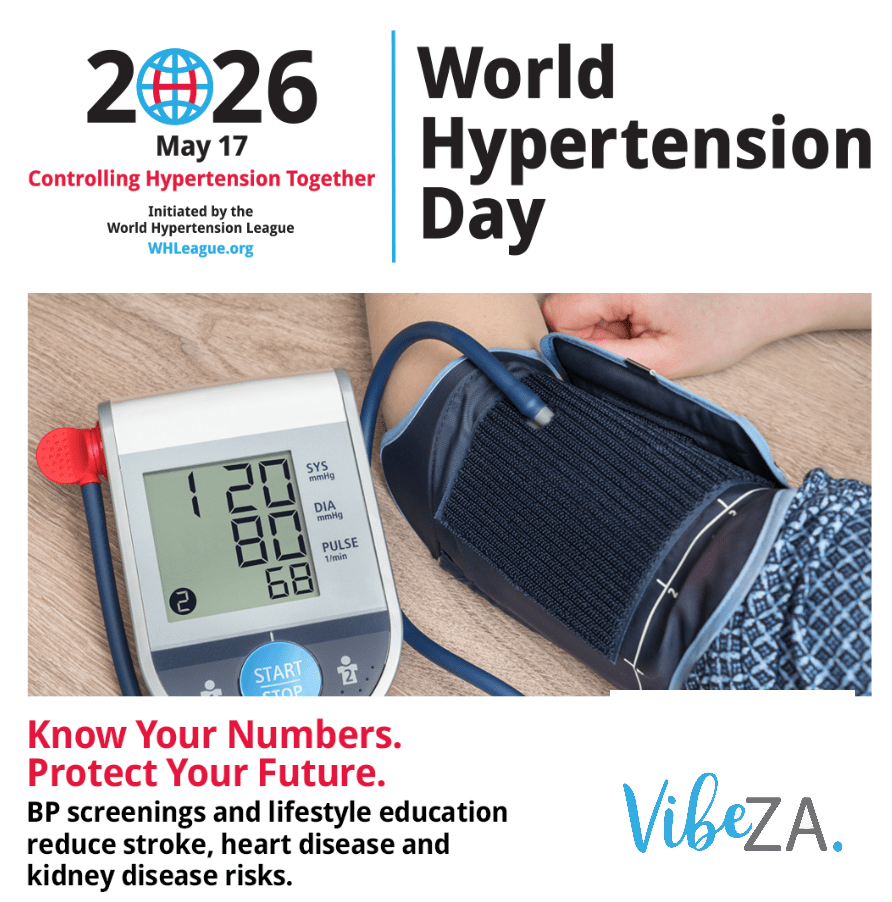
As South Africa marks World Hypertension Day 2026 under the theme “Controlling Hypertension Together!”, health experts are warning that the country’s growing blood pressure crisis is not only being shaped by genetics or age — but increasingly by the quiet, everyday habits happening in kitchens, grocery aisles and fast-food queues across the nation.
For many South Africans, hypertension still feels like a condition associated with old age or serious illness. But medical experts continue to stress that high blood pressure often develops gradually, fuelled by repeated lifestyle patterns that can begin years before any diagnosis is made.
What makes hypertension particularly dangerous is its silence.
Often showing no obvious symptoms, the condition can quietly damage the body over time, increasing the risk of strokes, heart attacks, kidney disease and other life-threatening complications before people even realise there is a problem.
According to the Heart and Stroke Foundation South Africa, heart disease claims the lives of 225 South Africans every single day, while globally, 13% of all deaths are linked to high blood pressure.
In 2026, however, health professionals say the issue is becoming more deeply connected to modern lifestyle pressures.
A Nation Eating on the Run
Across South Africa, rising food costs, demanding work schedules and the growth of convenience-based eating have transformed the way many households approach meals.
Processed foods, heavily salted snacks, quick takeaways and ready-made meals have become everyday solutions for time-strapped families trying to balance affordability and convenience.
At the same time, stress levels continue to rise, sleep quality is declining, and physical activity is becoming less common in many urban lifestyles — creating the perfect conditions for blood pressure to slowly climb over time.
Murishca Martheze, Marketing Manager at B-well by Southern Oil, says prevention starts long before a doctor’s diagnosis.
“Many people think managing blood pressure only starts once there is a diagnosis, but prevention often begins much earlier with everyday choices made in store and in the kitchen.”
Her comments reflect the broader message behind this year’s World Hypertension Day campaign — that managing hypertension is not solely the responsibility of healthcare professionals, but a shared effort involving families, communities, food producers and consumers themselves.
The Hidden Ingredients Many Families Overlook
While many consumers have become more conscious about reducing sugar or counting calories, health experts say other important dietary factors are often ignored.
Sodium intake, portion sizes and the types of fats used in everyday cooking continue to play a major role in long-term cardiovascular health.
And it is often the small, consistent habits that matter most.
Cooking more meals at home, reducing excessive salt use, incorporating fresher ingredients and making more balanced pantry choices can collectively have a meaningful impact over time.
Even the oils and condiments used daily can influence overall heart health.
Martheze says healthy eating does not have to feel overwhelming or financially impossible for households already under pressure.
“Healthy eating does not need to be expensive or complicated. Often it comes down to practical swaps that families can maintain consistently. Small improvements made every day can have a real long-term impact.”
Why Better Pantry Choices Matter
Health-conscious food alternatives are increasingly becoming part of conversations around preventative healthcare.
Products designed to support balanced cooking habits can help consumers make healthier decisions without sacrificing convenience or flavour.
For example, B-well canola oil is recognised for being very high in Omega-3, which supports heart and brain function, while also containing lower saturated fat levels than many commonly used cooking oils.
But experts say the conversation extends beyond just cooking oil.
Everyday products such as mayonnaise and salad dressings also contribute to overall dietary patterns. Choosing options lower in saturated fats — particularly products endorsed by organisations such as the Heart and Stroke Foundation South Africa and the Cancer Association of South Africa — can help consumers make more balanced food choices without drastically changing their diets.
Small Habits, Big Consequences
The central message behind this year’s World Hypertension Day is not about perfection, restrictive diets or unrealistic lifestyle changes.
It is about awareness.
High blood pressure rarely develops overnight. It builds slowly through habits repeated day after day — often unnoticed until serious health complications emerge.
But encouragingly, healthier habits work in exactly the same way.
Small improvements maintained consistently over time can significantly reduce health risks and contribute to better long-term wellbeing.
As South Africa continues to confront rising lifestyle-related diseases, health experts believe the path forward lies not only in hospitals and clinics, but also in everyday decisions made around dinner tables, grocery baskets and family kitchens.
“South Africa’s blood pressure challenge will not be solved in one doctor’s visit or one awareness day. But it can start improving through the habits built at every meal time,” concludes Martheze.