

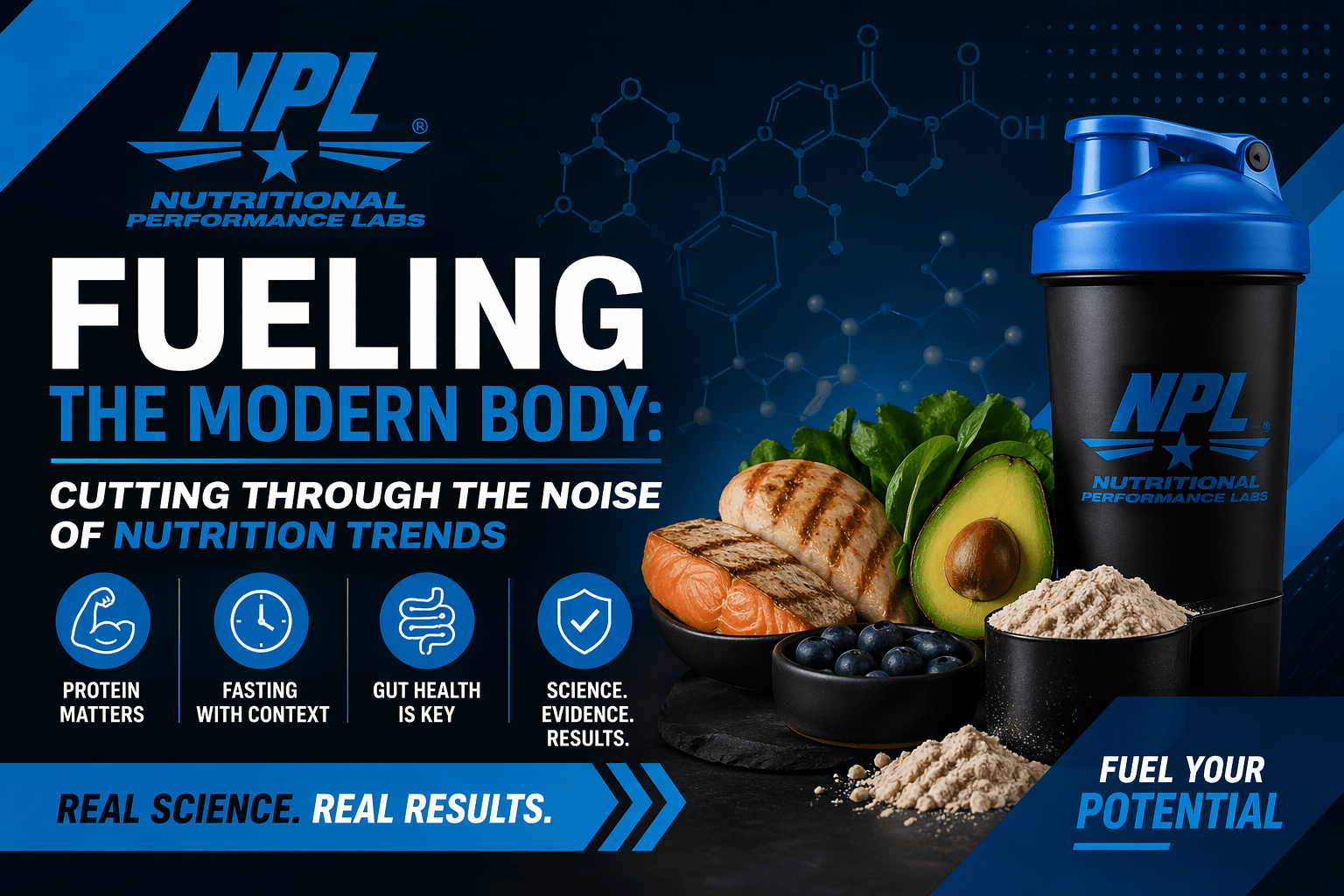

In an age where nutrition advice spreads faster than facts, certainty has become a commodity. One week it’s intermittent fasting, the next it’s carnivore diets or high-protein revolutions promising rapid transformation. But beneath the noise, one truth remains stubbornly consistent: the human body is not a trend.
According to NPL Nutritional Performance Labs, cutting through this confusion requires a return to evidence, context, and individuality. And as modern consumers search for clarity, the real story of nutrition is far less about extremes — and far more about understanding what actually works.
The Myth of the “Perfect Diet”
The wellness industry thrives on absolutes. But science does not.
Research consistently shows that there is no universal diet that works for everyone. Biological individuality — shaped by genetics, gut microbiome, hormones, activity levels, and even sleep — determines how each person responds to food. What fuels peak performance for one individual may leave another depleted.
The real danger isn’t misinformation alone — it’s misapplication. Studies conducted on specific populations are often stretched into one-size-fits-all solutions, losing their scientific integrity along the way.
This is not nutrition. It’s narrative.
Protein: Where Science Finds Agreement
Amid the chaos, one area stands on solid ground — protein.
For physically active individuals, adequate protein intake is essential. It supports muscle repair, recovery, and maintenance, especially during periods of intense training or calorie restriction. Current sports nutrition research points to a general range of 1.6 to 2.2 grams per kilogram of body weight per day, depending on training intensity and individual needs.
But beyond quantity, quality matters.
The effectiveness of protein lies in its amino acid profile, particularly leucine — the key trigger for muscle protein synthesis. Whether sourced from whey, plant-based blends, or whole foods, the biological impact is similar when amino acid composition is aligned.
The growing acceptance of plant-based proteins reflects a shift from outdated assumptions toward evidence-driven understanding.
Intermittent Fasting: Context Is Everything
Intermittent fasting continues to dominate headlines — and not without reason. Research shows benefits in insulin sensitivity and metabolic health in certain populations.
But when performance enters the equation, the narrative changes.
For individuals with high training demands, extended fasting periods may limit both pre-workout energy and post-exercise recovery. The timing of nutrient intake remains critical, particularly for maintaining muscle mass and sustaining performance.
In other words, fasting may work — but not for everyone, and not in every context.
Elimination Diets: A Double-Edged Sword
From gluten-free to dairy-free lifestyles, elimination diets have become cultural staples. For individuals with diagnosed conditions, these approaches can be life-changing.
For everyone else, they can be limiting — and sometimes harmful.
Unnecessary restriction risks nutritional deficiencies and undermines gut health, which thrives on dietary diversity. A fibre-rich, varied diet supports a balanced microbiome — a key factor in immunity, metabolism, and even mental health.
Removing entire food groups without medical need often solves a problem that never existed.
Back to Basics: The Power of Fundamentals
In a world chasing innovation, the fundamentals remain undefeated:
- Energy balance determines weight management
- Protein supports muscle and recovery
- Micronutrients sustain overall health
- Sleep and stress influence metabolic function
- Recovery is as important as training itself
Even in supplementation, simplicity wins. Creatine monohydrate — one of the most researched compounds in sports nutrition — continues to demonstrate consistent benefits in strength, power, and recovery.
These are not trends. They are truths.
A Smarter Way Forward
The modern nutrition conversation is shifting — from rigid rules to informed choice.
As Andy Moore, Research & Development and Quality Control Manager at NPL Nutritional Performance Labs, emphasises through this perspective, the goal is not to prescribe a universal solution, but to empower individuals with knowledge.
Because the real question is not whether a diet works.
It’s whether it works for you.
In a landscape crowded with promises, the most powerful tool remains critical thinking — grounded in science, shaped by context, and guided by your own body.