

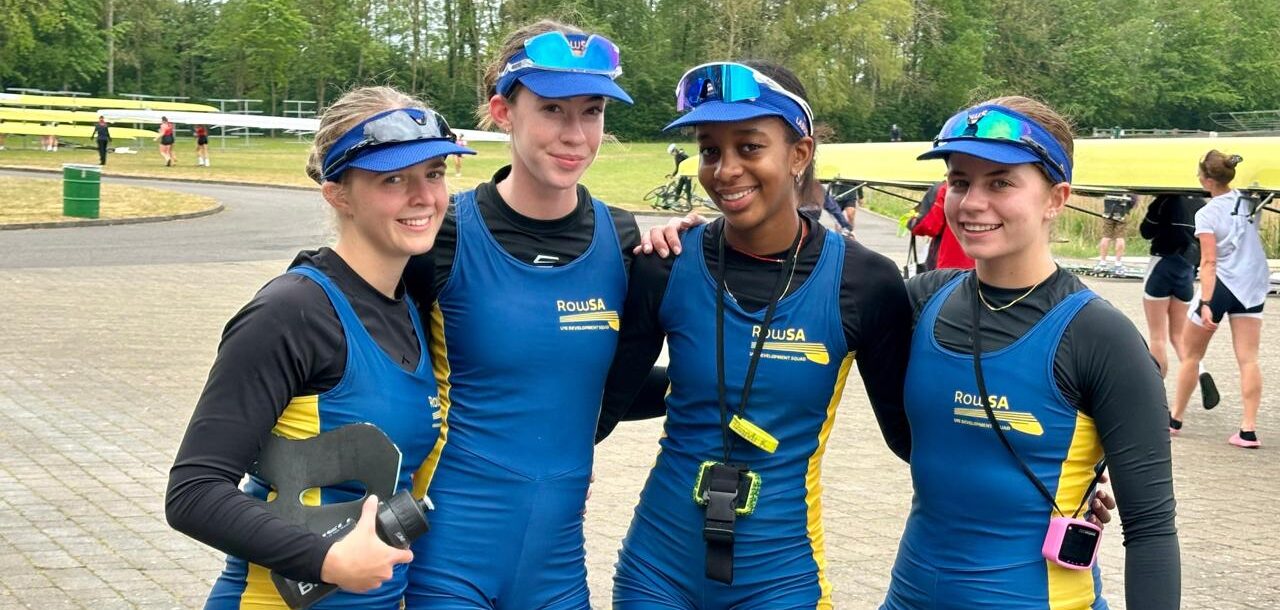
From the historic Olympic waters of England to the challenging surf conditions of Naples, South African rowers are continuing to prove that the country’s talent pool stretches far beyond its borders.
Over recent weeks, both emerging school athletes and experienced coastal rowers have represented South Africa on international waters, delivering performances that reflect not only technical ability, but resilience, adaptability and growing international confidence.
Together, these performances mark an encouraging beginning to what promises to be an exciting international rowing season for South Africa.
Young South African Talent Takes on Historic Olympic Waters
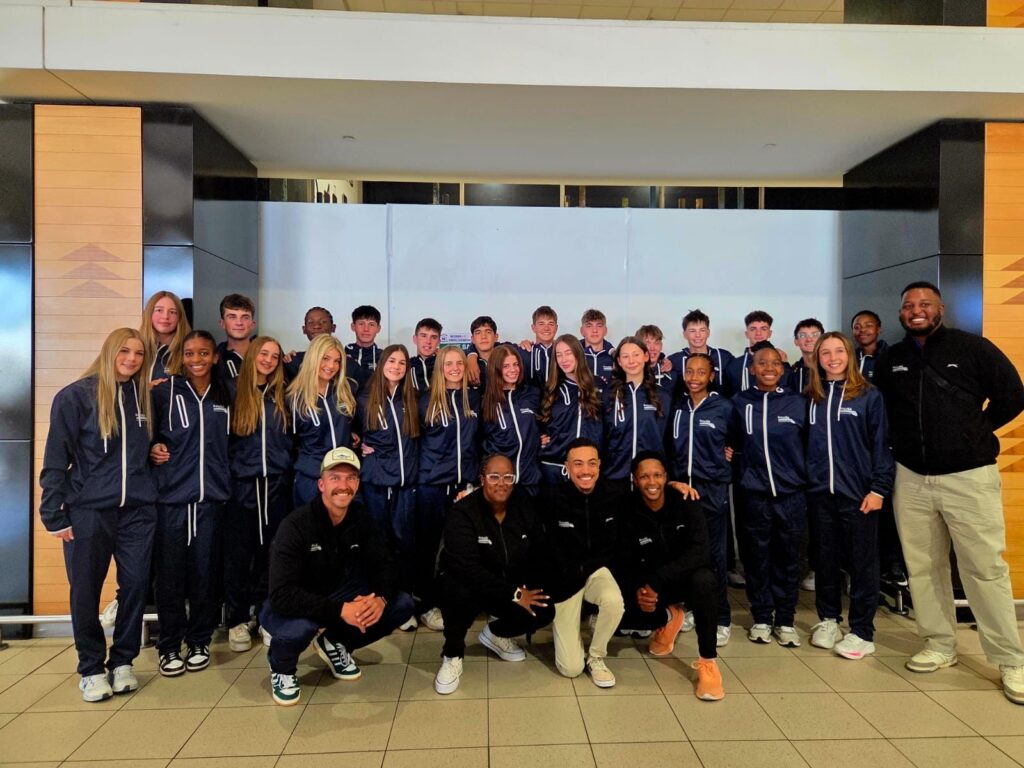
The South African Schools Rowing Union (SASRU) Under-16 touring squad recently embarked on a development tour to the United Kingdom, giving 27 young athletes from 11 South African schools the opportunity to compete and train at some of the world’s most iconic rowing venues.
Representing schools from Gauteng and KwaZulu-Natal, the squad included learners from:
- Holy Rosary School
- St Mary’s School, Waverley
- St Stithians Girls College
- St Stithians Boys College
- St Benedict’s College
- St Alban’s College
- St Andrew’s School for Girls
- St Dunstan’s College
- Hilton College
- Jeppe High School for Boys
- King Edward VII School
- American International School of Johannesburg (Pretoria Campus)
Despite enduring a demanding 15-hour flight delay, the team arrived determined to make the most of the experience.
Before even stepping onto the water, athletes immersed themselves in British culture with visits to Windsor Castle and the iconic Changing of the Guard ceremony — moments that set the tone for what would become a deeply memorable tour.
 Racing at the Home of South Africa’s Olympic Rowing History
The squad trained and competed at Dorney Lake, the rowing venue used during the 2012 Summer Olympics where South Africa secured its first Olympic rowing gold medal.
For many of the young athletes, racing on those historic waters carried emotional significance.
And the performances reflected that inspiration.
The standout result came from the South African Under-16 girls’ quad scull, which delivered an impressive victory at the prestigious Wallingford Regatta.
Other notable achievements included:
- Taylor Prinsloo of St Mary’s School, Waverley finishing second in the Under-18 women’s single sculls at Wallingford Regatta
- The South African Under-15 boys’ double scull placing second at the Junior Sculling Regatta
The squad also visited the legendary Leander Club, where Richard Egington hosted the athletes for a tour and insight into one of rowing’s most respected institutions.
Beyond medals and placements, the tour exposed young South African rowers to international coaching standards, elite facilities and the intensity of global competition — lessons expected to shape their development for years to come.
SASRU and Rowing South Africa also extended thanks to Eton College and the Dorney Lake staff for providing equipment, facilities and support throughout the tour.
South Africa’s Coastal Rowers Face the World’s Best in Italy
While the junior athletes were competing in England, South Africa’s top coastal rowers were testing themselves against elite international competition at the prestigious Filippi Lido Trophy in Naples, Italy.
Murray Bales-Smith and Violante Lama represented South Africa from 9 to 11 May, supported by coach Bill Godfrey.
The event attracted some of the world’s strongest beach sprint competitors and served as a critical early-season benchmark ahead of upcoming international championships.
For Bales-Smith, the regatta marked his first international appearance since finishing eighth at the 2025 World Rowing Coastal Championships.
He delivered a strong time-trial performance, finishing eighth and narrowing the gap significantly between himself and the world’s leading athletes.
However, difficult wave conditions during the knockout rounds disrupted his momentum after choosing what initially appeared to be the faster racing lane. He ultimately finished 12th overall.
Reflecting on the experience afterward, Bales-Smith noted:
“One key takeaway from this weekend is that I’m closer to the top guys in the time trials than I was at World Champs last year.”
Meanwhile, Lama faced an extremely competitive field and narrowly missed progression to the knockout rounds, but responded with determination to win the Club division — a performance that highlighted both her resilience and competitive spirit.
Momentum Builds Ahead of Major International Regattas
These international performances arrive at an important moment for South African rowing as athletes prepare for some of the sport’s biggest upcoming events.
Attention now shifts toward the World Rowing Cup Lucerne and the prestigious Henley Royal Regatta, where several South African athletes are expected to compete.
Among the names to watch are:
- Christopher Baxter in the men’s single sculls
- Kat Williams and Courtney Westley in the women’s pair
- Paige Badenhorst in the women’s single sculls
At the same time, a recent selection regatta has already identified the junior and Under-23 athletes who will represent South Africa later this year at the World Rowing Under-19 and Under-23 Championships.
Together, these results reinforce the growing depth and sustainability of South Africa’s rowing pipeline.
The Role of Support in Building International Success
Behind every international campaign lies the support systems that make global competition possible.
Rowing South Africa extended sincere appreciation to Rand Merchant Bank (RMB) for its continued partnership and investment in the sport.
That support enables South African athletes to compete internationally, gain critical exposure and continue developing against the world’s best competitors.
And increasingly, those experiences are translating into performances that place South African rowing firmly on the global map.
From school athletes discovering Olympic waters for the first time to experienced coastal rowers battling Mediterranean surf, one message continues emerging clearly:
South African rowing is not simply participating internationally anymore.
It is steadily building toward something far bigger.